(Reprinted from MusicRow’s Feb./March 2011 print issue.)
While content remains the coin of the realm for artists and the companies that promote them, one cannot ignore the proliferation of new channels to expose and distribute. It’s also impossible to ignore how connected society has become. Today’s label marketers and radio programmers must scan across a wide canyon of video, radio, music sales, sponsorships, social networking, mobile, and more to assess strategies for success. The dynamics between radio, sales, artists and social networking are being forged together like an edge on fine steel.
Meanwhile country sales are down almost 50% this decade. Retail space is fast disappearing despite the fact that during 2010 country fans still purchased about 85% of albums in physical format. Will CDs become a value add offered with other merchandise? Is there a viable plan for labels that offers a chance for survival? Are our revenue streams drying up?
Pandora CEO Tim Westergren said, “Smartphones really turned us into an anytime, anywhere service without us doing anything.” Unfortunately, technology hasn’t been as kind to the music industry. Should we ask consumers to pay on the way into the store? Is it time to pack up and move to the cloud? Are hit-driven singles the future?
To stir discussion and prescient answers, MusicRow brought together three forward thinking furturists—a label head, a video network digital strategist and a CEO whose company was called, “The Nielsen Ratings” of online music by Wired magazine. The article is presented in two interconnecting threads since scheduling prevented us from all meeting together at the same time.
PART TWO (Read Part One)

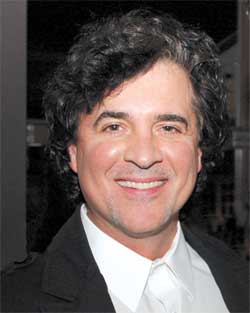
Scott Borchetta, President/CEO Big Machine Records Borchetta founded this label in 2005 which recently tipped the industry upside down by selling over one million Taylor Swift albums in one week. Since starting out in his father's company mailroom in the early '80s, Borchetta's star has risen high in Nashville's music industry sky. Only a few years ago he succinctly described his primary duty as "Building a new fighter jet for the revolution."
We have had a mantra since we opened to attack all media. What is important is these beautiful accidents. Five years ago MySpace was this beautiful accident. Facebook and Twitter now are these beautiful accidents. Anytime someone plans to launch something similar it has met a tragic ending and not achieved much traction. So part of it is leading and part is following. But really you have to attack everything. It takes so much to cut through and achieve critical mass by format. Our first goal is always to achieve critical mass within this format and then spill over into mainstream media and from there maybe to mainstream formats…like top 40 or hot AC.
Jay Frank: Twenty years ago as a media consumer you had two choices—TV and radio. Yes, you would consume some magazines and movies, but in passive audio or audio visual entertainment you had two places. Then the internet arrives. First you can stream some audio. Then you can download the audio and take it places. Then you can actually stream video. The communication tools get folded into one another and segmented to the point that they become addictive. Nothing has really replaced anything because TV is still the predominant medium and radio is the predominant medium in the car. In the next three years you will add mobile and connected TVs and then connected radios in the car. So in 20 years we’ve gone from having two methods of content distribution to a dozen viable avenues. The problem is that it isn’t about what works here or there, you have to get it all. The biggest problem the industry faces is everybody needs to start doubling their staffs to cover it all, but the economics have collapsed and they don’t have the dollars to do it. But if you want the ubiquity you have to be able to maintain every avenue because no one avenue can break an act on its own. Not radio, TV or the internet.
Scott Borchetta: Two years ago Jay said to me, “You’re going to need another building.” OK why? “It’s going to get bigger because of these other mediums,” he said. And he’s right. Going forward you have to build a portfolio of media to cut through and get traction.
Jay Frank: Some of the country acts need to recognize that country music should be at the forefront of this many-to-many communication. Country artists are always talking about spending time with the fans. Some artists do a masterful job of connecting with the fans, but unfortunately, lots don’t. The country artists that spend more time worrying why their record is not in the top ten should instead be worrying about why they didn’t spend the last hour communicating with bloggers who can reach 10k people at a time. Why didn’t they work to enhance and stoke the fires for these people to talk more about them instead of the other guy.
Scott Borchetta: Eric Garland’s discussion about modes of communication, “broadcasting” and “many-to-many” make great sense. To me, Taylor is a broadcaster. As a format we’re trying to create new broadcasters who can communicate from one-to-many, but you have to build that infrastructure and it takes time. After you get to a certain point it comes back around and you become a broadcaster. But when you have everyone’s attention say something smart or don’t say anything.

Jay Frank, SVP Music Strategy, Country Music Television Frank oversees the network's on-air and digital initiatives across all properties including CMT, CMT.com, mobile and more while working closely with labels and artists. He's served as VP of Music Programming at Yahoo! and been a broadcast radio programmer. Frank's book and blog, Futurehit.dna.com deftly revealed a digital landscape roadmap making him an in-demand speaker at conferences such as MIDEM, SXSW, ASCAP Expo, CMJ and many more.
As Scott said, this is such an interesting time. Our relationship with Taylor, for example is symbiotic. She still needs mass broadcasting to keep her star around, but mass broadcasting needs her, too. It’s a very nice circle. The interesting part of this equation is the fact that Taylor is a broadcaster. She has 15 million Facebook fans so if she says I want you to watch this video, there is a chance that maybe 20% or about 300,000 will see that message. And because it’s Taylor probably about 25% or about 75k of those will actually watch. So maybe 75,000 people will watch something because Taylor asked them to. How many radio stations have greater than a 75,000 cume in any quarter hour? [Very few.] Taylor is more influential than radio.
Scott Borchetta: To that point we had 9 million views on “Back To Dec.” within 24-48 hours. It was insane.
MR: Eric Garland believes that selling a million albums in one week means Taylor has at least a million core fans. How do you describe the process of achieving this kind of sales success?
Scott Borchetta: We are more of a front loaded business now, like the movie business. We learned that from Blockbuster. We can’t keep our physical product advertised for as long as we used to. So there is an immense pressure to make sure your first week is extraordinary. From a physical standpoint if you can’t create demand to get enough product out in the first week there is no longer the infrastructure for you to catch up unless you have a forest fire and those are very rare. So if you can’t get to a point on a new act where you can ship at least 60-75k physical CDs that first week you are almost DOA for the way that part of our business works.
Jay Frank: The consumer has so much at their fingertips that you have to grab them when their attention span occurs. If you don’t, it is shame on you, not shame on them. Don’t say, “I need you three months from now.” In the fashion world the number one thing happening is a store called Forever 21. This chain is on fire. Their modus operandi started with teenagers and has now expanded to almost every demographic. They make limited quantities of things and change the front store three times a week. There are 16-yr. old girls who go in there twice a week because they have to see and buy whatever is new—before it is sold out. So what does that mean for music retailing? Take Rascal Flatts for example. If you’re only going to have maybe a four week blitz, then get them into JC Penney’s where they have a relationship. Front load them in Starbucks and wherever else makes sense. The notion of letting things simmer and sell slowly, is antiquated at this point. You can still have records that have a slow build and we need some of those, but in terms of a big flash at retail it is a different game.
MR: Jay you said the CD was dead last year, but it’s still a big part of country revenue. What do we do?
JayFrank: The media market is fragmented. We need to recognize that sales income is fragmented as well. People are pointing to the fact that vinyl sales were up last year. Granted it’s a niche, but it’s important to know there is still a market for something that was left for dead. Some indie rock kids have started a cassette only label. What? We have to get used to the idea that no one format will be responsible for over 50% of your music income. It will come from CDs, from paid digital downloads, sponsored digital downloads, ringtones, streaming revenue on radio subscription services, sync licensing, streaming revenue on video and more. Nobody talks about it, but record labels are having to manage up to 100 skews for one piece of content.
MR: Are you worried about shrinking storefronts?
Scott Borchetta: It’s a big problem, but because we’re small and able to move quickly there are things we’re doing that some of our major label counterparts can’t. So I’m not as worried as they are. We have a lot of new places where we are going to be and in a lot of different configurations. Anywhere people are shopping, we are going to have music. But there will be a day when the CD is gone.
JayFrank: The problem we have now is not a lack of demand to buy music. Taylor’s million selling week proves you can sell records. You can’t say an industry is in trouble if it can still deliver that number. The trouble is that Scott had to go and find new partnerships, resources and outlets to be able to reach that number. Certain companies are not yet spending the time to find those outlets. The only thing that sells records is stores. It can be a physical store or a digital store. But when Tower closes and WalMart shrinks their space you need to call Pizza Hut, Forever 21 and anyone else. I keep hearing record companies wanting exorbitant up front fees to start digital stores. Instead we should be figuring ways to nurture and help them grow. Because if there are no storefronts there are no sales. Long term this is a very detrimental problem.
Scott Borchetta: It’s like closing every gas station in town and then wondering why there’s a gas crisis.
MR:
What about mobile 4G and the increased speed it will bring to transferring audio and video files? Will that help our industry?
Jay Frank: The most encouraging thing for the industry is that the FCC and wireless networks are trying to keep the phone relatively protected. So while it is extremely easy to illegally download a song on your computer it’s rather cumbersome to do on your phone. They are actively controlling that environment. As the phone becomes more ubiquitous as an entertainment device the fact that they are somewhat closed systems bodes well for content owners to potentially get more revenues. Those revenues may come from streaming rather than the sale of content which creates a different set of economics, but at least the theft part of the problem might actually decrease as people transfer to 4G.
Scott Borchetta: From an audio/video streaming capability, 4G is remarkable. We have to be ahead of it with something attractive and properly priced. We want people to say, “Cool you’re only adding $3 a month to my phone bill, great I’m in.” It’s amazing the video content we can share and the immediacy of how quickly we can get it out there. I got my first video text over the weekend on something that we are trying, it was very easy. One of things I’m picky about is the amount that we use something. Twitter for example. I don’t know that we should be trying to sell things on Twitter or raising money for charity. Some of those things should remain organic. It is beautiful like it is, don’t sell it out. That’s when people start running from something. They say, “We’ll let you know if we want to hear your message, we’ll come and find it if we’re interested. And if we really like it we’ll let you come back and tell us more about it.” We try to be really careful with our messaging and avoid this constant inundation.
MR: Is terrestrial radio ignoring the challenge of Internet radio?
Scott Borchetta: If you meet with the heads of companies like Clear Channel, CBS, Citadel, you’ll see they aren’t sitting idly by saying we don’t see this coming. You might disagree with some of their opinions on how quickly or what they are planning, but they still have locality and that has value. If you are a terrestrial radio station you’ve got to fight that fight. Locality is your unfair advantage. Why should terrestrial radio just lay down and say we’re not capable of being extraordinary. Shame on you if that’s how you are—stop now. We’ve all got to do a fantastic job. I personally can’t worry about the delivery system, that’s Jay’s job. I have to make something so compelling that he has to have it because his viewers and listeners all want it.
Jay Frank: The Band Perry’s “If I Die Young” was an interesting story for CMT. It highlights where the relationships need to be and some of the issues involved. In May 2010, Scott and I talked about the record. My entire staff loved it, but we all said what most traditional broadcasters say, “Great song Scott, but we’re going into summertime and the last thing I can do is to have a death ballad that has references to classic authors now. Come back in September, we’ll be there then.” Scott just did his classic Scott thing. He looked at me and said, “OK Jay, OK,” which he always does. I had to explain it to the artists, too, which was hard because they recorded something they were proud of that was quite good. How do you explain it wasn’t about the song, it was just a timing issue? But we put it on CMT.com which has a large audience and immediately saw a large reaction. At the same time, Scott was getting a strong reaction from places that had started the record. Four weeks later we came back and said, “OK we see it. We’re adding it.” Here’s what happened. We started playing it in July. In a four week period our airplay which was meaningful, not just token spins, saw single sales rise 150%. But radio charts went No. 27 to 27 to 27 to 26 in the same four week period. I called Scott and said, “This song is No. 30 on the pop sales chart, not country— the
pop sales chart. Is country radio blind, am I the only one who sees that this is an instantly reactive record?”
Scott Borchetta: I laughed and said, “Is this the Jay Frank from four weeks ago?”
Jay Frank: The point is we have the ability to turn on a dime. I don’t care about anything other than making my audience happy. The minute I see my audience reacting to something I will put the pedal to the metal in two seconds. What distressed me is that radio, which everybody in town is always touting as the No. 1 way to sell country music and get it out to people, was completely blind to the fact they had a monster hit on their hands. Most stations didn’t embrace it until three months later. The industry has radio guys who are afraid to take the risks and say “locally in my market.”
Scott Borchetta: And that goes back to what we said earlier, one medium can’t handle it. You have to have them all. Then you are creating this huge buzz factor and it becomes very real. When they come together you get The Band Perry going to No. 1 and truly have that media forest fire. But over analyzing and over consulting can make things worse. We see this in markets that had an aggressive country station but moved to a super slowed down rotation with lots less current music. It’s just a handful, but we have literally seen it change markets that were good sales markets for tickets and music literally dry up over time. People, that are participating in music are either young or “young at heart.” I’m not going to try to convince someone who doesn’t love music to love music, I don’t care about that person. Give me the music addicts and we’ll turn them on. Those people will turn away from your channel if they don’t like it, because they have a ton more opportunities to be entertained. They’ll go to CMT.com and other places where they can find things on demand and get what they want right now.
Jay Frank: The audience wants to be surprised, for you to take chances once in a while. But at country radio in particular I see a lack of risk in most places. Unless they start taking those risks they will wake up one day and realize that their audience moved to satellite or Pandora or us. We have streaming radio on our website and once 4G arrives it will be easy to listen on your mobile phone and then in your car. If you feel that your local radio station isn’t fulfilling the needs and you trust CMT, know damn well it’s going to be easy to switch in a matter of months. We don’t take outlandish risks, we take measured risks and we also pivot on a dime. I didn’t hold to my guns about Band Perry and waiting till Sept., I recognized our decision was wrong and we spun around in the matter of a week.
Scott Borchetta: Jay, I can’t let that be a sweeping statement about country radio. We wouldn’t get these things through if we didn’t have people taking calculated risks. So we do have a lot of great partners out there. I can’t sit here and be a hypocrite either. There are times in this industry that we [labels] have things on the chart that we are pushing and trying to keep alive and keep those exposures out there. We’re casting a big net across this subject but the relationships are still working quite well in a lot of areas. So I am pretty bullish about where we are and see a lot of opportunities.
Jay Frank: An influential book was last year’s “The Curse of The Mogul.” Contrary to conventional wisdom, the authors say when the barrier to entry dissolves, it becomes much
harder to succeed. That’s a good portion of the problems facing recorded music. It’s not difficult because people can steal music, it is the fact that more people can come in and be competitive for their time. We went from an industry that released 30k albums a year to close to 200k a year now across all genres. What the book said, and what Scott said very clearly just a few minutes ago, is that one key to success is locality. When you look at newspapers, TV or radio, too often they have minimized their competitive advantage–locality–in favor of cost cutting and emphasis on nationality. The book points out, very succinctly, that businesses focused on local or regional markets will routinely outperform business that are more global every time. Radio has an enormous opportunity to overemphasize and get back to a combination of things the community wants as information, and music they want to hear.
MR: Scott from a label perspective what are some things you’re watching closely?
Scott Borchetta: We’re closely watching the Netflix phenomenon. They feel like the first online subscription content provider getting traction and doing it quickly. I’m also interested to see if anybody cares if and when Spotify lands in the U.S. Will that subscription model work in the music space? So far it hasn’t. We’re also very interested in the cloud concept itself. We are doing a few things to get ahead of it. Twelve months from now. Walmart will still be selling CDs although we may have a little less space than we do now (which is not good) but there are going to be wins in other places.
MR: Jay what about hit-driven music and video?
Jay Frank: Music’s middle class is becoming a tough sell. Taylor’s success proves that hits can still generate a lot of money from recorded music sales. Also I hear all the time about Texas acts who are selling 50k albums and making plenty of money even before they start selling 2,000 tickets a night at concerts. But the people in the middle are hurting, because those records used to sell, be modestly profitable and help support the music industry ecosystem. Now the best case scenario is those might sell 100,000 albums and a million singles. And that’s problematic considering the amount of dollar investment that usually goes into developing acts at that level. Look at the number of albums Kenny Chesney had to make before he became KENNY CHESNEY. At least some revenue was coming in on those first three records before he broke wide open to justify having him on the books. Also the records came faster because the chart was faster. Now those records would come more slowly and the money is less. That distresses me because we need a development process that supports people with blind faith belief in an act who put their reputation on the line. If they are able to say, “I’m not losing my shirt, only my socks,” then they are willing to go to the next record. But a combination of, “I can’t sell anything and radio just spent 40 weeks on the record to figure out whether I might have something,” is going to get in the way of building the next generation of superstars. It already has.





 On her sixth album, McKenna continues what she does best, illuminating and examining everyday life and ordinary circumstances, offering poignant insights about love and family. The album’s title, Lorraine, is actually McKenna’s first name. She was named after her mother who died at roughly the same age Lori is now.


 Songwriter Dan Muckala, and band MercyMe were among the top honorees at last night’s (3/28) ASCAP Christian Music Awards, presented at Nashville’s Richland Country Club.