[Updated] Beloved Engineer Joe Palmaccio Dies

Joe Palmaccio

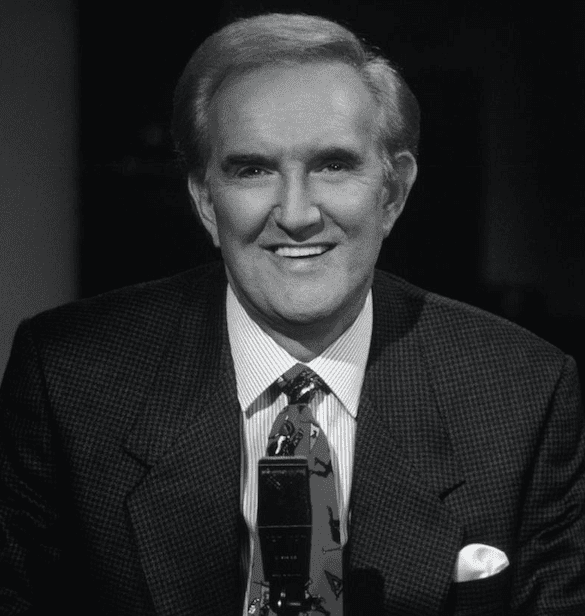
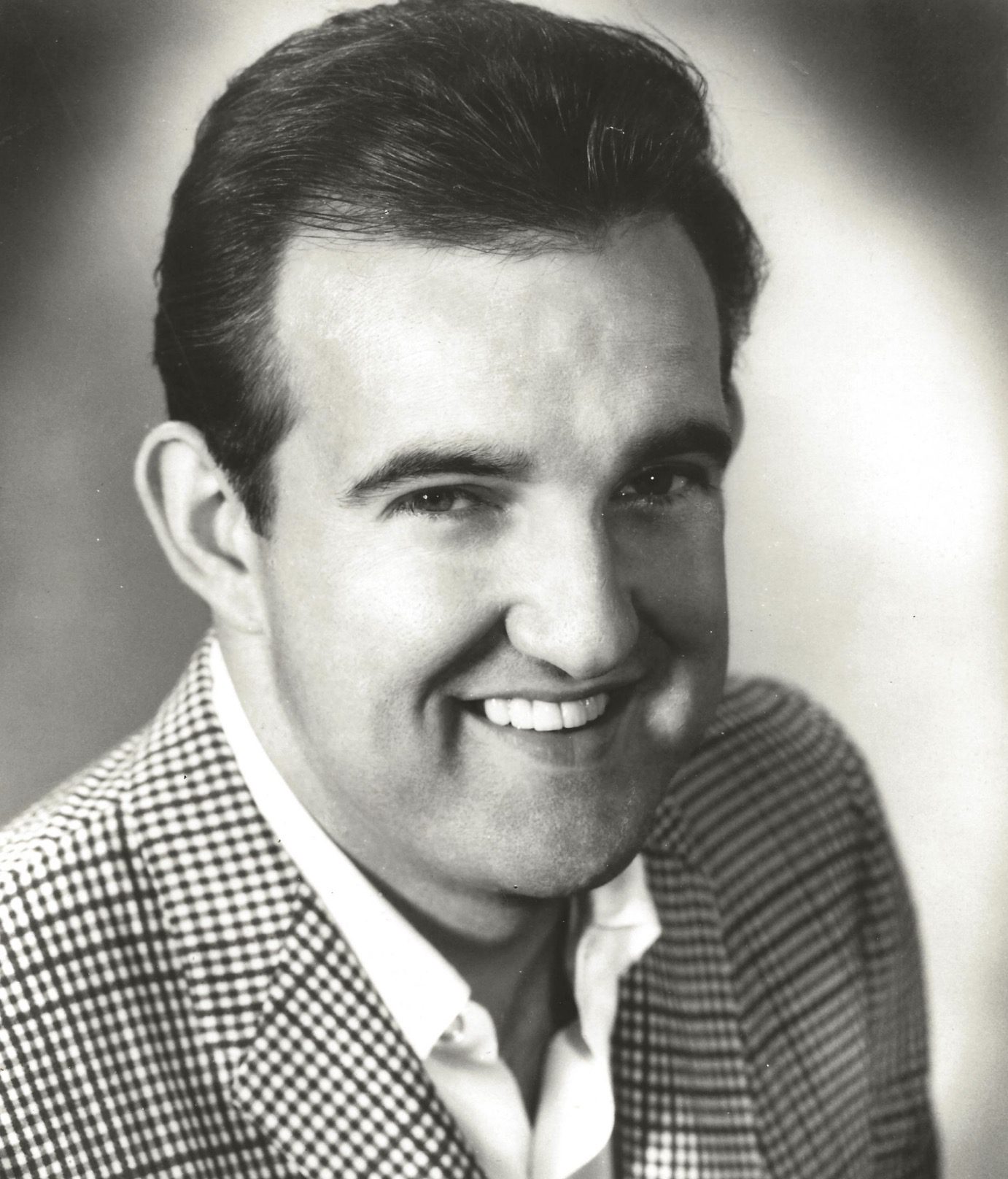
Grammy Award-winning mastering engineer, Joe Palmaccio, died while recovering from a motorcycle accident on Saturday (Oct. 16).

A native of rural South Carolina, Palmaccio began his formal music training at age eight after moving to a small town outside Chicago. First as a trumpet player and later as a drummer, he recorded his first demo at Hedden West Studio as a teenager. After completing a B.A. in Telecommunications with a minor in Religious Studies from Indiana University, he went on to work as a mastering engineer for Bonneville Broadcasting, PolyGram Records, Sterling Sound and Sony Music Studios.

Throughout his career, Palmaccio was nominated for six Grammy awards and won four in the Best Historical Album category for such projects as 1998’s The Complete Hank Williams, 2003’s Martin Scorsese Presents the Blues: A Musical Journey, 2004’s Night Train to Nashville: Music City Rhythm & Blues 1945-1970, and 2014’s Bill Withers: The Complete Sussex and Columbia Albums

Palmaccio also spent time as an audio hardware design consultant, musician, public speaker and musical instrument craftsman. He was extremely well versed in a large variety of musical styles, genres, and technologies as both a business professional and creative. A veteran of the New York mastering community, Palmaccio founded The Place…For Mastering in Nashville in 2006, where he was president and chief engineer. He was also an adjunct instructor at Belmont University.

Among the recent projects Palmaccio mastered were records for The Eagles, BeBe Winans, Keith Urban, Gwen Sebastian, The Rock and Roll Hall of Fame, David Cook, Josh Kelly and Jim Oblon. He was part of the Leadership Music Class of 2011. Palmaccio joined the Sony Music Nashville staff in April of 2019 as Specialist, A&R Administration, where he assisted with managing recording costs and trafficking and archiving all of Sony Music Nashville’s audio and video masters.

Palmaccio was known to be a loving family man. He and his wife of 28 years, Alex Rockafellar, were devoted partners in life and business.

Those wishing to express condolences may email alex@theplaceformastering.com.

There will be a celebration of life for Palmaccio on Saturday, Oct. 23 at the Vanderbilt Dyer Observatory from 3:00 p.m. – 6:00 p.m. More details here.

Ronnie Tutt, Drummer For Elvis Presley, Dies At 83

Ronnie Tutt, Elvis‘ drummer and an original member of his TCB Band, passed away on Oct. 16, 2021. He was 83.

Tutt was born in Dallas, Texas on March 12, 1938. He was involved with music and performing arts for most of his childhood.

Tutt joined Elvis’ TCB “Taking Care of Business” band at the beginning of his Las Vegas residency in 1969, and remained through Presley’s death in 1977 at 42. He also toured with Neil Diamond, and was an in-demand session drummer and touring musician who worked with Johnny Cash, Kenny Rogers, Stevie Nicks, Elvis Costello, Billy Joel, Jerry Garcia, Roy Orbison, The Carpenters and many others.

Elvis Presley Enterprises paid tribute to Tutt on the Graceland website with this message: “All of us with Elvis Presley Enterprises were deeply saddened to learn of the passing of Ronnie Tutt. In addition to being a legendary drummer, he was a good friend to many of us here at Graceland. We enjoyed each time he joined us here to celebrate Elvis Week, Elvis’ Birthday and many other special occasions. Ronnie was an amazing ambassador to Elvis’ legacy – sharing his memories of working with Elvis with fans – as well as bringing Elvis’ music to arenas around the globe through later Elvis in Concert shows and performances.”

Bluegrass Musician Phil Leadbetter Dies At 59

Phil Leadbetter. Photo: Courtesy of Crossroads Music

Bluegrass musician and businessman Phil Leadbetter has died after contracting COVID-19. He was 59.

Born in Knoxville, Tennessee, Leadbetter’s bluegrass career started at 14 with the founding of the Knoxville Newgrass Boys. The group would eventually be invited to perform at the White House during the bicentennial celebrations in 1976.

Leadbetter was hired on with Grandpa Jones in 1988, followed by a year with country singer Vern Gosdin. Beginning in 1990, he played resophonic guitar for J.D. Crowe and eventually took over booking for the group until 2001. Leadbetter recorded two album with Crowe–Flashback (1994) and Come On Down To My World (1999).

He served as a founding member of Wildfire with Robert Hale, Curt Chapman, Darrell Webb, and Barry Crabtree, later departing to start Grasstowne with Alan Bibey and Steve Gulley. He recorded three albums with Wildfire and two with Grasstowne.

As a solo artist, Leadbetter released three albums: Filibuster (1999), Slide Effects (2005), and The Next Move (2014). He released Swing For The Fences by Phil Leadbetter & The All-Stars of Bluegrass in 2020. The group had also played a number of shows in 2018-19 with a rotating cast of pickers and singers.

Leadbetter is a three-time recipient of the International Bluegrass Music Association’s Resophonic Guitar Player of the Year award. Gibson released the Phil Leadbetter Signature Series Dobro guitar in 2003 in his honor. Two years later, he won the first of his IBMA Resophonic Guitar Player awards, while also garnering an Instrumental Recording of the Year trophy for his second solo album, Slide Effects. He was nominated for a Best Bluegrass Album Grammy in 1994 for his work with J. D. Crowe and the New South on the album Flashback.

In 2011, Leadbetter received his first of five Hodgkin’s Lymphoma diagnoses.

He is survived by his grandchildren and son, Matt Leadbetter, who also become a professional resophonic guitar, now working with Dale Ann Bradley.

Memorial arrangements have not yet been announced.

Engineer Ron “Snake” Reynolds Passes

Ron “Snake” Reynolds. Photo: Courtesy The Musicians Hall of Fame

Renowned studio engineer Ron “Snake” Reynolds has passed away on Oct. 5. He was 76.

A Nashville native, Reynolds signed as an artist with Nugget Records in 1965 but quickly decided he preferred being behind a console instead of a mic and began his journey as an engineer and producer. He joined Columbia Records in 1972 as a staff engineer and remained there until its closing a decade later when he became a freelance studio engineer. Reynolds worked on records for George Jones, Merle Haggard, Tammy Wynette, Charlie Rich, Keith Urban, Dave Loggins, Elvis Costello, Earl Thomas Conley, Elton John, Toby Keith and many more.

As a songwriter he’s had songs recorded by John Anderson, Johnny Cash, Earl Thomas Conley, Johnny Rodriguez, Sonny James, Levon Helm, Billy Joe Royal, Neal McCoy, Toby Keith and others. His producer credits include albums for Merle Haggard, The Marcy Brothers, Tony Joe White, and more.

Reynolds most notably engineered Shania Twain’s 12-million-selling smash album The Woman In Me. He has engineered over 100 Gold, Platinum and multi-Platinum records and 60 No. 1 hits, won multiple Grammy Awards, and was named Engineer Of The Year by the ACM in 2004. He was acknowledged with a Lifetime Achievement Award by the Audio Engineering Society in 2016 and was inducted into the Musicians Hall of Fame that same year.

Details regarding memorial services have not yet been announced.

Country-Rocker Commander Cody Passes

George Frayne, “Commander Cody.” Photo: Garry Regester

George Frayne, known to music lovers as Commander Cody, died Sunday (Sept. 26) at age 77.

As the leader of Commander Cody & His Lost Planet Airmen, he was noted for such 1970s hits as “Hot Rod Lincoln” and “Smoke! Smoke! Smoke! (That Cigarette).” The country-rock mainstay released more than a dozen albums between 1972-1995.

Frayne was born in Boise, Idaho and raised in New York City. He pursued music and art as a youngster, becoming proficient on piano. His professional debut was in an all-lifeguard band at Jones Beach on Long Island. In college, he performed in the frat-house band The Fabulous Surfing Beavers.

After graduating from The University of Michigan in Ann Arbor, he formed a band with Bruce Barlow, Bill Kirchen, Billy C. Farlowe and others in 1967. They dubbed themselves Commander Cody & His Lost Planet Airmen, borrowing the name from a 1950s science-fiction movie serial.

The group specialized in retro styles such as western swing, boogie-woogie, jump blues and rockabilly. The Airmen relocated to San Francisco in 1969 and soon attracted a following among the city’s hippies.

Paramount Records signed the band and issued Lost in the Ozone as its debut LP in 1972. The collection mixed original tunes such as “Seeds and Stems (Again)” with revivals of country oldies such as Willie Nelson’s “Family Bible” (1960) and Charlie Ryan’s “Hot Rod Lincoln” (1955). The latter rose on the country charts and became a top-10 pop-music smash.

Cody followed it with a remake of the 1940-41 Glenn Miller / Andrews Sisters favorite “Beat Me Daddy Eight to the Bar.” Hot Steel, Cold Steel and Truckers Favorites appeared as the band’s second LP in 1973. Its country oldie remakes included “Truck Drivin’ Man,” “Diggy Diggy Lo” and “Looking at the World Through a Windshield.”

The group came to the 1973 CMA convention in Nashville. But the members’ long hair and flagrant marijuana smoking scandalized the mainstream country community, and they were booed off the stage.

The 1974 LP Country Casanova included versions of Bob Wills’ “My Window Faces the South” (1946), Buddy Holly’s “Rave On” (1958) and the Tex Williams/Merle Travis 1947 favorite “Smoke! Smoke! Smoke! (That Cigarette).” The last-named again appeared on both pop and country charts.

Recorded at Armadillo World Headquarters in Austin, the 1975 LP Live From Deep in the Heart of Texas earned a four-star review in Rolling Stone. The band switched to Warner Bros. Records, which issued Tales From the Ozone. Produced by Hoyt Axton, it contained “Roll Your Own,” “Minnie the Moocher,” “I Been to Georgia on a Fast Train” and “Cajun Baby.” Two more Warner LPs ensued, as well as the 1975 single “Don’t Let Go.” This revival of Roy Hamilton’s 1958 hit became the band’s final charted pop recording.

Cody’s tenure at Warners was profiled in the 1977 book Star Making Machinery. In its pages, he resisted the label’s pressure to become a commercial country-rock band like The Eagles.

Commander Cody & His Lost Planet Airmen appeared in the 1976 Roger Corman film Hollywood Boulevard and several times on the NBC TV series Police Woman. It also starred on The Midnight Special, Don Kirchner’s Rock Concert and other music series.

The Airmen became the opening act for everyone from Waylon Jennings and Merle Haggard to Led Zeppelin and the Doors. As headliners, they were noted for their wildly entertaining, marathon concert performances. Following a 1976 European tour, the original band broke up.

By then, Asleep at the Wheel had emerged as country’s premier western-swing revivalists. That band’s leader, Ray Benson, eulogized Frayne/Cody on Facebook by saying, “He made Asleep at the Wheel possible in so many ways, and we owe him a debt of gratitude for all the love and inspiration he gave us.”

Frayne continued his billing as Commander Cody, recording and touring with an ever-changing band lineup. Guitarist Kirchen often reunited with him. Cody signed with Arista Records for two albums in 1977-78. Later Commander Cody albums appeared on such labels as Blind Pig, Atlantic, Line, Relix and Woodstock.

As a sideman, he played piano on albums by Poco, Link Wray and New Riders of the Purple Sage. In 1980, his music video for “Two Triple Cheese (Side Order of Fries)” won an Emmy Award. Cody’s droll personality, easy-going quips, zany worldview and witty, talking-blues vocals made him a crowd-pleasing favorite on David Letterman’s TV talk show.

He also achieved notoriety as a painter. His works were exhibited in galleries worldwide and included in the 1979 book Star Art. He held a master’s degree in art and taught art at The University of Wisconsin.

George Frayne’s death was announced on Facebook by his wife, Sue Casanova. He died in Saratoga Springs, New York. No cause of death was revealed, and funeral arrangements are unknown.

“Sad Movies” Pop Star Sue Thompson Dies At Age 96

Sue Thompson, the western-swing singer who became a “teen” pop star of the 1960s, passed away on Sept. 23 at age 96.

While signed to the Acuff-Rose affiliated label Hickory Records in Nashville, Thomson scored big pop hits with “Sad Movies” (1961), “Norman” (1962), “James (Hold the Ladder Steady)” (1962) and “Paper Tiger” (1965). Sue Thompson gave boosts to the publishing company’s writers Boudleaux & Felice Bryant, Bob Montgomery and especially John D. Loudermilk.

She was born Eva Sue McKee in Nevada, Missouri on July 19, 1925. She got a guitar at age 7 and dreamed of becoming a singing cowboy like Gene Autry. Forced off their land in 1937, the family migrated to California during the Great Depression to work as fruit pickers.

The Mckees eventually settled near San Jose. During World War II, Sue worked in a defense plant near Oakland. She married in 1944, delivered a daughter in 1946 and divorced in 1947. By then she was working in a theater ticket box office by day and as a nightclub singer by night.

Discovered by western-swing bandleader Dude Martin, she began singing on his local San Francisco TV show. He also became her second husband. They moved to Los Angeles in 1951 and proved to be just as popular on TV there.

Signed to Mercury Records, Sue Thompson recorded a string of mildly popular country singles in the early 1950s. In 1952, she became the first to record the future pop standard “You Belong To Me” (Pee Wee King/ Redd Stewart/ Chilton Price).

In Hollywood, musician/comedian Hank Penny joined Martin’s troupe. He romanced her. She divorced Martin in 1953, married Penny and gave birth to a son in 1955.

The Pennys moved to Las Vegas to work the casino lounge circuit. She recorded for Decca and Columbia, but failed to score in either pop or country musical settings. But in Nashville at Hickory in the 1960s, she found her niche with teen novelty tunes. Sue Thompson had a pert bright quality in her voice that made her sound much younger than a 36-year-old when the whimpering ballad “Sad Movies” made her a teen pop star in 1961.

That plus the rocking, brass-punctuated “Norman” (1962) and its follow-ups propelled the strawberry blonde onto Hullabaloo, Shindig, American Bandstand, Where the Action Is, Hollywood A Go-Go and other pop TV shows.

The honeydew sweetness and innocence in her voice seemed to particularly suit Loudermilk’s songs. In addition to her first two hits, the Nashville Songwriters Hall of Fame member penned “If the Boy Only Knew,” “James,” “What’s Wrong Bill,” “Big Daddy,” “Paper Tiger” (a top hit in Australia & Canada) and “Stop the Music,” all of which landed on the pop charts for her in 1962-66. She and Penny divorced in 1963.

Sue Thompson’s pop albums on Hickory were Meet Sue Thompson, Two of a Kind, Golden Hits, Paper Tiger and With Strings Attached. During her teen-queen era, Mercury issued its old sides as The Country Side of Sue Thompson.

Publicists had dubbed her cute, saucy, coquette voice “itty bitty.” Wishing to shed that description, Thompson returned to country music. She issued a string of singles on Hickory and MGM in 1971-76, including several duets with future Country Music Hall of Fame member Don Gibson.

She made the country singles charts 12 times with 1974’s “Good Old Fashioned Country Love” reaching No. 31 as her biggest hit in this field. Her country LPs of the 1970s included Big Mable Murphy, And Love Me, Sweet Memories and two duet albums with Gibson.

Then she returned to the Nevada casino circuit, where she continued to appear into the 1990s. She also reemerged as the host of a radio show broadcast from North Hollywood’s famed nightspot The Palomino.

She married for a fourth time in 1993, but was widowed 20 years later. According to The New York Times, the entertainer died at the home of her daughter and caregiver, Julie Jennings, in Pahrump, Nevada. Her son, Greg Penny, said the cause was complications of Alzheimer’s disease. In addition to children Jennings and Penny, she is survived by eight grandchildren and 12 great-grandchildren.

Nashville A-Team Musician Bob Moore Dies

Pictured: Bob Moore, circa 1960. Photograph by: Bill Forshee, courtesy of CMHOF

Nashville A-Team bassist, Bob Moore, has died. He was 88.

Throughout his more than 60-year career, Moore was one of the lead musicians to utilize the bass guitar as a country music instrument and was the first-call bassist on Music Row’s A-Team of session musicians from the 1950s through the 1970s. Along the way, he provided rhythmic support and ideas for an array of classic country hits, including Patsy Cline’s “I Fall to Pieces,” Brenda Lee’s “I’m Sorry,” Loretta Lynn’s “Coal Miner’s Daughter,” Roger Miller’s “King of the Road,” Elvis Presley’s “Are You Lonesome Tonight?” Marty Robbins’s “El Paso,” Kenny Rogers’ “The Gambler,” and Conway Twitty’s “Hello Darlin’,” among countless others.

Pictured: Bob Moore on bass during a Brenda Lee recording session at Bradley’s Film and Recording Studio. Photograph by: Elmer Williams, courtesy of CMHOF

Born in 1932, he was raised by his grandmother near Nashville’s Shelby Park. By age nine he set up a shoeshine box near the entrance of the historic Ryman Auditorium, and before long was invited backstage to shine the boots and shoes of Opry stars.

Only a year later, Moore had begun performing in a band he formed called the Eagle Rangers. When Moore was 14, he joined the Grand Ole Opry duo Jamup & Honey before joining Little Jimmy Dickens’ band at 18. At age 23, he accepted an offer to play on the famed Red Foley television show, Ozark Jubilee.

Moore eventually met pianist and record producer Owen Bradley, who told Moore that he would soon be operating a Nashville office for Decca Records to which Moore would be a regular session bassist.

In the 1950s, Moore began playing on Nashville recordings that represented what would become known as rockabilly, including for Elvis Presley, Roy Orbison, Brenda Lee, Bobby Helms, Wanda Jackson, and Johnny Burnette and the Rock & Roll Trio.

In 1961, Moore also enjoyed a major pop hit of his own with his instrumental recording “Mexico.” The song went No. 1 in Germany and reached No. 7 on the U.S. pop charts.

Moore was honored as part of the Country Music Hall of Fame and Museums’ Nashville Cats: A Celebration of Music City Session Players program, and was inducted into the Musicians Hall of Fame in 2007, along with other members of the Nashville A-Team.

“Bob Moore’s contributions to American music are incalculable,” shares Kyle Young, CEO, Country Music Hall of Fame and Museum. “Raised in East Nashville, he was a musical master and the most-recorded bass player in country music history. As a key member of the much-vaunted ‘A-Team’ of Nashville session players, he was both an inspiration and an innovator. He was the heartbeat behind classics including Patsy Cline’s ‘Crazy,’ Sammi Smith’s ‘Help Me Make It Through the Night,’ Kenny Rogers’s ‘The Gambler,’ and hundreds of other recordings that changed the course of country music. He played with Johnny Cash, Tom T. Hall, Jerry Lee Lewis, Roy Orbison, Carl Perkins, Elvis Presley and so many others, and he helped establish Monument Records, where he was a player, a producer, an arranger and a hit artist. He once said, ‘Anyone who has heard me play the bass knows my soul.’ We’re fortunate that he shared his soul with us for so many years.”

Memorial arrangements have not yet been announced.

The Last Maddox Brother, Don Maddox, Dies

Pictured: The Maddox Brothers & Rose. (Don Maddox, far right). Photo: Courtesy Robert K. Oermann

Don Maddox, the last survivor of the legendary honky-tonk/rockabilly pioneering band The Maddox Brothers & Rose, has died at age 98.

From 1937 to 1956, The Maddox Brothers & Rose became known as “the most colorful hillbilly band in the land.” Their stage act was packed with wildly raucous, unpredictable antics and they were among the first country acts to embrace sequined, spangled “Nudie” outfits.

The Maddox sound was a bold, loud fusion of electric guitars and barroom rhythm that helped define the evolution of honky-tonk music in the 1940s. The brothers’ slap-back bass “country boogie” undertow and Rose’s exuberant vocals prefigured the rise of rockabilly music in the 1950s.

The band also popularized the songwriting of Woody Guthrie. The ensemble’s version of his “Philadelphia Lawyer” in 1949 became both his and the group’s biggest country hit. Other notable Maddox recordings featuring Don include “Sally Let Your Bangs Hang Down,” “Mean and Wicked Boogie,” “Whoa Sailor,” “Water Baby Blues,” “Alimony” and “Hangover Blues.”

The Maddox saga is one of the most cinematic in country-music history. Sharecropper mama Lula Maddox and husband Charlie left dirt-farm Alabama poverty with their kids in 1933 at the height of the Great Depression. Don, then aged 10, and his siblings learned to ride the rails to California, where they made newspaper headlines as residents inside lengths of large drainage culvert pipes.

They became crop pickers in the San Fernando Valley and began entertaining in the labor camps. The Maddox band was comprised of Cliff (1912-1949), Cal (1915-1968), Fred (1919-1992), Don (1922-2021), Rose (1925-1998) and Henry (1928-1974), who replaced Cliff when the latter died. Lula became the manager and domineering stage mother.

She and her outgoing son Fred talked KTRB in Modesto, California into hosting a radio show for the family act in 1937, leading to performances for tips in honky-tonk dives and hillbilly nightclubs. In 1939, The Maddox Brothers & Rose won a talent contest that rewarded them with a regionally syndicated radio show in California, Arizona, Oregon and Washington. Their popularity soared.

After Don and his brothers served in the armed forces during WWII, the band retooled its act to become more entertaining. The siblings adopted eye-popping costumes, resplendent with satin sleeves, long fringe, embroidered designs, spangled trim, elaborately tooled boots and flowing kerchiefs. The Maddoxes gaudy, flower-encrusted cowboy/Mexican outfits defined the country-music look for generations to come.

Their onstage behavior was equally showy, as the brothers incorporated shrieking comedy routines, blaring honky-tonk vocal wailing, hepped-up hillbilly versions of R&B tunes, zany ad-libbing sound effects and cackling laughter into their flashy performances. “Don Juan,” as he was dubbed, was the band’s fiddler and chief comedian, as well as a vocalist. The five spangled crazies traveled in a fleet of matching, gleaming black Cadillacs.

After the band’s breakup, Rose Maddox went solo, scoring a dozen top-20 hits in the 1950s and 1960s and giving the little-known Buck Owens a boost as her duet partner.

Following a successful career as a cattle rancher in Ashland, Oregon, Don reemerged as a performer, too. He began appearing at music festivals in the 1990s as a representative founder of rock n roll.

Don Maddox opened for Big & Rich at the Britt Festival in Oregon in 2005. He performed at the Muddy Roots Festival in Cookeville, Tennessee in 2011 and 2012. He appeared on Marty Stuart’s Nashville TV show, earned a standing ovation at his guest appearance on the Grand Ole Opry and recorded three solo fiddle albums.

Maddox was featured in the “Bakersfield” exhibit at the Country Music Hall of Fame in 2012-14. He headlined in Las Vegas at the first annual Rockabilly Rockout convention in 2014. In 2019, he was featured in the Ken Burns PBS documentary Country Music.

Don Maddox passed away on Sept. 12. He is survived by his wife Barbara, who he affectionately referred to as his “child bride.”

The family has donated Maddox’s fiddle along with other memorabilia to Stuart for a planned “Congress of Country Music” facility to be built in Philadelphia, Mississippi.

Maddox will be remembered at a graveside service at 11 a.m. Monday, Sept. 27, at Scenic Hills Memorial Park, 2585 E. Hills Dr. in Ashland, Oregan. Maddox’s wife said the service, which will include military honors, is open to all.

Nashville Musician, Publisher & Producer Ron Cornelius Dies

Ron Cornelius with 1959 Gretsch Country Gentleman Guitar. Photo: Courtesy Terry Bell

Ron Cornelius, a Music Row session musician, publisher, and producer, passed away on Aug. 18 following complications from a stroke. He was 76.

Cornelius got his start in music as a teen guitarist in California, cutting his musical teeth while backing a list of artists including Chubby Checker, Martha and the Vandellas, Smokey Robinson and the Miracles, Jan & Dean, Bobby Rydell, Glen Campbell, Sonny & Cher, Jackie Wilson, Mary Wells, and more. At age 16, he landed a label deal with his own group The Untouchables on Dot Records.

Ron Cornelius. Photo: Courtesy Terry Bell

After years as a backing guitarist, Cornelius formed the group West. In 1967, they signed with Epic Records and cut two albums in Nashville. A single, “Just Like Tom Thumb’s Blues” (a Bob Dylan composition), climbed to No. 17 on the national charts. The group went on to record a final LP for Paramount Records before dissolving. Altogether, Cornelius had five major label deals as an artist including one with A&M Records and his release of “Tin Luck” for Polydor Records.

In 1969, Cornelius was part of the production team for Johnny Cash’s album Live at San Quentin. He also served as lead guitarist on albums by Cash, Marty Robbins, Lester Flatt & Earl Scruggs, Hoyt Axton, Loudon Wainwright III, and many others. Cornelius also played lead on seven multi-Platinum albums for the legendary Bob Dylan. During this time, Cornelius also helped assemble a band for singer-songwriter Leonard Cohen, serving as band leader for six major world tours, four albums, and a movie. He also provided guitar on several film soundtracks including I Walk the Line starring Gregory Peck, Concrete Cowboy, Little Fauss and Big Halsy, and The Big Lebowski.

He moved to Nashville in 1980 and pursued a career as a producer, songwriter, and publisher in addition to his work as a guitarist. Joining forces with Pete Drake, he served as professional manager and producer of Drake Music Group’s Nashville publishing administration service, and later headed and produced for The A.T.V. Music Corporation’s Nashville office. At that time, A.T.V. was the fourth largest publisher in the world, administering the works of John Lennon and Paul McCartney, as well as a 6,000-song catalog of country greats.

In 1986, Cornelius founded The Cornelius Companies, an independent Nashville-based production and publishing company. Cornelius represented and administered catalogs for Cabin Fever Entertainment, Inc., Charlie Daniels/Miss Hazel Music, and The Lowery Music Group out of Atlanta. In 1995 Gateway Entertainment, Inc., a division of The Cornelius Companies, was created, and Cornelius racked up 11 Top 10s, eight Top 5’s, and two No. 1 singles, all produced by him.

In recent years Cornelius worked on projects for Colt Prather for Epic Records, the band Cooper Berry for Warner Brothers Records, California country singer Summer Schappell, and Miko Marks. Cornelius was featured in the Country Music Hall of Fame museum’s 2015-2018 Exhibition of Dylan, Cash, and the Nashville Cats: A New Music City. He loaned the museum his custom made 1959 Gretsch Country Gentleman guitar and other artifacts for the exhibit, and participated in a 2015 panel discussion about his work with Bob Dylan and Leonard Cohen. He is also the author of the book, The Guitar Behind Dylan and Cohen.

Music Executive Stan Moress Dies

Stan Moress

Beloved music executive Stan Moress died Monday afternoon (Sept. 6). Although Moress’ cause of death is unknown at this time, he fought a 10-year battle with Parkinson’s disease.

Moress was born on April 26, 1938 in Rochester, New York. He was the eldest of three and was very close to his family throughout his life. Moress graduated from Rollins College in 1960, where he was on the water skiing team.

Stan Moress. Photo: Courtesy Joe Galante

He started his career in the mailroom of the PR firm Rogers & Cowan. Moress moved to Nashville in the 1980s and went on to become an A&R executive and manage the careers of countless of country artists throughout his career, including Eddie Rabbitt, K.T. Oslin, Roger Miller, Lorrie Morgan, Don Williams, Clint Black, Tammy Wynette, Ronnie Milsap, Mindy McCready, Donna Summer, and many others. He also led Gloria Estefan and The Miami Sound Machine from South Florida nightclubs to international acclaim.

Along with Bernard Porter, Mike Martinovich, and Al Schlitz, Moress was a partner in Nashville-based artist management and consulting firm the Consortium. The firm’s management clients included Joe Diffie, Sherrie Austin, Tammy Cochrane, Mandy Barnett, Catherine Britt and Red Saturday. This partnership was part of the team that helped launch Broken Bow Records.

As a champion of people, Moress encouraged and helped many to recognize and live to their fullest potential. He mentored notable Nashville manager Clarence Spalding, as well as many others in the industry. Moress also served as a Country Music Association board member.

Moress is preceded in death by his sister Shelley, and is survived by his brother Stephen; nieces Hilary and Romi; and nephews Ryan, Steven, and Jordan.

Memorial details for Moress have not yet been announced.