The Book Wars—Chapter One Reading Between The Lines

Covered in shades of music industry deja vu, the book industry is about to plunge into the digital era. eBook hardware for the new format, most notably Amazon’s Kindle, has already begun to win over consumers and currently accounts for about 5% of sales in the U.S. book market. But now, with the imminent debut of Apple’s iPad and iBookstore platform, the space is heating to a boil. Amazon and Apple are turning up the flame as they joust for positioning and market share. Each company is attempting to enforce a competing business model designed to reinforce its competitive advantages across content providers. Both models also purport to control pricing through the use of digital rights management much like record labels did during the early days of the music industry digital transformation. Will booksellers experience the same piracy issues, file sharing and illegal downloading that has stung the music industry? Also can Amazon, which now owns 90% of the digital book market, retain its supremacy against the Apple onslaught?

Apple’s plan is being likened to an agency model, where the book publisher can decide the price (average costs from $12.99-$14.99) and then get a 30% commission. Amazon wants a wholesale model to leverage its large scale via lower prices. Both companies want content providers to agree to use the same model for everyone. Apple scored a strong first takedown against Amazon when it announced it had reached agreements with four of the five largest publishers—Macmillan, Simon & Schuster, Hachette, HarperCollins and Penguin. The big publishers are unhappy with Amazon’s low prices, fearing it could ultimately shrink profits. Amazon tried removing the “buy” buttons from all Macmillan books to bully the publisher, but consumer complaints forced the retailer to relent. Now both Apple and Amazon are actively courting the smaller publishers and reports of threats are cropping up from multiple sources.

Amazon’s latest move has been to make its book content readable on devices in addition to the kindle. Just this week they released software that makes Kindle books readable on Mac computers. Other hardware that already had software to read Kindle books inclues the iPhone, Blackberry and many PCs.

To date, research shows baby boomers and middle aged women appear to be the most fervent adopters of the new digital book reading formats. Additional players in the digital book space include Sony, Barnes & Noble, Plastic Logic, Microsoft and Google. Apple’s iBookstore platform has the advantage of being part of its iTunes store which consumers understand and enjoy using. However, the iPad’s book-reading experience is still an unknown, leaving the book market balance of power a mystery novel yet to be written.
Cauley Music Partners With Cool Vibe

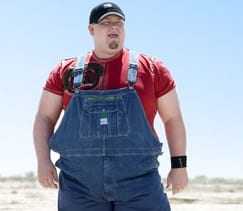
Trailer Choir's Big Vinny

Cauley Music Group, the company founded by Lane Caudell and Bob Crumley, has entered a joint publishing partnership with Cool Vibe Publishing. The deal covering current and future songwriters has Cauley purchasing a stake in Cool Vibe, and providing administrative services.

As part of the agreement covering current and future songwriters, Cauley adds tunesmiths Vencent Hickerson aka Trailer Choir’s “Big Vinny,” Isaac Rich, and Phoenix Mendoza to its staff. Rich has been writing since childhood and is a co-writer on Tyler Dickerson’s inaugural release, “Tell Your Sister I’m Single,” on Lyric Street Records. Phoenix Mendoza began his professional career with Warner Chappel in 2006 and has experience as a songwriter and performer.

The Crauley roster is made up of Blake Mevis, Danny Wells, Jennifer Hicks, Jamie Tate, Caudell and Crumley. Mevis, writer of“Fool Hearted Memory” and “Brokenheartsville,” oversees day to day operations for Cauley.

FCC Chairman Reveals Broadband Plan Elements To CMA

(L-R) CMA Board President Steve Buchanan; KKGO Senior Programmer Charlie Cook; FCC Chairman Julius Genachowski; CMA Board Chairman Steve Moore; EMI Music EVP/GM; and KILT Program Director Jeff Garrison.

The FCC’s long-awaited National Broadband Plan is due to be revealed next Tuesday (3/16) then presented to Congress the following day. FCC Chairman Julius Genachowski, nominated by President Barack Obama and sworn into office on June 29, 2009, met with Country Music Association Board members in Washington DC at the Capitol Building 3/10.

Genachowski has spent over 10 years working in the technology industry as an executive and entrepreneur. His bio describes him as “active at the intersection of social responsibility and the marketplace.” The following transcription has been edited for space, but gives a studied look inside the upcoming plan. Content owners will be pleased to see the Chairmanis a proponent of IP rights.

Edited text from Julius Genachowski while addressing the CMA
People who still think of country music as some niche industry apart from the American mainstream haven’t been paying attention for a long, long time. You’ve got Taylor Swift selling more albums than any artist in America last year and selling out Madison Square garden in one minute. American idol is perhaps the ultimate arbiter of popular culture in America and Carrie Underwood won on that show by an overwhelming margin and has gone on to sell more albums than any other winner. When Barack Obama accepted the Democratic nomination in Denver what song did they play? Brooks and Dunn’s “Only In America.” And the same song was played when President Bush accepted the Republican nomination in 2004. Now that is broad appeal.

Not to say that the country music industry doesn’t have unique issues and interests, but at the end of the day policies that will grow our economy will also help grow your industry. Actions that expand real opportunity are good for all Americans no matter what music you listen to. And few actions will do more to grow our economy and expand opportunity than building a world class broadband infrastructure here in the United States.

The plan that we will be announcing next week is intended to get broadband deployed to unserved households around the nation over the next several years through a reform of the Universal Services fund and other initiatives.

In addition to deployment—getting broadband to places that just don’t have it at all—another part of the problem is adoption, use of broadband. 42% of core country music fans who are not online also say they have no desire to remedy the situation according to recent research from the CMA. This dovetails with recent findings by the FCCs broadband team regarding non adopters. Relevance is a key factor cited by people who don’t subscribe to high speed Internet access. They just aren’t aware yet of the benefits, whether it’s music, employment opportunities or health information. They don’t see what the Internet can do for them or why it is a service they should subscribe to.

Yesterday the FCC together with the Knight Foundation co-hosted a summit on digital inclusion in Washington to focus on affordability and adoption issues around broadband. We announced several initiatives in our plan including a digital literacy corp and other efforts to help people get online and realize the benefits that broadband can bring.

The group Lady Antebellum owes its existence to the Internet. Members met on Myspace. Lady A, a younger group, draws 28% of its revenue from digital sales (closer to 10% for older artists), which says something about future direction. Country stars are harnessing the high tech tools of today to reach their audience. For example, country’s hottest star Taylor Swift has 2.8 million twitter followers. So what will the national broadband plan mean for this marketplace of artists, radio station owners, Internet entrepreneurs and music lovers?

Broadband is our generation’s major infrastructure challenge. It is like roads, canals, railroads and telephones were for previous generations. In terms of transformative power, broadband is most akin to the advent of electricity. Our electric grid was a platform for innovation that as much as anything helped propel the US to global economic leadership in the 20th century. Think about your industry without electricity.

Electricity brought the country an unending array of new appliances— refrigerators, radios, ovens, TVs and computers. Broadband brings innovation-fueled applications. Even modest increases in broadband adoption can yield hundreds of thousands of new jobs and economic activity.

As we pursue broadband networks that deliver broad opportunity and prosperity we believe in the complementary goals of preserving freedom on the Internet and protecting the intellectual property rights of creative artists and other content owners. The national broadband plan is not self-executed, it’s a strategic blueprint for action. It will require subsequent public processes to implement. And the delivery of the plan is not the end, but actually the beginning of the next stage of our process. As we proceed I want you all to know that my door is open and we welcome the input from everyone in this room as we tackle the challenges ahead.

As we roll out the next generation of the Internet we need to do it in a way that is both open and safe and secure for businesses especially for IP owners who need to get on the Internet in order to profit from the new technologies, but of course we have to do it in a way that doesn’t lead to all the content being stolen. And I think what you will see in the plan is an identification of some of those issues and a desire to work together to make sure our broadband infrastructure promotes broad opportunity, broad prosperity and we understand that protecting one of our precious resources, our intellectual property in this country, has to be a part of that.

With respect to deployment via wired and/or wireless access, the plan will be technologically neutral. We need to lead the world in both wired and wireless broadband. They each provide services the other can’t provide. If a loved one gets into an accident somewhere on a country road we want the EMT to have a broadband connection to the emergency room, it will save lives, but wired broadband can’t do that. At the same time, the amount of capacity that you can get in a fixed, wired location will always be more than wireless, so we need to promote investment in both. Even though there are physical constraints that will keep wireless speed below fiber, the speed that we will be able to get in the next few years with wireless will be faster than the wired speeds we have now. And so it is part of a plan to make sure that rural America gets broadband. We are hopeful, notwithstanding the differences, that wired and wireless will exert competitive pressure on each other which will be good for American consumers and businesses that want to compete on the Internet. We are certainly going to be speaking both about setting ambitious speed and deployment goals for the country around broadband which will chiefly be achieved through wires, but also by unleashing spectrum so that the U.S. can be the center of innovation in mobile broadband which represents a tremendous opportunity for the country over the next ten years.

UMPG Re-Signs Two Hit Songwriters

UMPG has recently re-signed Rivers Rutherford and Luke Laird to exclusive world-wide publishing agreements.

Rutherford, who originally signed with UMPG in 1996 has had 8 No. 1 hit songs, and has enjoyed numerous awards and nominations from ASCAP, Billboard, ACM and CMA. Rutherford received the ASCAP Song of the Year in 2002 for "Ain't Nothin' 'Bout You" recorded by Brooks & Dunn and was honored with ASCAP's Songwriter of the Year award in 2006. Rutherford's songs have been recorded by Keith Urban, Carrie Underwood, Tim McGraw, Gretchen Wilson, Reba McEntire, Gary Allan, Faith Hill, LeAnn Rimes, Blake Shelton, Deana Carter, Justin Moore, Darius Rucker, Trick Pony, and Montgomery Gentry. Pictured (L-R): UMPG Nashville’s President Pat Higdon and UMPG Nashville’s Senior Vice President-Creative Kent Earls; Seated: Rivers Rutherford; Photo by: Kay Williams

Luke Laird has had numerous No. 1 hits including “Last Name” and “So Small” both off Carrie Underwood’s "Carnival Ride" CD which has scanned over 3 million units to date. Laird also co-wrote four songs on Underwood’s third and most recent release "Play On," including her current single, “Temporary Home.” “Hillbilly Bone,” recorded by Blake Shelton and featuring Trace Adkins, is another current Laird penned single climbing the country charts. Tim McGraw, Rascal Flatts, Lee Ann Womack, Jessica Simpson, Holly Williams, Clay Walker, Jessica Harp, Julianne Hough, Little Big Town, Katharine McPhee, Joe Nichols and Laura Bell Bundy are just a few of the artists who have recently chosen to record Luke’s work. Pictured (l-r): UMPG Nashville’s Senior Vice President – Creative Kent Earls, UMPG Nashville’s President Pat Higdon. Seated: Luke Laird; Photo by: Kay Williams

Jim Halsey Releases “Starmaker”

After building powerhouse country music booking agency The Jim Halsey Company and selling it to the William Morris Agency, Jim Halsey founded the Jim Halsey Institute, which focuses on helping others pursue their dreams in the music industry. This month, the veteran booking agent will release Starmaker, a book that shares the secrets he learned while shepherding the careers of entertainment giants.

Published by Tate Publishing and Enterprises, Starmaker digs deep into the fundamentals: how to develop an act, how to get an agent, how to use the press to build your audience, how to play the biggest and best forums. His advice is designed to help readers find their place on the team—the position that provides the most successful and most fulfilling career.

Halsey has worked with The Oak Ridge Boys, Roy Clark, Hank Thompson, Reba McEntire, Wanda Jackson, Tammy Wynette, Rick Nelson, Roy Orbison, Dwight Yoakam, Clint Black, the Judds, Merle Haggard, Waylon Jennings, Lee Greenwood, and a host of others. Since 1990, The Jim Halsey Institute has been helping artists’ dreams come true everyday. Halsey, who makes his home near Tulsa, Oklahoma, continues to manage The Oak Ridge Boys.

Gordie Sampson Inks With Bug Music

Front (L-R): Bug Music CEO John Rudolph, and Gordie Sampson; Back (L-R): Sheri Jones, Jones & Co. Artist Management; Betsy Anthony, Bug Music Sr. Mngr, Creative/Writer Services

Bug Music Publishing has signed a new co-publishing deal with songwriter Gordie Sampson, the award winning co-writer of “Jesus, Take The Wheel” and other charttopping hits.

Sampson has had cuts by Carrie Underwood, Faith Hill, Keith Urban, Bon Jovi, and Martina McBride. Among his numerous national and international awards are the 2007 Grammy for Best Country Song, Juno Award for Songwriter of the Year, and ASCAP Song of the Year Award for “Jesus, Take The Wheel.” He is also a 2010 Grammy nominee for Best Engineered Album, Non-Classical for “Swan Feathers” (Leslie Mendelson), and was recently honored by ASCAP for Underwood’s “Just a Dream.”

Bug Music CEO John Rudolph announced the new agreement which includes Sampson’s future works. Previously, Bug had handled Sampson through his co-publishing agreement with Windswept.

Bug’s catalog has over 250,000 copyrights including the classics “What a Wonderful World,” “Fever” and “Happy Together,” as well as songs from Johnny Cash, Pete Townshend, Woody Guthrie, Stevie Ray Vaughan, Ashley Gorley (Carrie Underwood, Trace Atkins), Kara DioGuardi (Pink, Jonas Brothers, Celine Dion), Ryan Adams, and Kings of Leon.

Industry Toasts White-Hot Hit From Lambert/Hemby

Pictured are (l-r): Carnival Music’s Matthew Miller, BMI’s Jody Williams, Sony/ATV Music Publishing’s Troy Tomlinson, Miranda Lambert, producer Mike Wrucke, co-writer Natalie Hemby, producer Frank Liddell, ShopKeeper Management’s Marion Kraft, Columbia Nashville’s Jimmy Rector. Photo by Rick Diamond

Miranda Lambert is no stranger to critical acclaim and her recent third album is boosting her appeal to the commercial masses. BMI saluted Lambert’s first No. 1 hit “White Liar,” co-written with Natalie Hemby, with a 1940s-themed gala on Friday, Feb. 26. The single is the first chart-topper for both songwriters who celebrated with friends and industry guests donned in black and white ‘40s duds. A live swing band provided the musical backdrop at trendy downtown Nashville event space Cellar One.

Among the partygoers cheering Lambert and Hemby were team members pictured above, as well as Blake Shelton, Steve Moore, Tracy Gershon, Joey Lee, Henry Glascock, Katie Nelson, Jon Freeman, Christie King, Kay Clary, Michelle Goble and tons more.

Lambert’s albums have all debuted at the top of the charts, and followed with Platinum or Gold certification, but “White Liar” is her first radio charttopper, and one of the 11 songs she wrote or co-wrote for her latest album Revolution.

Carnival Music’s Hemby has also been on a hot streak. She has writing credits on recent albums from Lee Ann Womack (“The Bees”), Eli Young Band (“Mystery In The Making”) and the title track to Carrie Underwood’s latest, Play On.

“White Liar” was her first country single though, and she says she and Lambert wrote it in just 30 minutes. She also co-wrote three other songs for Revolution: “Only Prettier,” “Airstream Song” and “Virginia Bluebell.”

Del Casino Exposes Copyright ‘Gap’

Copyright Office Acknowledges Problem; to Extend ‘Notice of Inquiry’

[Press Release] – Intellectual Property and Copyright Law Attorney Casey Del Casino, of Adams and Reese, received notice from the U.S. Copyright Office that his observation regarding a “significant gap” in the termination rights provisions of the Copyright Act of 1976 will result in the office to issue a ‘Notice of Inquiry’ –  soliciting opinions and experiences of various authors and stakeholders to make recommendations to Congress about necessary amendments to the Copyright Act.

The gap deals with Section 203 and Section 304 of the Copyright Act and could affect many songwriters and publishers in Nashville, said Del Casino, as he released his findings in a recent presentation to the Nashville Bar Association Intellectual Property Section held Wednesday at the offices of the Nashville Songwriters Association International (NSAI).

Casey Del Casino

Del Casino, who has been having discussions with counsel for the Copyright Office about this “gap” for nearly a year now, also advised the NBA IP Section, along with NSAI’s Bart Herbison, Executive Director, and Debi Cochran, Legislative Director, that he had just received an email from counsel for the Copyright Office, advising that they are preparing a ‘Notice Of Inquiry’ with respect to this “gap” in the termination rights provisions of the Copyright Act for release in mid-March.

Under Section 203, the exclusive or nonexclusive grant of a transfer or license of copyright or any right under copyright, executed by the author on or after January 1, 1978, is subject to termination and Section 203 further provides that:

“Termination of the grant may be effected during a period of five years beginning at the end of 35 years from the date of execution of the grant; or if the grant covers the right of publication of the work, the period begins at the end of 35 years from the date of publication or at the end of 40 years from the date of execution of the grant, whichever term ends earlier.”

Section 304 states that:
“In the case of any copyright subsisting in either its first or renewal term on January 1, 1978 … the exclusive or nonexclusive grant of a transfer of the renewal copyright or any right under it, executed before January 1, 1978 … is subject to termination under the following conditions: (3) Termination of the grant may be effected at any time during a period of five years beginning at the end of 56 years from the date the copyright was originally secured, or beginning on January 1, 1978, whichever is later.”

Del Casino said the gap is best illustrated by the question of when would the transfer of a copyright in a musical composition, created and published in 1979, which was written pursuant to a long-term exclusive songwriting agreement, dated January 1, 1976, be terminable and under which provision of the Act – Section 203 or Section 304.

“There are real world consequences to the confusion outlined in these two sections. The termination provisions of the Act are silent with respect to the termination of a transfer of copyright in a work, which transfer of copyright purportedly occurred, prior to January 1, 1978, in a work created, subsequent to January 1, 1978,” said Del Casino.

Del Casino studied and researched the provisions for about a year, originally acting on behalf of a client, who had entered into a long-term exclusive songwriting agreement with a publisher in 1976 and later created musical compositions in 1979, pursuant to the agreement. Del Casino said notices of termination were served upon the successor-in-interest to the original publisher by the original songwriter in February 2008, pursuant to Section 203 of the Act for the musical compositions, created in 1979.

“In passing the termination rights provisions of both Section 203 and Section 304 of the Act, Congress expressed its belief of the need for a safeguard to protect authors against unrenunerative transfers due to both the unequal bargaining power of authors and the impossibility of determining a work’s value until it had been exploited,” said Del Casino. “In light of these goals, it is our belief that this gap between these Sections renders the termination of certain transfers of copyright in certain works impossible … Many publishers will appreciate more certainty as to whether terminations are effective, not only so they can respond accordingly to terminations served on them but so they can properly asses the value of their copyright portfolios.”

Del Casino is Special Counsel with the Special Business Services Practice Group in the Adams and Reese Nashville Music Row office. He has extensive experience in handling intellectual property and copyright law matters for members of the entertainment industry including artists, record companies, songwriters, publishers, managers, producers and executives.

Buenahora Joins ole

ole music publishing has announced the addition of Arthur Buenahora as the company’s Senior Creative Director, Nashville. A graduate of the University of Tennessee, Buenahora got his start in the music business in the tape room at Sony/ATV/Tree. He rose quickly through the ranks, placing over one hundred songs over five years, resulting in ten No. 1 singles and developing promising newcomers including Dierks Bentley, Miranda Lambert and a 14-year-old singer/songwriter by the name of Taylor Swift. In 2005, he joined Capitol Records Nashville as Senior Director of A&R where he continued his creative relationship with Bentley and Church. In 2008, he moved over to Universal Records South as VP of A&R.

“Arthur has had a huge impact on Nashville, signing Dierks Bentley and Taylor Swift among others, to their first publishing deals,” says ole Chief Creative Officer, Gilles Godard. “Having worked both in publishing and on the record side offers him a unique perspective on the ever-changing music business, and I look forward to adding him to our team at ole.”

“I’m really pumped about joining ole,” enthuses Buenahora. “They’re a growth company and I’m looking forward to helping maximize the potential of the catalog there and making sure that the songs get the best opportunity to shine.”

SESAC Honors Christian Songwriters

Christian songwriter/producer Jason Ingram was named SESAC’s 2009 Christian Songwriter of the Year at ceremonies held February 16 at the Loveless Barn outside of Nashville. peertunes Ltd/Grange Hill Music/Windsor Way Music were named SESAC’s 2009 Christian Publishers of the Year.

Other SESAC award winners included Steven Taylor, Ian Eskelin, Brian White, Cary Barlowe, Sarah Reeves and Michael Donehey of Tenth Avenue North.

SESAC's Associate Vice President, Writer/Publisher Relations Tim Fink; peertunes Ltd./Nashville Vice President Kevin Lamb; SESAC's Senior Vice President, Writer/Publisher Relations John Mullins; Jason Ingram; Grange Hill Music's President David Steunebrink and Grange Hill Music's Publishing Manager Lani Crump.