My Music Row Story: Spotify’s Tim Foisset

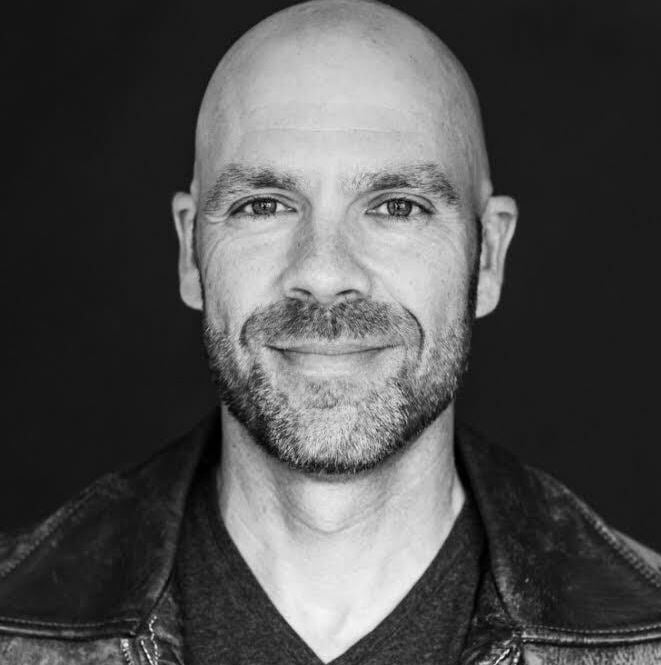
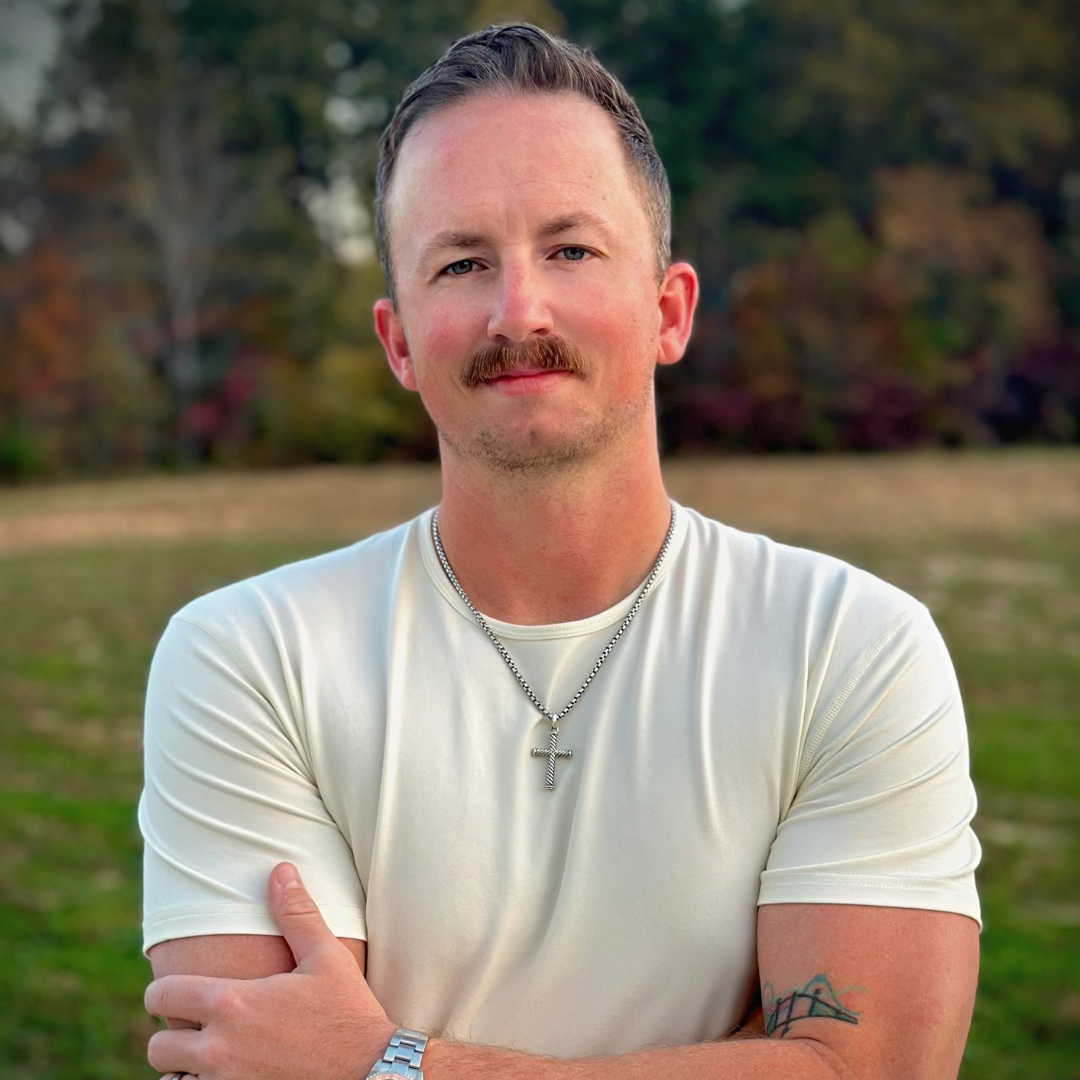
Tim Foisset

The “My Music Row Story” weekly column features notable members of the Nashville music industry selected by the MusicRow editorial team. These individuals serve in key roles that help advance and promote the success of our industry. This column spotlights the invaluable people that keep the wheels rolling and the music playing.

Tim Foisset joined Spotify as the Head of Label Partnerships, Nashville & Canada, in late 2023. His team recently spearheaded impactful new release campaigns for Post Malone, Jelly Roll, Lainey Wilson, Tucker Wetmore, Kelsea Ballerini and more.

Prior to Spotify, he spent 13 years at Warner Music Nashville, most recently as SVP Commercial Partnerships, where he worked with WMN’s partners in streaming, digital retail, physical retail, e-commerce and D2C to drive strategic marketing and revenue. He’s guided new release strategies for artists including Blake Shelton, Kenny Chesney, Dan + Shay, Bailey Zimmerman, Ashley McBryde, Gabby Barrett, Ingrid Andress, Cole Swindell, Cody Johnson and more.

Foisset began his career in NYC and moved to Nashville in 2011 to join Warner Music Nashville.

Photo: Courtesy of Foisset

MusicRow: Where did you grow up?

I grew up in a tiny town called Shushan, New York, right on the New York–Southern Vermont border. I could basically throw a baseball from my backyard into Vermont. It was rural. My parents had 30 acres off a dirt road in the woods. The town had more cows than people. I graduated high school with 42 kids in the same building where I’d gone to kindergarten.

What were you into? What was your childhood like?

We didn’t have cable TV, so my younger brother and I were outside a lot. I spent a lot of time by myself, but I was also one of those kids who fit in with every group. I played football and baseball, did theater, hung out with the snowboarders and the stoners. I was in all the school plays—I was Daddy Warbucks one year—bald cap and everything. I bounced around, in a good way.

Did you like music then?

I did. I was lucky to grow up near an independent radio station called WEQX. That place changed everything for me. My formative years were the late ’80s and early ’90s. WEQX introduced me to cool music—The Replacements, Talking Heads, Jane’s Addiction, Pixies. And being from Vermont, I’m legally obligated to be a huge fan of Phish. I saw my first Phish show in ’92 and have been a fan ever since.

Photo: Courtesy of Foisset

So when did you know this was the path?

Pretty much right away. In high school, I did some announcing for our girls’ basketball team. We had a state-level team, and I’d do the mic work. And being inspired by WEQX, radio felt like a realistic path. That was always the goal.

When I was visiting colleges, I only cared about the campus radio station and that led me to SUNY Geneseo in western New York. They had a professionally run station called WGSU. I started with overnight shifts on Friday and Saturday nights. While everyone was partying, I was on the air. I still have the tapes. By sophomore year, I was the music director. It wasn’t a freeform station, we programmed it. I was picking the music, talking to record labels. Back then, labels had college promo teams, so I was building relationships with reps at Capitol, Interscope—people probably not much older than me. By senior year, I was running the station. I managed the staff, hired DJs, programmed shows. That’s where I got the leadership bug.

We were six hours from New York City, and every fall we’d go to this festival called CMJ Music Marathon, kind of like New York’s version of SXSW. I’d meet the labels, crash on couches, and see insane shows. I saw Johnny Cash open for Wilco. I saw Sleater-Kinney and Nine Inch Nails in tiny clubs. It was peak post-Nirvana alternative boom. That music’s in my DNA.

Photo: Courtesy of Foisset

I’m sure the industry cared a lot about college radio then.

Totally. Every station was flipping to alternative formats. We were trying to stay even more cutting-edge, playing artists like Pavement, Built to Spill, Liz Phair, PJ Harvey and Superchunk. I remember getting a new R.E.M. single—“What’s the Frequency, Kenneth?”—on CD in the mail and putting it on the air right away before we even listened to it. It was exciting.

And I built my community there. Some of my best friends today came from those years. I met my partner Michele through the station. She and her roommate used to listen to my show.

What happened after college?

After graduation, I mailed cassette tapes to radio stations, trying to get a job. It didn’t work. Michele and I moved to New York City a few months after graduation, that was always the goal. I got a college promo job at an indie label. I was the one calling college radio stations, just like people used to call me.That kicked off my career in New York.

Tell me about that. What was it like?

We moved to Brooklyn in 1997, back when it was still cool. But it was a struggle. I was making $200 cash under the table for that job. I did it for about eight months, then landed an opportunity at Burly Bear Network—a TV network owned by Lorne Michaels’ Broadway Video. We produced shows for college students—a cooking show called Half Baked and a music news show called Shuffle. We’d send VHS tapes to college TV stations to air. I programmed the music video show, which meant I was still talking to record labels—just about videos this time. I’d put together video playlists and send them out.

This was right at the dawn of the internet, and we had the brilliant, slightly illegal idea to stream those videos on our website.

Photo: Courtesy of Foisset

So, you invented YouTube.

Basically, yeah. [Laughs] That kicked off my interest in the digital side of the music business.

How long did you do that?

A few years. Then I ended up at Fuse TV, which was also focused on music videos and was a competitor to MTV. I worked on their marketing team for shows like Steven’s Untitled Rock Show and Uranium. I spent the summer of 2004 on the Warped Tour as part of the team managing our on-the-ground activations.

I had some friends who worked at Razor & Tie. They were looking for someone to manage their new partnership with Apple—this brand-new thing called iTunes. I jumped. Right place, right time. Back then, we were mailing CDs to iTunes so they could ingest them. I was making sure our albums were featured in the early version of the iTunes store.

I did that job for about six years. And like every New Yorker, eventually we were ready to leave. After 14 years in the city, we moved to Nashville so I could manage the iTunes account for Warner—and also Word, their Christian division.

Photo: Courtesy of Foisset

How did you learn all of it in the early days?

I’ve always tried to be on the front end of new things. I cared about digital before most people did. At Razor & Tie, iTunes was such a small part of the business—most of it was still CDs, sold through 1-800 numbers and TV commercials. That gave me room to experiment, build relationships, fail, try again. Nobody cared yet. It was the same with streaming. At first, nobody was paying attention, which gave us time to figure things out.

Music used to come out Monday nights, and I’d stay up to make sure our albums dropped on iTunes at midnight. Sometimes it just didn’t show up—and there was nothing you could do. The systems weren’t built for it yet. That never happens now.

Do you have a favorite memory from that time?

One of our biggest brands at Razor & Tie was Kidz Bop. I was the first to suggest we put our music on Myspace, and I told my boss we should be on YouTube too. This was before Google owned it. I uploaded the Kidz Bop version of Kelly Clarkson’s “Since U Been Gone” to YouTube. I always tell people to go watch it—it’s the greatest Kidz Bop video of all time.

That felt exciting. We knew we were doing something new. Streaming videos was still a novelty.

Photo: Courtesy of Foisset

Tell me about moving to Nashville.

I knew nothing about Nashville. I found the Warner job through LinkedIn—managing the iTunes account for Warner and Word. I figured out the hiring manager was Jeremy Holley. Between LinkedIn and Facebook, we had 75 mutual contacts, so I messaged every one of them asking if they’d reach out on my behalf. Eventually Jeremy called. His first words were, “I hear I need to meet you.”

He happened to be in New York, so we met up. Once I got the offer, my partner, Michele—who’d never even been to Nashville—and I flew down the next day. We sat in a honky tonk on Broadway that doesn’t exist anymore and said, yeah, we could do this. I didn’t grow up on country music. I moved here in 2011, the same year The Voice started. I didn’t even know who Blake Shelton was.

I had to learn quickly. But I’d already worked on genres I didn’t personally love, like children’s music and heavy metal. To me, the fun part is figuring out how to connect with the people who do love it. Whether it’s a mom buying music for her kid or a metalhead with a crumpled $10 bill, the challenge is the same—how do you reach that person? That same mindset applied to country and Christian music, and it really fueled me.

Photo: Courtesy of Foisset

Take me through that chapter at Warner.

I was at Warner for 13 years. The first five or so, I was working on things nobody really cared about. Spotify launched about a year after I started, and I became the unofficial Spotify person, trying to get our artists and team to care. I convinced Dan + Shay to release their debut album two weeks early on Spotify. That would never happen now, but we were just trying things. Back then, people only cared about iTunes chart position.

Eventually, streaming became a big enough revenue source that everything shifted. One day, suddenly John Esposito knew my name—and then I was in his office every day. When streaming passed 50% of our revenue, priorities changed. And again, I was lucky to be in the right place. Kristen Williams really fought for me and helped me build a team. By the time I left, I’d built and rebuilt two great teams. Most of them went on to even bigger jobs. I’m really proud of that.

Photo: Courtesy of Foisset

Then Spotify came calling.

Spotify approached me when Brittany Schaffer left during CRS in 2023. It was a long process. I wasn’t sure at first because I really loved Warner, but this was the one job I would leave for. Warner was supportive, and I joined Spotify in November 2023. After 13 years, I wanted new problems to solve, new people to meet. And it’s been exactly that—new fire drills every day, in a good way. Even a year and a half in, things still come up I’ve never dealt with. I’m using different parts of my brain. I love that.

The team was in transition when I joined, but I really connected with them. We built a culture based on teamwork. That’s the best part—watching them work together to crush an event like [Spotify House], or the Morgan Wallen or Jelly Roll releases. That’s what lights me up. I’ve learned this later in my career, but what I really love is leading people. Helping them succeed, clearing a path, helping them prioritize. And when they win, shouting it from the rooftops so they get the credit they deserve. That’s my favorite part.

Photo: Courtesy of Foisset

What are you most proud of when you look back?

That I was right… multiple times! [Laughs] But seriously, I’m proud of recognizing the moment, showing up and taking the swing.

What’s the best advice you’ve ever gotten?

Ben Kline once told me: “Report the news.” Meaning—just be honest. If something’s on fire, say it. If something’s going great, say that too.

One thing I always tell my team is: stay steady. Don’t get too high, don’t get too low. We experience this every Friday. One person’s thrilled, the next is furious. You have to stay even. That’s something I’ve really learned with time.

JUST IN: Lost Highway Taps Casey Thomas & Vincent Masino

Casey Thomas, Vincent Masino

Lost Highway has named two members of its growing Nashville-based team. Casey Thomas has been appointed to Vice President of Marketing and Vincent Masino has been named Manager, Audience Development and Content Strategy at the label.

Thomas joins Lost Highway after a nearly seven-year tenure at Monument Records where she served as Vice President of Marketing and Commercial Partnerships. Prior to that she worked in the development department of the Country Music Hall of Fame. She has a master’s degree from Boston College.

Masino joins Lost Highway from Universal Music Group’s Nashville headquarters where he was the digital content specialist for the past two years. He started his career as a freelance specialist working for labels and in artist management. He is a graduate of University of North Georgia with a bachelor’s degree in business administration in marketing with an emphasis on digital media.

“Casey has built a reputation in Nashville as an innovative music marketer with a deep understanding of artistic vision and how to effectively bring that vision to life,” shares Robert Knotts, Co-Head of Lost Highway. “Similarly, Vinny has a unique skillset in connecting an artist’s vision with a receptive audience across an ever-changing digital landscape. Together they will play an integral role in serving Lost Highway’s longstanding vision as a springboard for music’s most important and culture defining artists.”

Originally founded in 2000, Lost Highway was reactivated earlier this year, spearheaded by music business veterans Knotts and Jake Gear. Lost Highway announced last month that Grammy winner Kacey Musgraves had joined the roster, reuniting her with the label that first signed her in 2011.

Joe Fox Jumps Into Top 20 On MusicRow Top Songwriter Chart

Joe Fox

Joe Fox has entered the top 20 on the MusicRow Top Songwriter Chart. George Birge’s “It Won’t Be Long,” Josh Ross’ “Single Again” and Morgan Wallen’s “Skoal, Chevy, and Browning” all push the songwriter to No. 17 this week.

Charlie Handsome remains in the No. 1 spot with “Don’t We,” “Eyes Are Closed,” “Falling Apart,” “Genesis,” “I Ain’t Comin’ Back,” “I Got Better,” “I’m The Problem,” “Interlude,” “Just In Case,” “Kick Myself,” “Kiss Her In Front Of You,” “Love Somebody,” “Miami,” “Missing,” “Smile,” “Superman,” “TN,” “What I Want” and “Where’d That Girl Go.” Wallen stays at No. 2 with “Don’t We,” “Eyes Are Closed,” “Falling Apart,” “Genesis,” “I Ain’t Comin’ Back,” “I Got Better,” “I’m The Problem,” “Interlude,” “Just In Case,” “Kick Myself,” “Love Somebody,” “Miami,” “Missing,” “Smile,” “Superman,” “TN,” “What I Want” and “Where’d That Girl Go.”

Riley Green (No. 3), Blake Pendergrass (No. 4) and John Byron (No. 5) round out this week’s top five.

The weekly MusicRow Top Songwriter Chart uses algorithms based upon song activity according to airplay, digital download track sales and streams. This unique and exclusive addition to the MusicRow portfolio is the only songwriter chart of its kind.

Click here to view the full MusicRow Top Songwriter Chart.

Kenny Chesney To Return To Sphere In 2026 After Wrapping 15-Show Run

Kenny Chesney performs during his residency at Sphere Las Vegas. Photo: Allister Ann

Kenny Chesney wrapped his Sphere residency in Las Vegas over the weekend by announcing he’ll return to the venue in 2026 for another set of shows for his No Shoes Nation.

“I got a little carried away,” Chesney admitted after one of the shows, “but after all the guests, all the songs we hadn’t planned on, all the people who came from all over, I just didn’t want to keep it a secret. I knew we were coming back, and if No Shoes Nation had half as much fun as we did, I wanted them to know we’d see them right here next summer. What could be better?”

The last two performances of the 15-show residency also included more surprises, as songwriter/sometime Coral Reefer and dear friend Mac McAnally joined Chesney onstage during the special shows. The duo delivered their No. 1 duet “Down The Road,” originally recorded on McAnally’s Simple Life, then treated the crowd to a rendition of Shenandoah’s “Two Dozen Roses” which was penned by McAnally. After talking about performing with James Taylor to singing their friend Jimmy Buffett into the Rock & Roll Hall of Fame, and mentioning the presence of Buffett’s sister Lucy on Saturday night, the pair reprised the classic “Come Monday” for the eager crowd.

“When we said we were taking No Shoes Nation into another dimension, no one truly knew what that meant,” admits Chesney about the whole Sphere experience. “Now that we do, we can’t wait to come back and do it all over again.”

Details for next year’s shows will be revealed in a few weeks.

JUST IN: Dolly Parton Headed To Las Vegas For Special Limited Engagement

Dolly Parton has announced a brand-new limited-run engagement at The Colosseum at Caesars Palace, with six performances running from Dec. 4 through 13, 2025 during National Finals Rodeo.

“Dolly: Live In Las Vegas” will bring the Country and Rock & Roll Hall of Famer back to Vegas for her first extended run in 32 years. The shows will weave together seven decades of classic hits and fan favorites from her catalog, including “9 to 5,” “Jolene,” “Coat of Many Colors,” “I Will Always Love You” and more.

Parton shares, “To say I’m excited would be an understatement. I haven’t worked Vegas in years and I’ve always loved singing there. I’m looking so forward to the shows in The Colosseum at Caesars and I hope you are as well. See you there!”

Tickets for the six shows go on sale starting Wednesday, June 25 at 10 a.m. PT.

MusicRow Weekly (News, Charts, More…)

The latest edition of The MusicRow Weekly brings a flurry of industry achievements, strategic shifts and milestone celebrations. Click here to see the full edition.

Big Loud Records and Mercury Records have jointly named Wes Donehower as Senior Vice President of A&R.

Songwriters took center stage in New York last Thursday (June 12), as Ashley Gorley was formally inducted into the Songwriters Hall of Fame. Gorley, one of country music’s most prolific hitmakers, joined an illustrious class that included The Doobie BrothersTom Johnston, Michael McDonald and Patrick Simmons, George Clinton, Rodney “Darkchild” Jerkins, Mike Love of The Beach Boys, and Tony Macaulay. The evening also honored Stephen Schwartz with the Johnny Mercer Award and Gracie Abrams with the Hal David Starlight Award.

The Country Music Hall of Fame and Museum has announced a special exhibit honoring Lainey Wilson. Opening July 18 and running through June 2026, the display will feature a curated selection of Wilson’s personal and professional memorabilia, including her childhood saddle, teenage journal, and iconic outfits from red carpets and milestone performances, such as her Grand Ole Opry debut.

Luke Combs has earned 34 new RIAA certifications, bringing his career total to more than 155.5 million certified units. This achievement places Combs second only to Garth Brooks in country music RIAA certifications.

Triple Tigers Records is doubling down on its promotional efforts with the launch of a second promotion team, Akando Music. Industry veteran JC Coffey has been appointed Senior Director of National Promotion at Akando and will lead the team’s day-to-day operations. Raffaella Braun, VP of Promotion at Triple Tigers, and Co-President Kevin Herring will provide executive oversight.

Kate Bowling has joined The Core Entertainment as Director of Creative, bringing her expertise to the growing company’s artist roster and creative direction.

Musicians On Call (MOC) has announced the addition of nine new team members as it scales its nationwide footprint. New hires include Hailey Gilleland (Director of Development), Kathryn Bennett (Director of Individual Giving), Katie Trent (Development Coordinator), Danys Coronel (Digital Content Manager), Christopher Anthony (PR & Talent Coordinator), Emiley Roye (Northeast Program Coordinator), Abby Tannler and Ella Hunt (Program Coordinators) and Delaney McBride (Executive Assistant).

On the publishing front, Liz Rose Music and Sheltered Music Publishing have partnered to sign Eric Paslay. Sydney Quiseng has inked a worldwide agreement with BMG, while Ryan Kohn has signed a global publishing deal with Concord Music Publishing in partnership with John Dennis’ InDent Music, marking another strong collaboration in the songwriting and publishing space.

Brothers Ocie and Wes Crowe, better known as The Crowe Boys, reached a career high on June 10 with their debut performance on the Grand Ole Opry stage.

Meanwhile, Go West Creative has promoted Jeremy Vaughn to Director of Entertainment & Experiential, expanding his leadership role within the company’s growing live entertainment and brand experience initiatives.

This week also features a look at 100 Years of Grand Ole Opry, a new hardcover book offers fans and industry insiders a deeper understanding of the institution that helped shape country music itself with Craig Shelburne. Grammy-nominated songwriter Sandy Knox also talks about Weighting: My Life If It Were A Musical, a first-of-its-kind audiobook musical set for release June 24.

In addition, the latest MusicRow CountryBreakout Radio Chart is included. Nate Smith takes the No. 1 spot with “Fix What You Didn’t Break.” Explore more chart data here.

The MusicRow Weekly is delivered every Friday, featuring Nashville’s top music industry news, exclusive interviews, song reviews, radio and songwriter charts and more. Sign up for free here.

Nate Smith Claims No. 1 Spot On MusicRow Radio Chart

Nate Smith lands at No. 1 position on the MusicRow CountryBreakout Radio Chart with his song, “Fix What You Didn’t Break.”

The song appears on Smith’s second studio album California Gold, and was written by Smith, Ashley Gorley, Taylor Phillips and Lindsay Rimes.

After a string of festivals and fairs through July, Smith will join Jason Aldean as direct support on the star’s 2025 “Full Throttle Tour.”

“Fix What You Didn’t Break” currently sits at No. 9 on the Billboard Country Airplay chart and No. 7 on the Mediabase chart.

Click here to view the latest edition of the MusicRow Weekly containing the MusicRow CountryBreakout Radio Chart.

A Century On The Stage: New Book ‘100 Years Of Grand Ole Opry’ Offers Intimate Look At The Institution [Interview]

Craig Shelburne

As the Grand Ole Opry celebrates its centennial, a new hardcover book offers fans and industry insiders a deeper understanding of the institution that helped shape country music itself. 100 Years of Grand Ole Opry, released by Abrams Books this spring, is a visually rich, narrative-driven look at the venue’s remarkable history, crafted through archival materials, exclusive interviews and untold stories spanning generations.

Spearheaded by longtime music journalist Craig Shelburne, the book captures the Opry’s evolution from a live radio experiment in 1925 to a modern-day cultural touchstone. “The Opry itself is the main character,” Shelburne tells MusicRow. “Like a movie, we found the plot twists and built the story around them.”

Shelburne—whose writing credits include CMT.com, The Bluegrass Situation and MusicRow—first approached the Opry team about the project in 2017, knowing the 100-year milestone was on the horizon. After several years of conversations, the concept took shape and was officially greenlit in 2023. From there, he worked closely with Opry historian Brenda Colladay and a full team to bring the idea to life.

The book’s structure follows key eras across the century, organized loosely by decade. Shelburne and his team leaned into the idea that each ten-year span brought pivotal changes, whether in membership, sound, technology or audience engagement.

“We started with 1925 to 1940 and closed with 2019 to 2025, because so much has happened in just the last six years,” he explains. “We wanted to give space to the newer members and moments that are shaping the next chapter.”

Throughout the process, the project remained deeply collaborative. The Opry opened its archives, giving access to rare photos, artifacts and memorabilia. Their talent division helped connect Shelburne with dozens of current and former members. The result is a layered portrait of the Opry’s legacy told through multiple voices, perspectives and memories.

“I didn’t want it to be a quick, ‘I love the Opry’ kind of thing,” Shelburne says. “I wanted to ask, ‘How did you get here? Why does this place matter to you?’ A lot of people got emotional. They were thinking about the history, but also realizing they’re part of it now.”

From those conversations came vivid stories—some moving, others just plain fun. Reba McEntire’s memories of attending as a child, and Marty Stuart’s tale of arriving at the Ryman by bus as a kid from Mississippi, wide-eyed and alone, ready to join Lester Flatt’s band on the Opry stage.

Shelburne also highlights moments of resilience, like the 2010 Nashville flood. “At one point, they took the podium from the flooded Opry House and brought it to War Memorial Auditorium, where the Opry had performed in the ’40s,” he says. “That night was historic. They hadn’t been back there in decades.”

What’s remained consistent across the years, he notes, is the focus on quality and community. “You really have to be good to play the Opry,” Shelburne says. “They don’t hand that out. And they’ve kept it going nearly every Saturday night for 100 years. That kind of consistency is rare.”

Still, the book doesn’t ignore how the Opry has changed. One shift Shelburne sees as promising is the renewed investment in younger artists and broader genres. Where the mid-century cast was tight-knit and member-heavy, today’s Opry features more balance between members and guests, bringing in Americana acts, comedians, Christian artists and newcomers making their debut.

“They make a big deal out of those debuts now,” he says. “Younger artists get really excited, and they bring their fans into it, too. That’s the ticket to the future.”

The Opry’s livestreams during the pandemic introduced the show to new, international audiences for the first time. And yet, for those who grew up with it—like Shelburne, who watched weekly broadcasts on TNN with his grandparents—it remains deeply personal.

“I didn’t realize at the time that the Opry was my first real resource for understanding country music history,” he says. “You’re discovering a new generation while learning the roots. And now with this book, someone can pick it up and see how we got here.”

100 Years of Grand Ole Opry is as much a collector’s item as it is a storytelling vessel. Richly illustrated and carefully written, it preserves the past while offering a window into what’s next. For readers steeped in the business or simply fans of the format, it’s an invitation to walk through a century’s worth of moments, on stage and behind the curtain.

For Shelburne, the experience has also been full circle. “Once I started working on the book, I was out there all the time—doing interviews, research, you name it. Seeing it that often made me realize what a massive operation it is,” he says. “They really go the extra mile. Nothing is done halfway. It’s a special place.”

BREAKING: Big Loud & Mercury Records Name Wes Donehower As Sr. VP, A&R

Wes Donehower. Photo: Toby Tenenbaum

Big Loud Records and Mercury Records have named Wes Donehower Senior Vice President of A&R. The dual role originated from the successful strategic alliance between Big Loud Records and Mercury Records, who have worked closely together across artists like Big Loud’s Morgan Wallen, and as part of Big Loud Records’ wider distribution deal with Mercury Records.

“Wes has an exceptional track record of discovering and signing game-changing talent, and he’s firmly established himself as one of the industry’s top A&R executives,” Big Loud’s Partner and CEO Seth England shares. “I respect his work ethic, his creative instincts, and the impact he makes on the culture. We’re honored to welcome him into the Big Loud family through our partnership with Mercury.”

Mercury Records Chairman and CEO Tyler Arnold adds, “Wes is an incredible A&R executive who has an innate ability to work across every genre. He has great instincts, but more impressively has a gift of building long lasting and genuine relationships with artists. We’ve shared a lot of great moments already, and I’m so excited to team up with Wes for many years to come.”

Most recently, Donehower served as Senior Vice President, A&R at Republic Records where he spearheaded the deal to bring Jelly Roll to the label in partnership with BMG and Broken Bow Records. He also led A&R for Republic on Jelly’s latest album Beautifully Broken, which bowed at No. 1 on the Billboard 200, boasted the RIAA Platinum-certified “I Am Not Okay” and garnered two No. 1’s at country radio. Prior, he worked in A&R at Columbia Records where he signed everyone from Lil Nas X and Russ to Koe Wetzel, and Quinn XCII.

Donehower shares, “Tyler and Seth have set a standard for our business with their dynamic and artist centric approach. It’s a privilege to work with both the Mercury and Big Loud teams. I’m looking forward to continuing to build new relationships in country music while fostering my longstanding partnerships across all genres.”

Acclaimed Composer Stacy Widelitz Passes

Stacy Widelitz

Stacy Widelitz, a celebrated composer, songwriter, photographer and arts advocate, passed away Tuesday morning (June 17) following a recent diagnosis of pancreatic cancer that had metastasized. He was 69.

Widelitz first rose to prominence with the song “She’s Like the Wind,” co-written with his friend Patrick Swayze and featured on the Dirty Dancing soundtrack. The track reached No. 3 on the Billboard Hot 100 and No. 1 on the Adult Contemporary chart, contributing to the massive commercial success of the film’s soundtrack.

Over the course of his career, Widelitz composed music for feature films and more than 20 made-for-TV movies, and was nominated for an Emmy for his work on ABC’s World of Discovery. He also penned the end-title song for Disney’s Pocahontas II.

A native of Plainview, New York, Widelitz spent nearly two decades in Los Angeles before relocating to Nashville in 2000. In Music City, he continued his work in music and became deeply engaged in the broader creative and civic community.

He served on the boards of numerous local organizations, including the Nashville Opera, Nashville Film Festival, Alias Chamber Ensemble, and Dismas House, holding the role of President at several. He was also a longtime member and Past President of the Leadership Music Board of Directors. From 2016 to 2020, he served as a City Commissioner in Oak Hill, Tennessee.

In recent years, Widelitz explored a new creative path through black-and-white street photography, earning multiple awards and exhibiting his work at Chauvet Arts in Nashville. His photography took him around the world, including to Italy, Cuba, Paris, London, Berlin, Barcelona and across the United States.

In a note Widelitz wrote a few days before his death, he said: “When I look at my life, I’ve been on an incredibly lucky streak. I pursued my dreams of a career in music from an early age, and made a success of them. I even found further satisfaction and success with new and unexpected pursuits, such as photography and civic leadership. It’s been gratifying, fascinating, at times challenging and infuriating, but mostly it’s been a whole lot of fun. I’m not torturing myself with ‘shoulda” or “coulda.’ As Edith Piaf sang, ‘Non, Je Ne Regrette Rien’ – I regret nothing.”

A Celebration of Life has been set for Wednesday, Aug. 20 at the CMA Theater (222 Rep. John Lewis Way S., Nashville, TN 37203). Doors will open at 5:30 p.m. central, with the program beginning at 6:00 p.m. A cocktail reception will follow in the Grand Foyer at 7:00 p.m.