Opry Star Stu Phillips Passes

Stu Phillips

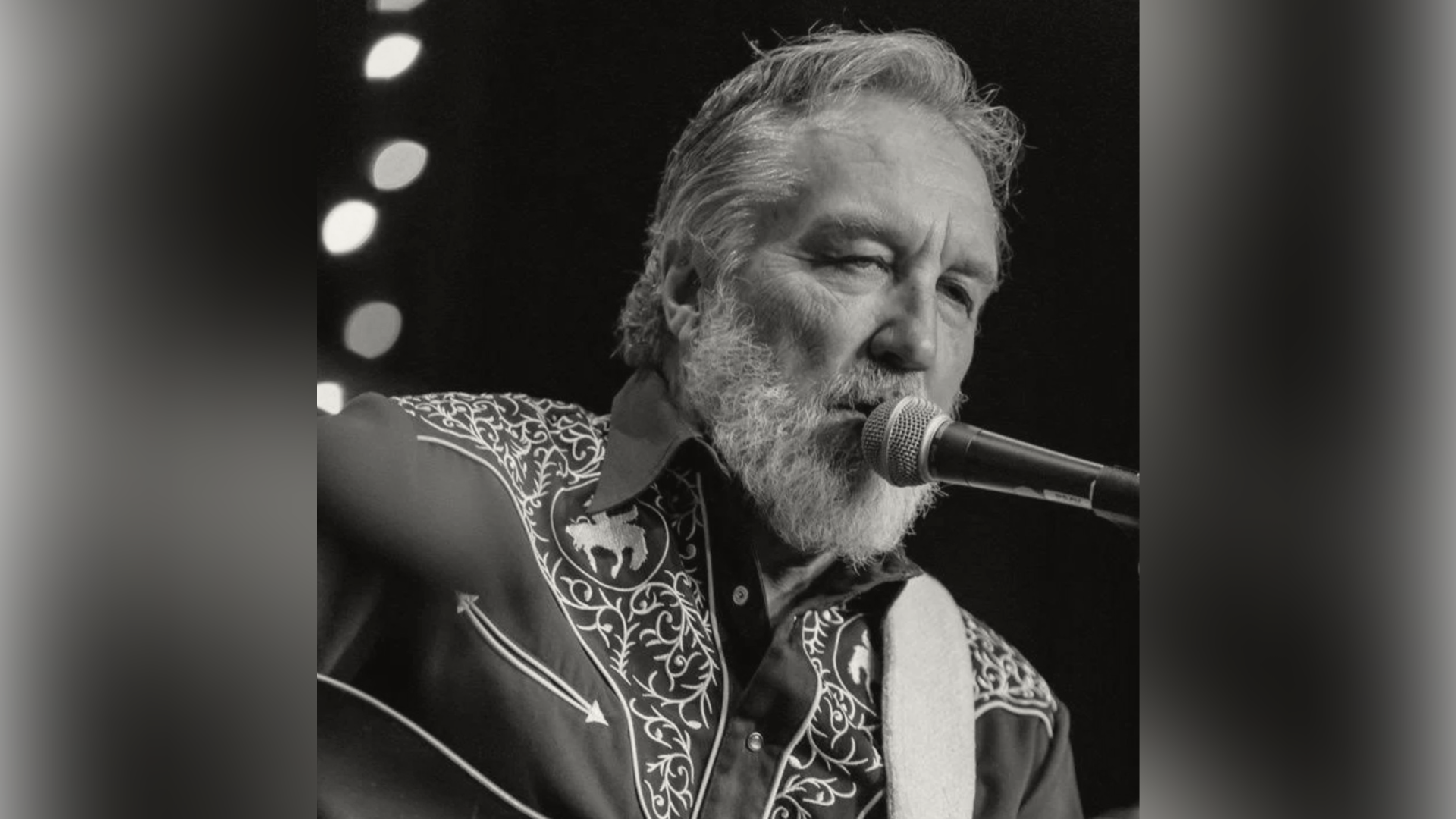
Longtime Grand Ole Opry cast member Stu Phillips died on Dec. 25 at age 92.

A mellow-voiced crooner, Phillips was a member of the Canadian Country Music Hall of Fame who hosted national radio and television shows in his homeland. He placed eight singles on the U.S. country charts in the 1960s, including the 1967 top-20 hits “Vin Rose” and “Juanita Jones.”

Stuart John Tristram Phillips was born in Quebec, but rose to fame in the western province of Alberta, in the foothills of the Canadian Rockies. He was a DJ on CFRN radio with a morning show titled “Stu for Breakfast.” Phillips graduated to the “Town and Country” afternoon program and a Friday-night broadcast titled “Cowtown Jamboree.”

Moving to television, he starred on the national, Saturday-night CBC program Red River Jamboree in 1961-65. After achieving several Canadian hits, he moved to Nashville in 1965. Chet Atkins signed him to RCA and produced his records. After making 20+ guest appearances on its stage, Stu Phillips joined the Opry’s cast in 1967.

Known as “The Western Gentleman” and “The Traveling Balladeer,” he starred on the syndicated TV series Music Place in the 1970s. He was popular overseas and toured in Europe, Africa, Asia and the Middle East. He and his wife Aldona owned and operated the Long Hollow Winery in Goodlettsville. Son Joel Phillips maintains that business today.

Stu Phillips earned a divinity degree from the University of the South in Sewanee, Tennessee. His Opry appearances became less frequent in the 1980s when he became a minister in the Episcopal Church.

More than 30 years after he joined the Opry’s cast, Phillips became a U.S. citizen in 1998. He and Adona celebrated the event on the Opry stage during the Fourth of July weekend that year.

At the time of his death, Stu Phillips was the Grand Ole Opry’s senior cast member. Funeral arrangements have not been announced.

Revered BMI Exec Roger Sovine Passes

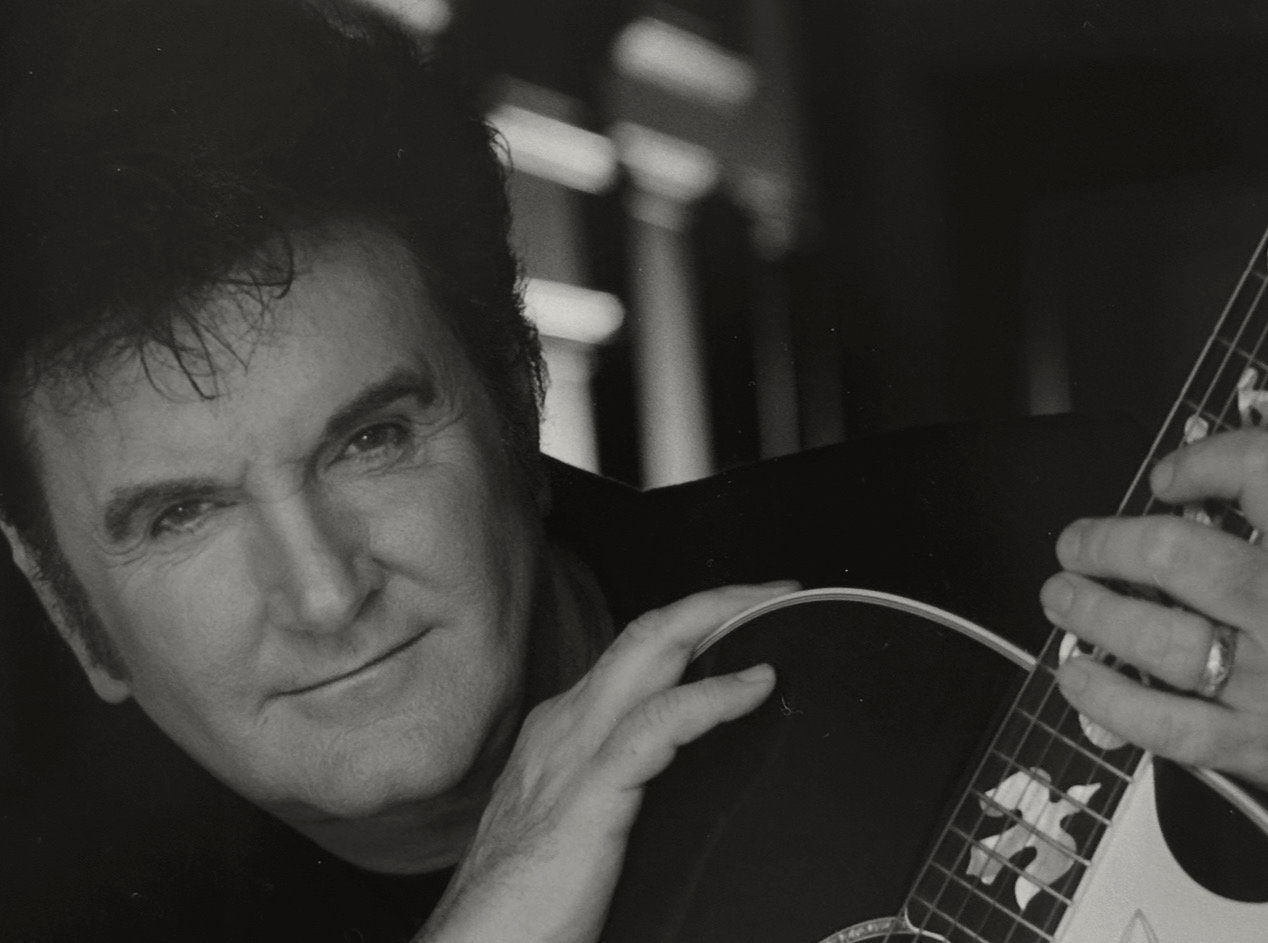
Former BMI Nashville executive Roger Sovine has died at age 82.

The widely loved Music Row mainstay bolstered the careers of hundreds of Nashville songwriters and served as a volunteer leader for dozens of non-profits. In recognition of his years of service to the music community, he was given the Recording Academy’s Governors Award in 2000.

Born in West Virginia, he was the son of entertainer Woodrow Wilson “Red” Sovine (1917-1980). Roger’s father performed on radio in Wheeling and Charleston before relocating to Shreveport to perform on KWKH’s Louisiana Hayride, where he was mentored by Hank Williams. Red Sovine also rose to prominence on WSFA in Montgomery, Alabama.

The family moved to Nashville in 1955, when Roger was 12. His father joined the cast of the Grand Ole Opry and led Webb Pierce’s Wandering Boys band. Red recorded for MGM, Decca, RCA, Starday, Chart, and other country labels.

Red Sovine scored big hits via duets with Goldie Hill (1955’s “Are You Mine”) and Pierce (1956’s “Why Baby Why” and “Little Rosa”), and sang the solo successes “If Jesus Came to Your House” (1956), “Hold Everything” (1956) and “Dream House for Sale” (1964). He achieved his biggest hits with the trucker-themed recitations “Giddyup Go” (1965), “Phantom 309” (1967) and “Teddy Bear” (1976). Between 1955 and 1980, Red Sovine placed 31 singles on the country charts. In 1963, he became an early mentor to emerging artist Charley Pride.

Roger Sovine initially followed in his father’s footsteps. After graduating from Father Ryan High School and serving in the U.S. Marines, he recorded a string of singles for Imperial and Barnaby in the 1960s and early 1970s. He charted with his self-penned “Cullman, Alabama” and “Little Bitty Nitty Gritty Dirt Town” in 1968-69.

During this same era, Roger Sovine began working in music publishing. He was on staff at Cedarwood Music beginning in 1965. His Cedarwood songs were recorded by Mel Tillis, Carl Perkins, Brent Burns, and others. He also worked at Show-Biz Publishing and South Publishing Productions.

He joined BMI in 1972 as Assistant Vice President of Writer Relations, championing the works of Dolly Parton, Kris Kristofferson, Willie Nelson and other country songwriting greats. He returned to song publishing in 1979 as an executive at the Welk Music Group. He was named Vice President of Tree International in 1982.

Roger Sovine came back to BMI in 1985 and assumed the title of Vice President of Writer/Publisher Relations. During the 1980s and 1990s, he was one of the Music Row community’s most vibrant and influential personalities. Noted for his hail-fellow-well-met demeanor, a twinkle in his eye, unpretentious approach, and good-natured irreverence, he was a touchstone of sanity as the Nashville music industry expanded dramatically.

He championed such songwriters as Vince Gill, Marty Stuart, Brooks & Dunn, Waylon Jennings, and Dwight Yoakam. In the case of Keith Urban, as well as many of the others, he believed in talent long before fame arrived. Roger lent his guidance to unknowns as well as hit makers.

His impact extended beyond the boundaries of Music Row. He championed fairness for songwriters when political or economic forces threatened their livelihoods. He served as a mentor to many younger executives and professionals in the industry. Throughout his career, he was a gracious steward of Nashville’s culture as the city transitioned and expanded into becoming a world-renowned entertainment center.

Roger Sovine was the four-time president of the Nashville chapter of the Recording Academy. He served as the president and the chairman of the board of the Country Music Association. He was chairman of the Copyright Society of the South. He was a trustee of the Country Music Foundation/Hall of Fame and a national trustee of NARAS. He was a commissioner of the Tennessee Film, Entertainment and Music Commission. He was executive vice president of R.O.P.E. (the Reunion of Professional Entertainers) and an organizer of Leadership Music.

His public service also included becoming an executive committee member of of the T.J. Martel Foundation of Cancer, Leukemia and AIDS research. He held similar volunteer leadership roles at MusiCares and at the United Way of Middle Tennessee.

Roger Sovine retired from BMI in 2001 and moved to Gulf Shores, Alabama. In retirement, he enjoyed fishing, golf, travel and playing guitar with his grandchildren. Back in Music City, he became an advocate and supporter of the Nashville Classical West Charter School.

He passed away peacefully at Alive Hospice on Dec. 23, surrounded by his loving family. Roger Sovine is survived by Shirley Sovine, his wife of 62 years, as well as by son Jim Sovine and daughter Amy Sovine, plus eight grandchildren and two great-grandchildren.

A Celebration of Life will be held on Monday, Jan. 5, 2026 at 3:00 p.m. at BMI (10 Music Square East) with a reception to follow.

In lieu of flowers, memorial donations can be made to Alive Hospice (1718 Patterson Street, Nashville, TN 37203). Also, an arts endowment will be established in Roger’s honor at the Nashville Classical West Charter School (Sovine Endowment: 1015 Davidson Drive, Nashville, TN 37205).

Legendary Texas Singer-Songwriter Joe Ely Dies At 78

Joe Ely performs at a Songwriter Session at the Country Music Hall of Fame and Museum in 2018. Photo: Courtesy of the Country Music Hall of Fame and Museum

Texas troubadour Joe Ely passed away yesterday (Dec. 15) from complications of Lewy Body Dementia, Parkinson’s and pneumonia at his home in Taos, New Mexico. He was 78.

Ely was born Feb. 9, 1947 in Amarillo, Texas. In the early ’70s, he founded country rock unit The Flatlanders with fellow West Texas musicians Jimmie Dale Gilmore and Butch Hancock, and recorded an album together that would set the tone for Ely’s storied 50-year career to follow. After the group of talents disbanded, Ely later signed with MCA Records in the 1970s and spent more than five decades recording solo albums and performing on a myriad of prestigious stages around the world.

The alt-country artist’s prolific songwriting skills even reached across the Pond in the late ’70s, catching the ear of members of rockers The Clash in London, who would later have him add backing vocals to their iconic hit, “Should I Stay Or Should I Go?” and join them on tour. Decades into his career, Ely also found some kindred spirits in the members of Los Super Seven, which included Freddy Fender and Flaco Jiménez, and would perform with the band, taking home a Grammy in 1999 for Best Mexican-American Album.

Ely reconnected with The Flatlanders in the early 2000s, recording new material and touring the country. Throughout the course of his legendary career he performed with a vast Who’s Who of artists, including The Rolling Stones, Linda Ronstadt, Bruce Springsteen, The Chieftains, and many more. Ely was also an author and released several books, including Bonfire of Roadmaps, as well as 2014’s Reverb • An Odyssey.

In 2022, he was inducted into the Austin City Limits Hall of Fame. Ely is survived by his wife Sharon and daughter Marie, who were by his side when he passed.

“Joe Ely performed American roots music with the fervor of a true believer who knew music could transport souls,” says Kyle Young, CEO of the Country Music Hall of Fame and Museum. “His distinctive musical style could only have emerged from Texas, with its southwestern blend of honky-tonk, rock & roll, roadhouse blues, western swing, and conjunto. He began his career in the Flatlanders, with fellow Lubbock natives Jimmie Dale Gilmore and Butch Hancock, and he would mix their songs with his through 50 years of critically acclaimed recordings. But his true measure came through in the dynamic intensity of his powerhouse live performances, where he could stand his ground aside fellow zealots Bruce Springsteen who recorded duets with Ely, and the Stones and the Clash, who took Ely on tour as an opening act.”

Mavericks Frontman Raul Malo Dies Following Battle With Cancer

Raul Malo. Photo: Michael Weintrob

Raul Malo, the unmistakable voice and charismatic frontman of the Grammy-winning band The Mavericks, has passed away after a battle with cancer. He was 60.

The son of Cuban parents who came to the U.S. in search of a better life, Malo was born in Miami in 1965. He founded The Mavericks with drummer Paul Deakin and bassist Robert Reynolds in 1989, and the band’s genre-defying gumbo of rock and country swirled with Latin horns and beats soon caught the ears of Nashville. After releasing an indie album, they signed with MCA Nashville in 1991, and subsequently released their 1992 debut “From Hell To Paradise.” 1994’s What a Crying Shame yielded the singles “There Goes My Heart” and “O What a Thrill,” which built on their growing popularity.

A talented songwriter and musician, Malo and the band’s 1995 album Music for All Occasions yielded their biggest country hit, “All You Ever Do Is Bring Me Down,” which was penned by Malo and Al Anderson and featured colorful accordionist and singer Flaco Jiménez. The song hit No. 13 on Billboard’s Hot Country Songs chart and became the Mavericks’ signature song during their legendary live performances. The album also helped fuel the band’s consecutive CMA wins for Vocal Group of the Year in 1995 and 1996, and its first Grammy win for Best Country Performance by a Duo or Group With Vocal, for “Here Comes the Rain.”

Malo dominated any stage he stepped on with his inimitable soaring vocals and swaggering style, and the group weathered many changes through the decades and recorded and toured together for over 30 years. Malo’s hits include “Here Comes the Rain,” “What A Crying Shame,” “Dance The Night Away” and “Back In Your Arms Again,” and he also helped write and produce country artist Rick Trevino’s song “In My Dreams” in 2003. The Mavericks disbanded in 2000 for a time, and Malo then pursued a solo career and released nine albums of his own. He also played with the Los Super Seven, a Grammy-winning Latin American collective.

The Mavericks reunited in 2011 and signed with Big Machine Label Group, releasing two albums for the Nashville label, 2013’s In Time and 2015’s Mono. The group has been actively touring and recording since, and in 2018, they won a Grammy for their self-released album Brand New Day in the Americana category. The group lineup of Malo, Deakin, keyboardist Jerry Dale McFadden and guitarist Eddie Perez released their latest album, Moon & Stars, in 2024.

Following that release, Malo shared with fans that he had been diagnosed with colon cancer, and after undergoing liver tumor surgery and chemotherapy, in September revealed that the cancer had progressed to leptomeningeal disease, a complication of advanced cancer where fluid surrounds the brain and spinal cord.

Last week just days before Malo’s death, the band carried on with the planned “Dance The Night Away” tribute shows at Nashville’s Ryman Auditorium. The band issued a statement following his passing, saying: “It’s with the deepest grief we share the passing of our friend, bandmate and brother Raul Malo. Anyone with the pleasure of being in Raul’s orbit knew that he was a force of human nature, with an infectious energy. Over a career of more than three decades entertaining millions around the globe, his towering creative contributions and unrivaled, generational talent created the kind of multicultural American music reaching far beyond America itself.”

Malo’s wife Betty also posted a statement on socials: “My love… our boys’ father… a devoted son and brother… and a friend to so many, gained his angel wings. He was called to do another gig — this time in the sky — and he’s flying high like an eagle. No one embodied life and love, joy and passion, family, friends, music, and adventure the way our beloved Raul did, Now he will look down on us with all that heaven will allow, lighting the way and reminding us to savor every moment. Dino, Victor, Max and I — along with our entire family — thank all of you for your love and support through all of this. We felt every bit of it.”

Legendary Guitarist, R&B & Soul Musician Steve Cropper Passes

Steve Cropper

Steve Cropper, Memphis soul legend, guitarist and member of Booker T. & the M.G.’s, has passed. He was 84.

The influential player on the R&B and soul scene grew up in Memphis and began playing guitar as a teen. In 1960, he formed the band The Royal Spades with fellow students from his high school. Soon after, he ventured into engineering, producing, and playing on sessions at Stax Records, which released the Royal Spades’—later known as the Mar-Keys—first hit, “Last Night.”

Along with several other Mar-Keys members, Cropper went on to form Booker T. & the M.G.’s. The band released the instrumental “Green Onions,” which became a major R&B and pop smash. A celebrated songwriter as well as a sideman, Cropper co-wrote “Green Onions,” along with beloved classics such as “(Sittin’ On) The Dock of the Bay,” “In the Midnight Hour,” and many others. The M.G.’s released albums and 45s throughout the 1960s and also served as the Stax house band, backing numerous legendary singers including Wilson Pickett and Otis Redding. Cropper was especially close to Redding, and reportedly added the final touches to Redding’s timeless hit “(Sittin’ On) The Dock of the Bay” while grieving after the singer was killed in a tragic plane crash in 1967.

Cropper eventually became an A&R executive at Stax, and before exiting the label, released several solo albums that showcased his guitar prowess. He continued working in production with numerous acts and played on sessions for John Lennon, Rod Stewart, and others before joining the John Belushi–Dan Aykroyd act The Blues Brothers as guitarist. He performed on their cover of “Soul Man” and appeared in the band’s films. In later years, he reunited with members of the M.G.’s for special performances, including Bob Dylan’s 30th Anniversary Concert at Madison Square Garden in 1992 and a tour supporting Neil Young the following year.

After moving to Nashville in 1988, Cropper founded his own recording studio and record label, recording with artists such as Dolly Parton, Jimmy Buffett, Alabama, Wynonna Judd and many more, and becoming a fixture in the Nashville music community. He continued writing, producing and collaborating with new artists throughout his later years, remaining an active presence in studios around the city. In 2010, he was inducted into the Nashville Songwriters Hall of Fame, and in 2015 received a star on the Music City Walk of Fame alongside Miranda Lambert, E.W. “Bud” Wendell and Johnny Cash. BMI honored him with the BMI Icon Award at its 2018 Country Awards.

In 2024, Cropper released what would be his final solo album, Friendlytown, under the name Steve Cropper & the Midnight Hour. The album featured guest work from guitar legends like Billy Gibbons (of ZZ Top) and Brian May (of Queen), and earned a Grammy nomination for Best Contemporary Blues Album.

Cropper was inducted into the Rock and Roll Hall of Fame in 1992 as a member of Booker T. & the M.G.’s, and into the Songwriters Hall of Fame in 2005. He received a Grammy Award for Lifetime Achievement in 2007, and in 2008 was inducted into the Musicians Hall of Fame along with Booker T. & the M.G.’s. Rolling Stone ranked him No. 39 on its “100 Greatest Guitarists” list.

Cropper is survived by his wife, Angel; and his children Andrea, Cameron, Stevie and Ashley.

A private family service will be held.

Nashville Pop Singer Dolores Watson Dies At 96

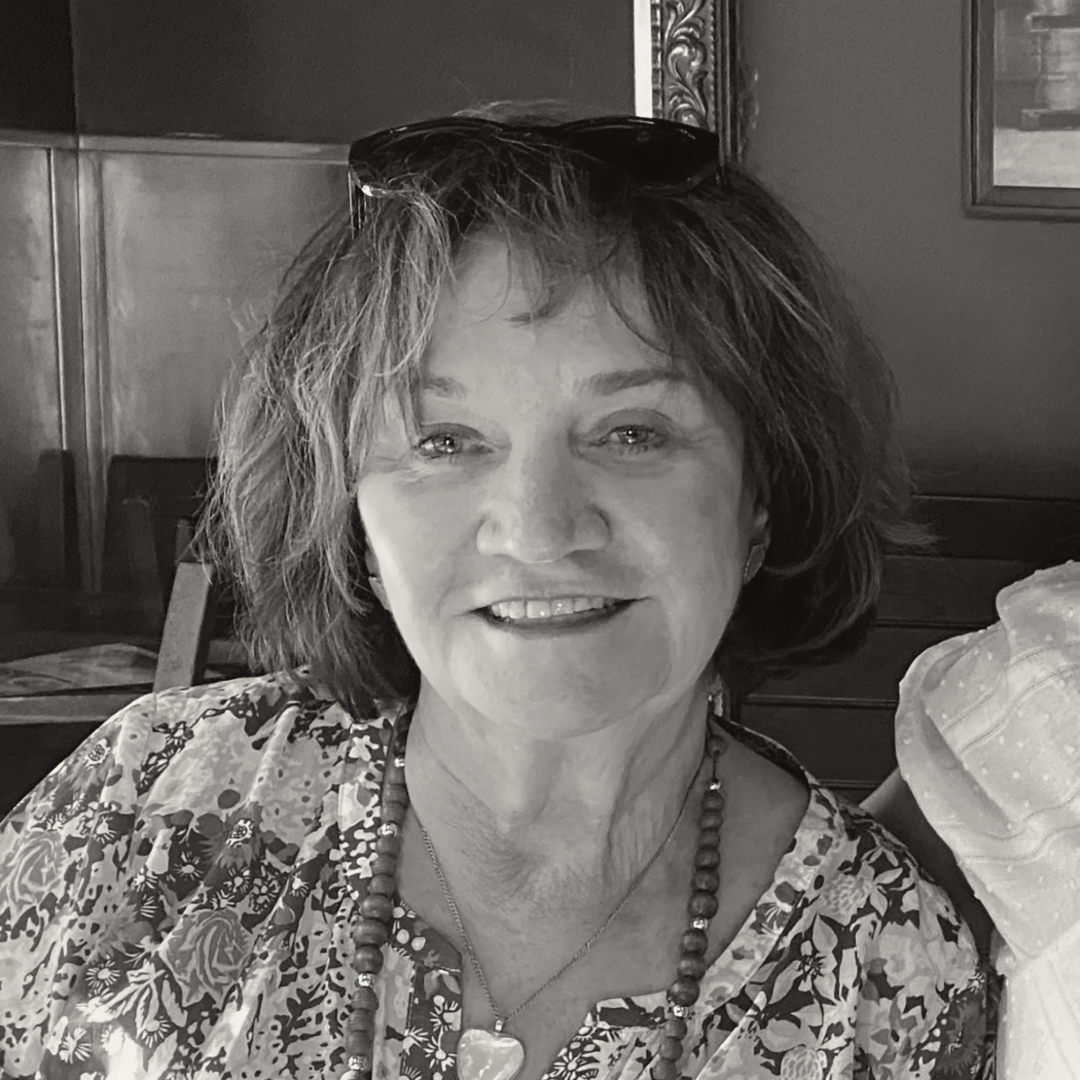
Dolores Watson Seigenthaler died on Sunday (Nov. 30) at age 96 while in hospice care.

She was a regionally popular vocalist of the 1940s and 1950s on radio and television who recorded for Decca, RCA and other labels. She was married to John Seigenthaler (1927-2014). He was editor/publisher of The Tennessean in 1962-1991 who attained national notoriety as a civil rights activist, power broker and journalism icon. Nashville’s downtown pedestrian bridge spanning the Cumberland River is named for him.

Dolores Watson was born in Lexington, Kentucky in 1929. After her parents divorced, she moved with her mother to Rome, Georgia. Watson began singing at age 14 and made her first record at age 16. While attending Shorter College for Girls, she sang with local bands and on Rome’s WRGA radio.

She won the Southern Radio Queen contest, which led to engagements in Miami and Havana, which was then a popular American tourist destination. In 1946, Watson came to Nashville to perform as a vocalist with Owen Bradley’s dance band at the Club Plantation. Nashville was “dry” at the time and this 1,000-person venue was the biggest of the private clubs serving alcohol. Bradley was hired by Decca Records in 1947 and in 1954-55 built The Quonset Hut as the first business on what became known as Music Row.

Watson auditioned for WSM radio in 1948 and soon became one of the station’s most popular vocalists. She was the featured singer on WSM’s “Sunday Down South,” which was broadcast nationally on NBC.

In 1950, she recorded “Better Dead Than Wed” and “Shovin’ My Lovin’” for Decca as the vocalist in Lenny Dee & His D-Men. RCA Victor also recorded her in 1950 as the duet partner of Slim Whitman on “Let’s Go to Church (Next Sunday Morning).”

WSM launched Nashville’s first TV station that year. WSM-TV (later WSMV, Channel 4) featured her on its daily morning show The Waking Crew and weekly on its Music City U.S.A. Sunday-night program.

Radio work continued as Dolores Watson sang on such programs as “The Jim Reeves Show,” which was picked up for national airing by ABC. Chet Atkins moved to Nashville in 1950. He and Watson starred on WSM’s nightly radio show “Dreamtime.” During the early 1950s she also sang three times weekly on the variety series “Eight O’Clock Time” with a band headed by Bob Lamm.

Centennial Park staged concerts in those days. Dolores Watson starred on one in 1953. The Tennessean sent cub reporter John Seigenthaler to cover it. He met Dolores Watson and was smitten. They married in 1955. By then, she had performed with Eddy Arnold, Minnie Pearl and Whitey Ford, in addition to Reeves, Whitman, Bradley and Atkins.

After her marriage, she continued her singing career for a time. She opened for Elvis Presley in Mississippi in 1955. But son John Michael Seigenthaler was born late that year, and she soon retired from music to raise him. He eventually became an anchorman of the newscasts on NBC and MSNBC, worked for the Associated Press and entered public relations.

Dolores Seigenthaler is survived by her son and his wife, Kerry Brock; by brother, Frank Watson of Athens, Georgia; grandson Jack Seigenthaler, a Harvard Law School student; and by many nieces and nephews.

The family is requesting donations be made online in Dolores Seigenthaler’s name to the two charities where she volunteered most, Ladies of Charity and Room in the Inn.

Hit Songwriter Walt Aldridge Passes

Walt Aldridge. Photo: Courtesy of Nashville Songwriters Hall of Fame

Nashville Songwriters Hall of Fame member Walt Aldridge died Wednesday (Nov. 19) at age 70 following a long illness.

He was noted for such award-winning songs as “(There’s) No Gettin’ Over Me,” “Holding Her and Loving You” and “I Loved Her First.” Aldridge was also a producer, a singer, a studio engineer, a guitarist and a bandleader. He taught in the Entertainment Industry Department of the University of North Alabama for approximately 10 years. He was a mainstay of the Muscle Shoals music scene.

James Walton Aldridge Jr. was a native of Florence, Alabama, and he remained in that area for most of his life. He spent 17 years as a staff engineer at Fame Studios in Muscle Shoals. During that time, he worked on more than 200 records for artists such as Mac Davis, Wilson Pickett, The Osmonds, Clarence Carter, the Gatlins, Jerry Reed and Dobie Gray.

His songwriting career took flight with “(There’s) No Gettin’ Over Me” in 1981 when Ronnie Milsap took the song to No. 1 on the country chart and won a Grammy Award for his performance. Co-written with frequent collaborator Tom Brasfield, the song also became a top pop hit and won ASCAP’s Country Song of the Year award in 1982.

Other early songwriting hits for Aldridge included “’Til You’re Gone” sung by Barbara Mandrell (1982), “Holding Her and Loving You” by Earl Thomas Conley (1983), “She Sure Got Away With My Heart” by John Anderson (1984), “Crime of Passion” by Ricky Van Shelton (1987) and “One Owner Heart,” “Doncha” and “In Over My Heart” all by T.G. Sheppard (1985). All of these were top-10 hits. “Holding Her and Loving You” was named the NSAI Song of the Year.

The songwriter had top-20 successes with “She’s Steppin’ Out” for Con Hunley (1981), “Anybody’s Heart But Mine” for Terri Gibbs (1983) and “Save the Last Chance” (1985) for Johnny Lee (1985).

In the late 1980s, Walt Aldridge sang lead, produced and wrote the songs for the country-rock band The Shooters. The group charted with seven of Aldridge’s co-written tunes in 1987-89, including “They Only Come Out at Night” (1987), “Borderline” (1988) and “If I Ever Go Crazy” (1989). The group’s lone album was issued by Epic Records in 1987.

Aldridge also continued writing for others. Conway Twitty scored a major hit with “She’s Got a Single Thing in Mind” in 1989. In 1990, Shenandoah succeeded with “See If I Care” and Ricky Van Shelton went to the top of the charts in 1991 with “I Am a Simple Man.” Steve Wariner’s “Leave Him Out of This” (1992), BlackHawk’s “I Sure Can Smell the Rain” (1994), Pam Tillis’s “Deep Down” (1995), BlackHawk’s “Like There Ain’t No Yesterday” (1995), Reba McEntire’s “The Fear of Being Alone” (1996), and Sons of the Desert’s “Whatever Comes First” (1997) were all top-10 hits co-written by Aldridge. His songwriting collaborators often included his fellow Muscle Shoals neighbors Mac McAnally, Robert Byrne and James LeBlanc, as well as Brasfield. He also wrote regularly with Nashville folk performer Kate Campbell.

Walt Aldridge entered the new century with a new clutch of songwriting hits. These included “Some Things Never Change” for Tim McGraw (2000), “Modern Day Bonnie and Clyde” for Travis Tritt (2002) and the chart-topping “I Loved Her First” for Heartland (2006).

He wrote songs that were covered by Alabama, T. Graham Brown, Joe Diffie, George Strait, Restless Heart, K.T. Oslin, Tanya Tucker, Darryl Worley, Jo Dee Messina, Sammy Kershaw, Martina McBride, Lonestar, Blake Shelton Little Texas, Ty Herndon, Billy Ray Cyrus, Bill Anderson, Eddy Raven and a host of other big country stars.

Walt Aldridge wrote or co-wrote 56 top-40 country hits over four decades. His pop-music cuts include recordings by Peter Cetera, Lou Reed, Candi Staton and Andrew Gold, among others.

As a record producer, Walt Aldridge worked with Lacy J. Dalton, Lisa Angelle, Marty Stuart, Buffy Lawson, Troy Goldsby, and Jason Sellers, as well as Campbell and Heartland.

Aldridge was inducted into the Nashville Songwriters Hall of Fame in 2017 and the Alabama Music Hall of Fame in 2018. He earned more than 30 songwriter awards from ASCAP.

Walt Aldridge is survived by his wife, Stephanie, children Rachael Stolt and Hannah Aldridge, nine grandchildren, sister Ramona Faucett and a large extended family. Funeral arrangements are being handled by Morrison Funeral Home & Crematory in Florence, Alabama.

As a gift to the family, the Entertainment Department of the University of North Alabama is hosting the funeral service at its Mane Room, 310 N Pine St, Florence, AL. Visitation will be Saturday, Nov. 22, 2025, 12:00pm – 2:00pm. Service will immediately follow visitation. Burial will be at Greenview Memorial Park located at 3657 Old Chisholm Rd., Florence, AL following the service.

In lieu of flowers, donations can be made to the Walt Aldridge Entertainment Industry Scholarship. Checks may be sent to: UNA Foundation, UNA, Box 5113, Florence, AL 35632. Reference the Walt Aldridge Entertainment Industry Scholarship. To send flowers to the family or to plant a tree in memory of Walt Aldridge, contact Morrison Funeral Home.

Americana Music Mainstay Todd Snider Passes

Todd Snider. Photo: Angelina Castillo

Singer-songwriter Todd Snider died in Nashville on Friday (Nov. 14) at age 59 due to complications from pneumonia. He was a mercurial, highly influential Americana music star, noted for his sardonic wit, iconoclastic whimsy and contrary attitude.

Among his tunes are “Play a Train Song,” “Alright Guy,” “Talking Seattle Grunge Rock Blues,” “Beer Run,” “The Devil You Know,” “Barbie Doll,” “The Real Deal,” the gospel favorite “Somebody’s Comin,’” and the memorable “Conservative Christian, Right-Wing Republican, Straight, White, American Males.”

He was a prolific recording artist, creating more than 20 albums between 1994 and the present. Snider was also an entertaining showman, alternating his striking songs with his skills as a raconteur of anecdotes and stories. He helped to shape the Americana genre and gave voice to the alternative-music scene of East Nashville.

Todd Snider was born and raised in Oregon, but rose to popularity in the clubs of Austin and San Marcos, Texas. Following a stint in Memphis, he moved to Nashville. Jimmy Buffett and John Prine were fans of his songwriting and became friends and supporters. Buffett signed him to his Margaritaville label. Early albums included 1994’s Songs for the Daily Planet (Margaritaville/MCA), 1996’s Step Right Up (Margaritaville/MCA) and 1998’s Viva Satellite (MCA). Prine next signed Snider to his Oh Boy Records label, which issued 2000’s Happy to Be Here, 2002’s New Connection, 2003’s Near Truths and Hotel Rooms, and 2004’s breakthrough collection East Nashville Skyline.

These were followed by 2005’s MCA compilation That Was Me (Hip-O), 2006’s The Devil You Know (New Door), 2007’s Peace Love and Anarchy (Oh Boy) and 2007’s Live at Grimey’s (New Door). Because of the success of The Devil You Know and East Nashville Skyline, Snider was nominated as the Americana Music Association (AMA) Artist of the Year in 2007.

At this point, Todd Snider formed his own label, Aimless Records. The majority of his releases were on that imprint for the rest of his life. His output continued with 2008’s political Peace Queer (Aimless), 2009’s The Excitement Plan (Yep Roc), 2011’s Live: The Storyteller (Aimless), 2012’s Agnostic Hymns & Stoner Fables (Aimless) and 2012’s tribute Time As We Know It: The Songs of Jerry Jeff Walker (Aimless).

In 2013, he formed the band Hard Working Americans with Dave Schools (Widespread Panic), Neal Casal, Chad Staehly, Duane Trucks and Jesse Aycock. The group issued 2014’s Hard Working Americans (Melvin), 2016’s Rest In Chaos (Melvin), and 2017’s We’re All In This Together (Melvin). The group was also the subject of a 2014 documentary film. The AMA nominated Hard Working Americans as Group of the Year in 2014. Snider also recorded under the alias “Elmo Buzz.”

His solo albums on Aimless Records continued with 2016’s East Side Bulldog, 2019’s Cash Cabin Sessions, 2021’s fan favorite First Agnostic Church of Hope and Wonder, 2023’s Crank It, We’re Doomed, and 2025’s High, Lonesome and Then Some, released last month. Snider also participated in multi-artist tribute recordings for Buddy Holly, Billy Joe Shaver, Kris Kristofferson, Kinky Friedman, Peter Case, Shel Silverstein and Steve Forbert.

He was noted for relentless touring and acquired a devoted cult following. Snider’s career was sometimes hampered by drugs and alcohol, but his songwriting never dimmed. Among the dozens who have recorded his tunes are T. Graham Brown, Jack Ingram, Mark Chesnutt, Jason & The Scorchers, Rick Trevino, Charlie Robson, BR5-49, Gary Allan, Robert Earl Keen, Loretta Lynn, Tom Jones, and longtime band collaborator Will Kimbrough.

In addition to Kimbrough, Prine and Buffett, he collaborated with Tony Brown, Patty Griffin, Ray Kennedy, Tommy Womack, Don Was, Jason Isbell, Amanda Shires, Kix Brooks, Joe Ely, Elizabeth Cook, and other notables.

In 2014, he issued his entertaining memoir I Never Met a Story I Didn’t Like: Mostly True Tall Tales (DaCapo Press). Texas A&M University Press published 2025’s East Nashville Skyline: The Songwriting Legacy of Todd Snider.

The circumstances leading up to the troubadour’s death are somewhat murky. Despite suffering from chronic back pain, he decided to tour in support of High, Lonesome and Then Some. The second stop on the tour was Salt Lake City. On Nov. 3, Snider announced the cancellation of all remaining tour dates. He reported that he had sustained “severe injuries as the victim of a violent fight outside of his hotel.” He told police he was beaten up and robbed. He was seen at a local hospital but became combative when the staff refused to admit him for further treatment. Salt Lake City police charged Snider with disorderly conduct, criminal trespass and threats of violence.

He returned home to Music City. Complaining of chest pain and difficulty breathing, he was hospitalized in Hendersonville with a case of previously undiagnosed “walking pneumonia.” His condition deteriorated rapidly, and he died the next day.

Industry Leader Bill Ivey Passes

Bill Ivey. Photo: Courtesy of the Country Music Hall of Fame and Museum

Bill Ivey, the Country Music Hall of Fame executive who became the head of the Recording Academy, the American Folklore Society and the National Endowment for the Arts, has passed away.

Ivey, 81, was the Hall of Fame’s CEO from 1971 through 1997. He died in Nashville on Friday, Nov. 7.

While at the Country Music Hall of Fame, Bill Ivey founded its Library & Archives, built the museum’s collections, acquired Hatch Show Print and purchased the Bob Pinson Recorded Sound Collection. His leadership elevated the institution from being a modest tourist attraction to being the world’s center for the preservation and study of country’s many styles, past and present.

Born in Detroit in 1944, Ivey earned an undergraduate history degree at the University of Michigan, then an M.A. in folklore and ethnomusicology at Indiana University. He was also an acoustic-guitar player. He was doing graduate work toward a Ph.D. in 1971, when he decided to apply for a job as director of the library at the Country Music Foundation (CMF), the umbrella nonprofit for the Country Music Hall of Fame and Museum. The Museum had opened on Music Row in 1967, and the board of the Country Music Association (then running the CMF) determined four years later that the Museum should have a proper library and research center.

In August, 1971, Ivey was hired to oversee the development of the library. He so impressed the CMF’s board that he was promoted to director of the CMF by the fall of that year. During the next 25 years, he made the Country Music Hall of Fame & Museum a key player in the music industry as well as Nashville’s burgeoning tourism industry. Ivey also set a rigorous standard that ensured the collections of artifacts, recordings and library materials documenting country music would be unmatched. He presided over two building expansions and secured national accreditation for the museum, which it has maintained.

In December 1997, President Bill Clinton selected Bill Ivey to be the chair of the National Endowment for the Arts. While there, Ivey established the NEA “Songs of the Century” project to educate students about the history of American popular music. He laid the groundwork for better relations with Congress and led to the funding of his “Challenge America” and “Creative Links, Positive Alternatives for Youth” initiatives designed to foster stronger ties between arts organizations, community groups and federal agencies. He also accompanied First Lady Hillary Clinton to the Grammy Awards when she won in the Spoken Word category.

After four years of serving the NEA in Washington, Ivey returned to Music City. He directed the Curb Center for Art, Enterprise, and Public Policy at Vanderbilt University and served on the faculty there from 2002 to 2012.

Bill Ivey rose through the volunteer ranks of the National Academy of Recording Arts & Sciences (NARAS) to become its trustee and two-time national chairman (in 1981-83 and again in 1989-91). He remained a force on the Grammy organization’s board of directors for many years. Ivey was also elected president of the American Folklore Society.

In 1989, he helped found the Leadership Music nonprofit networking forum and served for several years as that organization’s discussion facilitator. He also wrote liner notes for historical reissue albums as well as scholarly articles. In later years, Bill Ivey wrote three books exploring the intersections of popular culture, politics and public policy.

In a social media post, the CMF eulogized Bill Ivey: “He was a challenging thinker who helped cement the reputation of the Country Music Hall of Fame and Museum as a significant and authoritative music history center. His impact on the Museum and the wider arts world is incalculable.”

A Celebration of Life will be held for Ivey on Saturday (Feb. 21) at 2 p.m. CT at the CMA Theater inside the Country Music Hall of Fame and Museum.

Harmonica Mentor Carlos DeFord Bailey Passes

Nashville singer, songwriter and bandleader Carlos DeFord Bailey died on Monday (Nov. 3) at age 66 following a struggle with cancer.

He was the grandson of Country Music Hall of Fame member DeFord Bailey and the “keeper of the flame” of the star’s legacy.

Carlos was an enthusiastic booster of his grandfather’s election to the Hall of Fame, plus induction into the Music City Walk of Fame and the renaming of a Music Row street in his honor. Carlos performed and/or appeared at these occasions to represent his family. He also entertained frequently at the Grand Ole Opry in his grandfather’s memory. In addition, Carlos became a perennial favorite as a demonstrator/teacher at the Hall of Fame.

Carlos DeFord Bailey was a Nashville native born in 1959. He was the son of blues performer DeFord Bailey Jr. and was on stage by the time he reached his teens. Carlos was a skilled singer and harmonica player who performed in school recitals during his youth and in the Greater Bethel Church choir.

The first song he sang in public was Otis Redding’s “Dock of the Bay,” and his bands through the 1970s specialized in traditional r&b sounds at community events. He began promoting his grandfather’s legacy via songs such as “Music City Shoeshine Man.”

The Hall of Fame posted this eulogy: “Carlos was passionate about working with the Country Music Hall of Fame and Museum and participated in 26 educational programs between 2019 and 2024. That accounts for more than 1,000 museum visitors who saw him demonstrate the harmonica or ukulele and speak about his grandfather.”

In addition, Carlos aided the Hall of Fame in the launch of its ‘Discover DeFord Bailey’ web page, He participated in a series of videos, playing harmonica in his grandfather’s style and sharing stories about him.

The Opry’s Ketch Secor of Old Crow Medicine Show also posted a fond remembrance of Carlos DeFord Bailey, including this: “I’ll never forget your joy and big open heart.” Ketch and Carlos engineered a posthumous Opry apology to the legendary “Harmonica Wizard” for its treatment of the Black county pioneer.

Carlos taught harmonica at the William Edmondson Arts and Culture Festival, the Nashville Public Library, and at other fairs, festivals, and culture centers around Middle Tennessee. In 2023, Carlos showcased at the National Museum of African American Music (NMAAM) in Nashville.

Funeral arrangements have not been announced.