
A Decade of Growth: Inside First Horizon Bank’s Music Industry Expansion [Interview]
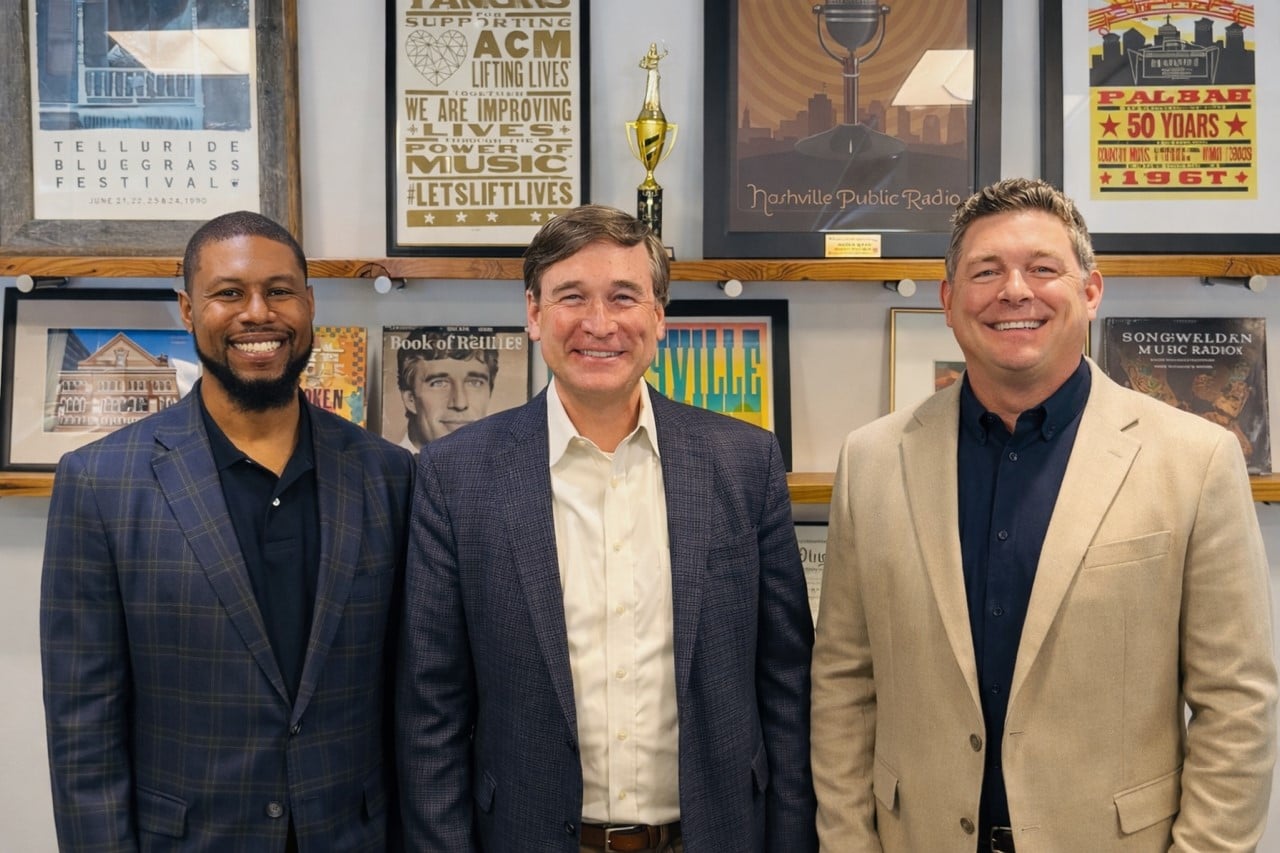
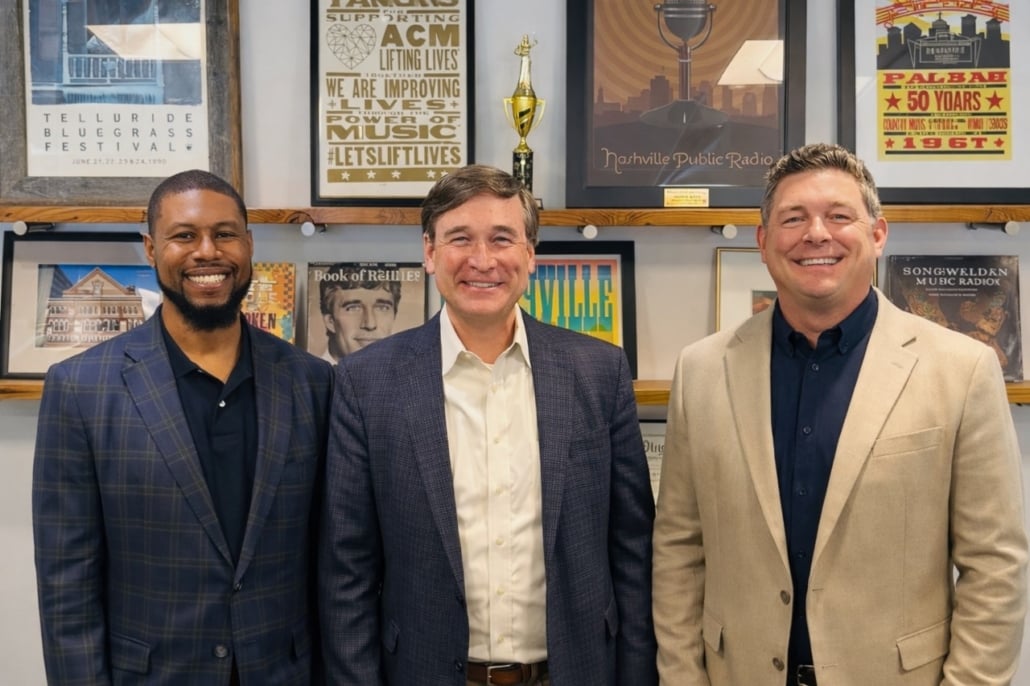
Pictured (L-R): Ben James, Senior Vice President and Managing Director, Music, Sports and Entertainment Group for First Horizon Bank; Andrew Kintz, Executive Vice President, Music, Sports and Entertainment Group for First Horizon Bank; Bryan Bolton, Senior Vice President and Managing Director, Music, Sports and Entertainment Group for First Horizon Bank. Photo: Courtesy of First Horizon Bank
It started with borrowed furniture, a sublet office on Music Row, and zero loans, deposits, or revenue. When First Horizon’s Music, Sports and Entertainment (MSE) group launched in the summer of 2016, Andrew Kintz and Bryan Bolton felt the pressure to generate business quickly.
Ten years later, they have grown into a coast-to-coast team of 21 bankers operating out of Nashville, Atlanta, and Miami, with clients spanning New York and Los Angeles and beyond.
The group has originated over a billion dollars in financing for the music industry. What began as a scrappy bet on a niche market has grown into a well-established specialty lending and private banking operation in the entertainment business.
Today, approximately 89 percent of the group’s revenue flows from five cities: Nashville, Atlanta, Miami, New York, and Los Angeles. This concentration speaks to both the geography of the music business and the intentional focus the team has maintained.
Kintz, Executive Vice President, Bolton, Senior VP and Managing Director, and Ben James, Senior VP and Managing Director, are key members of the leadership team. Kintz and Bolton operate out of Nashville’s Music Row office. James leads the firm’s East operations from Atlanta. Together, they sat down with MusicRow to reflect on what the last decade has taught them, what has changed in the music industry, and where they see things heading next.
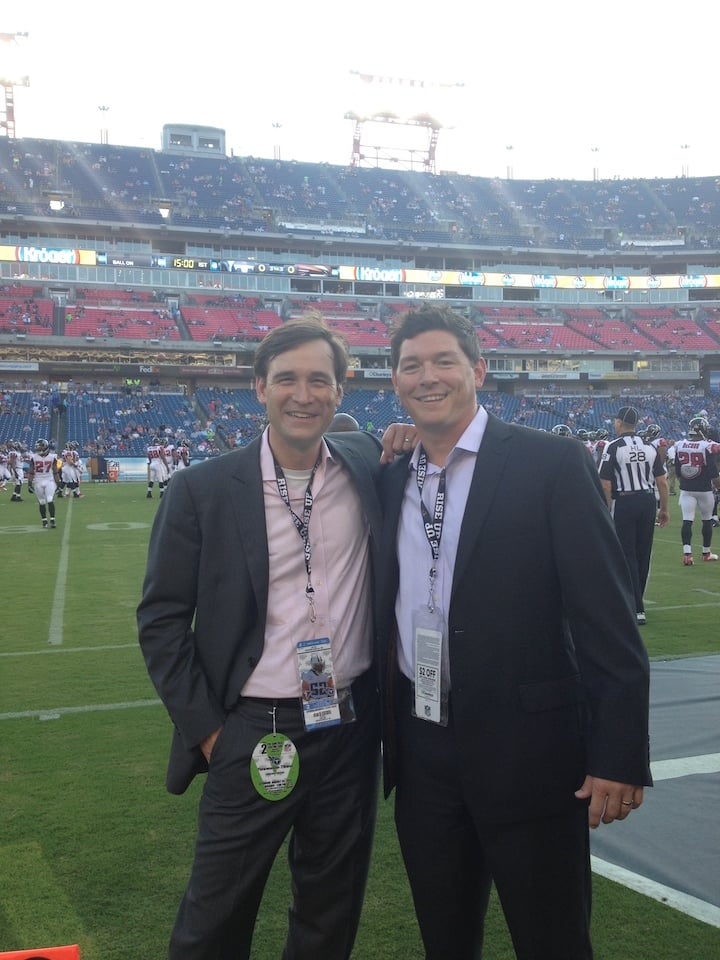
Pictured (L-R): Andrew Kintz, Executive Vice President, Music, Sports and Entertainment Group for First Horizon Bank; Bryan Bolton, Senior Vice President and Managing Director, Music, Sports and Entertainment Group for First Horizon Bank. Photo: Courtesy of First Horizon Bank
While Kintz and Bolton set up their first office inside SESAC’s Nashville building in 2016, James joined the team through a parallel journey. After years of experience in music finance at SunTrust, James was recruited into Iberia Bank’s Sports & Entertainment group, founded by longtime music finance leader Alex Hernandez.
Iberia Bank and First Horizon merged in 2019, and Hernandez and Kintz brought the teams together to form First Horizon Bank’s Music, Sports and Entertainment Group.
While the merger was a key inflection point in the bank’s growth, streaming changed everything.
If there is a single moment the team points to as the catalyst for explosive growth, it is 2016, the year streaming revenue finally turned upward after years of declining revenue in the music industry.
For years, banking had been comfortable lending against the underlying music copyrights of publishing rights. Record label revenue had cratered from the early 2000s and the cash flows from master recordings were simply too unpredictable to leverage. 2015 was the first year many industry observers realized streaming wasn’t just a niche revenue stream.
Then streaming changed the math.
As Kintz explains, the cash flows from master recordings started behaving similarly to those of publishing assets with some predictability and measurable growth.
“All of a sudden, this entire huge group of clients we were not calling on became open to us and we got super excited,” shares Kintz. “In the overall industry, people got really interested in these assets from both a strategic perspective and as a financial asset.”
Labels, funds, and investors who had been sitting on master recordings suddenly had a bankable asset. And First Horizon was positioned to move fast.
James adds, “You started to see the investor pool broaden as more traditional investors started getting into the copyright game because they started to better understand it. Over the years, it has become a more traditional asset class as investors look for yield.”
Bolton shares that one of the group’s most innovative contributions to music industry finance is an option to “replace the advance” which offers an alternative financing structure. In the traditional model, a label or publisher advances money to an artist or writer, then recoups that advance from the future royalties. For the artist or writer, it comes with real costs. The full advance is considered taxable income and often commissionable. Also, the label or publisher ties up its own capital in the process.
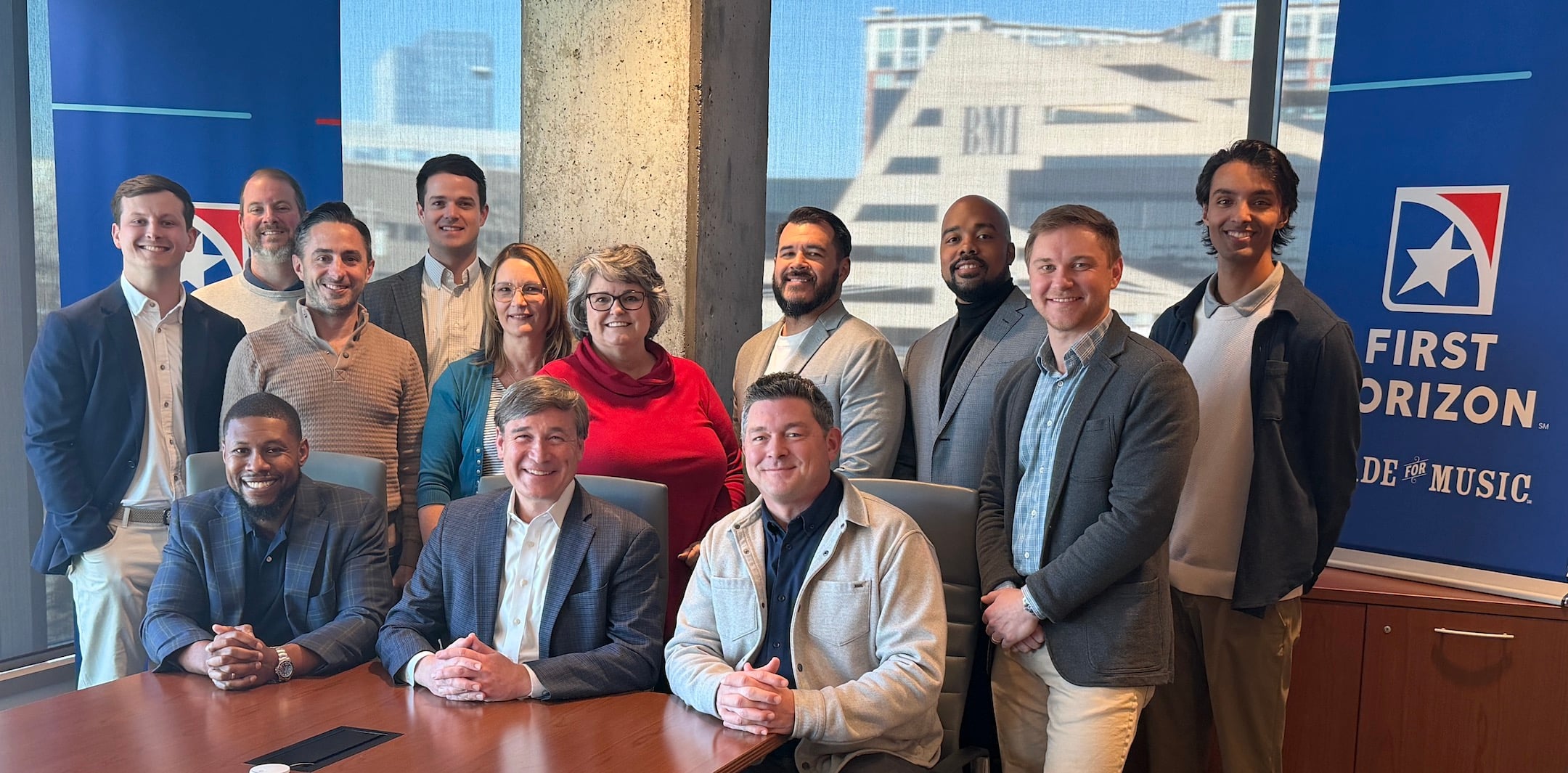
Pictured (L-R): First Horizon Bank’s Jack Spangler, Tyler Marler, Daniel Webster, Ben James, Ben Jelks, Christy McDaniel, Debbi Hooper, Andrew Kintz, Colby Shepperson, Reuben Coopwood, Bryan Bolton, Alex Strong and Parker McRoy. Photo: Courtesy of First Horizon Bank
The alternative structure is more nuanced. The artist or writer comes directly to First Horizon for a royalty loan. The loan incurs interest but is repaid as royalties come in. Because it is structured as debt rather than income, the artist pays taxes only as royalties arrive each year, not on the lump sum advanced in the beginning of the deal. Commissions are not triggered until the royalties are earned and the label retains its capital to invest elsewhere.
“It is literally the efficient allocation of capital. It is more efficient for us to put bank capital to work,” says Kintz. The deal works for everyone at the table and it represents exactly the kind of creative financial structuring that defines how First Horizon approaches client services.
For a long time, investing in music felt like a vanity play. You could see and touch a building. You could run the numbers on a manufacturing company. But for the music industry, the investable side felt abstract, emotional, volatile, and unquantifiable.
That perception has fundamentally changed, and the team at First Horizon has watched it happen in real time over the last decade.
Several forces drove the shift. The first was data integrity. Kintz points to the contrast between the 1980s, when tracking a song’s global consumption was essentially impossible, and today, when streaming platforms generate granular, real-time royalty data at scale. When a bank can see exactly how much a copyright is earning, in every market, on a monthly basis, the asset becomes much easier to value and underwrite.
Another force was the arrival of institutional capital. Private equity giants such as KKR, The Carlyle Group, Blackstone, and Apollo have all launched specialized vehicles and joint ventures to actively acquire music catalogs, royalties, and publishing rights. The influx of institutional money has done more than just validate the asset class. It has brought powerful advocates to Capitol Hill lobbying for songwriter and artist rights.
The Music Modernization Act is one example of how advocacy translated into laws that help not only copyright owners, but also make music more bankable.
Relationships drive their business, not transactions. Bolton describes the foundation as deceptively simple by doing what you say you are going to do, tell the truth even when the news is hard, and never resist picking up the phone.
James adds, “It’s important to not be transactional. I try to never forget it’s always about the people.”
That culture runs through the internal team as much as the client roster. Kintz describes their banking group as genuinely invested in one another. This fosters a work environment that is the kind of place where a colleague’s baby shower becomes a team event and where people show up not because they have to, but because they care about the person.
Looking into the future, no conversation about the music business is complete without addressing AI, and the First Horizon team receives this question constantly.
Their take is measured. For their core business, lending against established catalogs with multi-year track records and proven fan bases, they are not particularly worried. The cash flows are stable, the consumption data is clear, and the emotional bond between audiences and artists is not something an algorithm can manufacture.
Speaking of the deep emotional connection people have to music, Kintz shares, “We do not believe AI can take that away. Velvet Sundown, [an AI-generated artist], might be an interesting listen, but at the end of the day, there is no deep emotional connection.”
Where the team sees real risk is for emerging artists. A market flooded with AI-generated music makes discovery harder for early-stage creators trying to break through the noise.
But they also see AI as a tool. Songwriters are already using it to test arrangements, explore alternate tempos, and develop ideas faster. And companies are building AI-powered royalty collection tools that could help ensure artists actually get paid what they are owed. The winners and losers dynamic is real, but it mirrors what the industry experienced with the internet.
A decade in, First Horizon no longer feels like the younger sibling in the music banking world. The team is being invited into deals led by other institutions, and they are leading deals that bring others to the table. The steady, compounding growth they have built in headcount, deal volume, revenue, and geographic reach has earned them a seat at the table.
Kintz sees consistent growth, expanding relationships, and a business that continues to attract bankers who are equally passionate about music and finance.
“The pie keeps getting bigger and that, to me, is an encouraging sign,” says Kintz.
From a sublet office with borrowed furniture and no revenue to a billion-dollar origination business in ten years, First Horizon has proven that the music business, understood on its own terms, is as bankable as any industry in the world.
