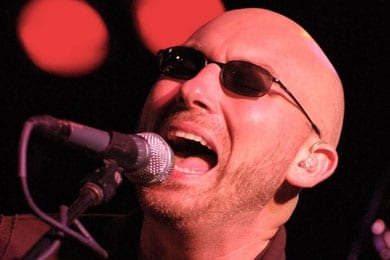
Corey Smith
It’s a classic conundrum: music industry sales are shrinking and at the same time interest and consumption of music is skyrocketing. A recent Wall Street Journal article by Damian Kulash Jr., lead singer and guitarist of rock band OK Go delves into some of the corners around which the new models are being built.
“We once relied on investment and support from a major label,” says Kulash. “Now we make a comparable living raising money directly from fans and through licensing and sponsorship. Music isn’t going away. We’re just moving out of the brief period—a flash in history’s pan—when an artist could expect to make a living selling records alone.”
Records became a music commodity in the sense that fans could experience music via a “discreet package.” The Internet changed that equation and global record sales plunged from about $27 billion in 1999 to $17 billion in 2009. Kulash ties the sales slide to the new freedoms afforded by the digital era. “Music is getting harder to define again,” he says. “It’s becoming more of an experience and less of an object. Without records as clearly delineated receptacles of value, last century’s rules—both industrial and creative—are out the window. For those who can find an audience or a paycheck outside the traditional system, this can mean blessed freedom from the music industry’s gatekeepers.”
One such artist profiled in the article is singer/songwriter Corey Smith who recently signed with Nashville-based Average Joe’s Entertainment whose roster includes Colt Ford, Brantley Gilbert and Josh Gracin. Smith’s manager Marty Winsch tells WSJ that his artist grossed about $4 million in 2008 from touring, merchandise and other revenue. Smith’s music is available FREE from his website in digital format and CDs can be purchased at discounted prices. So the music is used to promote touring rather than the reverse. “We don’t look at it as free, ” Winsch says. “When people come to the website and download the music, they’re giving us their time, their most valuable commodity.” Not surprisingly the Average Joe’s label deal is non-traditional with the artist reaping 50% of any net revenue.
So it makes sense to use the music to bolster ticket sales, but touring has also faced cutbacks and faltering demand this past year. The article notes that popular artists therefore are returning to the “centuries old logic” of patronage in the modern-day form of sponsorships and licensing. For unknown acts, however, these deals are harder to forge, but can offer creative freedom when successful. “Outside sponsors tend to take a broader view of success,” says Kulash. “The measuring stick could be mentions in the press, traffic to a website, email addresses collected or views of online videos. Artists have meaningful, direct, and emotional access to our fans, and at a time when capturing the public’s attention is increasingly difficult for the army of competing marketers, that access is a big asset.”
Kulash sums the overall dilemma nicely, “Music is getting harder to define again. It’s becoming more of an experience and less of an object. Without records as clearly delineated receptacles of value, last century’s rules—both industrial and creative—are out the window.”

Music Evolves From Commodity To Experience
/by adminCorey Smith
It’s a classic conundrum: music industry sales are shrinking and at the same time interest and consumption of music is skyrocketing. A recent Wall Street Journal article by Damian Kulash Jr., lead singer and guitarist of rock band OK Go delves into some of the corners around which the new models are being built.
“We once relied on investment and support from a major label,” says Kulash. “Now we make a comparable living raising money directly from fans and through licensing and sponsorship. Music isn’t going away. We’re just moving out of the brief period—a flash in history’s pan—when an artist could expect to make a living selling records alone.”
Records became a music commodity in the sense that fans could experience music via a “discreet package.” The Internet changed that equation and global record sales plunged from about $27 billion in 1999 to $17 billion in 2009. Kulash ties the sales slide to the new freedoms afforded by the digital era. “Music is getting harder to define again,” he says. “It’s becoming more of an experience and less of an object. Without records as clearly delineated receptacles of value, last century’s rules—both industrial and creative—are out the window. For those who can find an audience or a paycheck outside the traditional system, this can mean blessed freedom from the music industry’s gatekeepers.”
One such artist profiled in the article is singer/songwriter Corey Smith who recently signed with Nashville-based Average Joe’s Entertainment whose roster includes Colt Ford, Brantley Gilbert and Josh Gracin. Smith’s manager Marty Winsch tells WSJ that his artist grossed about $4 million in 2008 from touring, merchandise and other revenue. Smith’s music is available FREE from his website in digital format and CDs can be purchased at discounted prices. So the music is used to promote touring rather than the reverse. “We don’t look at it as free, ” Winsch says. “When people come to the website and download the music, they’re giving us their time, their most valuable commodity.” Not surprisingly the Average Joe’s label deal is non-traditional with the artist reaping 50% of any net revenue.
So it makes sense to use the music to bolster ticket sales, but touring has also faced cutbacks and faltering demand this past year. The article notes that popular artists therefore are returning to the “centuries old logic” of patronage in the modern-day form of sponsorships and licensing. For unknown acts, however, these deals are harder to forge, but can offer creative freedom when successful. “Outside sponsors tend to take a broader view of success,” says Kulash. “The measuring stick could be mentions in the press, traffic to a website, email addresses collected or views of online videos. Artists have meaningful, direct, and emotional access to our fans, and at a time when capturing the public’s attention is increasingly difficult for the army of competing marketers, that access is a big asset.”
Kulash sums the overall dilemma nicely, “Music is getting harder to define again. It’s becoming more of an experience and less of an object. Without records as clearly delineated receptacles of value, last century’s rules—both industrial and creative—are out the window.”
Garth: Good Ride Cowboy
/by Sarah SkatesGarth Brooks at a press conference 12/16/10. Photo: Alan Mayor
The 140,000 concertgoers turning out this week for Garth Brooks’ Nashville shows haven’t been disappointed. His infectious energy radiated through the sold-out Bridgestone Arena last night (12/19) as the headset-wearing hit machine ran through two hours of material. Dubbed Nashville 10: The Rescue Party, the series of shows benefiting flood relief has raised $5 million to date.
The crowd did the wave in anticipation of the superstar’s entrance, and fanatical screams filled the arena as a silver box rose up from below the stage and Brooks stepped out. “Rodeo” was a perfect opening number, given its line about “the roar of a Sunday crowd.”
Brooks’ monumental success is a combination of stage and song. He selects excellent material, executes it with perfection, and then offers a thrilling concert experience—a showcase for his extensive catalog. Last night he sang older hits like debut single “Much Too Young (To Feel This Damn Old),” and newer ones like the Chris LeDoux salute “Good Ride Cowboy.” All his songs were met with wild adoration from fans, especially his most well-known chart-toppers like “Shameless.”
Brooks took the stage with just his acoustic guitar for “Unanswered Prayers”—a set-up similar to his Las Vegas shows—and the audience sang lead for most of the song. They erupted after only the first four notes of “Friends In Low Places.”
Steve Wariner joined him onstage for “Longneck Bottle,” and Brooks’ lovely wife Trisha Yearwood appeared for the duet “In Another’s Eyes.” She stayed on to perform her hits “She’s In Love With the Boy” and the “Wrong Side Of Memphis.”
What wasn’t lovely was the price gouging going on downtown. Making a killing from benefit concertgoers were Central Parking ($20/car) and the arena ($10/beer).
Nonetheless, the spirit of giving prevailed, with volunteers collecting Toys For Tots at the show’s entrance. The event was also broadcast on the Armed Forces Network for troops worldwide.
The enthusiasm of Brooks and his fans can’t be stifled. It filled the venue with excitement, just like the confetti and streamers during the grand finale.
Grascals, Vincent Earn Multiple SPBGMA Nominations
/by FreemanReigning SPBGMA Bluegrass Band of the Year The Grascals are up for 10 SPBGMA Awards, including Album of the Year (The Famous Lefty Flynn’s), Entertaining Group of the Year and numerous instrumental awards for individual band members.
The 37th Annual SPBGMA Convention will be held on February 3 – 6, 2011 in Nashville, TN at the Music City Sheraton, with the Awards ceremony on Sunday, February 6, 2011. A full list of nominations is available here.
Hot Schatz and Adkins End Business Relationship
/by MichelleSchatzi Hageman
Schatzi Hageman, President and founder of Hot Schatz PR, has announced that her long-term professional relationship with Trace Adkins will be ending at the end of the year. Hageman and Adkins have worked together since 1998.
“Changes like these are difficult, but they can be very invigorating and energizing, as well,” Hageman continues. “I’m really looking forward to new collaborations that are as fruitful as what Trace and I have had.”
Beginning January 2011, all press inquiries for Adkins should be directed to Natalie Moore, Manager of Artist Development & Creative Services at Show Dog-Universal Music (Natalie.Moore@sdumusic.com).
Durante Plays WPOC Show
/by admin(L-R) Nine North’s Stan Marczewski, WPOC’s Justin Cole & Margaret Durante.
Emrose/Stroudavarious/Nine North’s Margaret Durante played the WPOC Charm City Country Showcase at Hightopps Backstage Grill in Baltimore last night while promoting her single “Mississippi’s Crying.”
Durante, now 22 years old is a native of Potomac, Maryland. Some of her influences include Mary Chapin Carpenter and Bonnie Raitt whose voices gave her a love of “soulful, story-telling music.”
Durante has been writing with such Nashville songwriters as Stephony Smith, Shelly Fairchild and Lisa Carver. Her debut album project is scheduled for release in early 2011.
Artist Tidbits: Jay DeMarcus, Eddie Montgomery and Joanna Smith
/by Michelle•••
Eddie Montgomery is happy to report that he is resting at home after a successful surgery to treat prostate cancer earlier this week. The doctors report that no further treatment should be needed, and he plans to enjoy some down time at home with his family. After a break to enjoy the holidays, Montgomery and duo partner Troy Gentry will be heading out on a USO Tour in early 2011.
•••
Nashville’s Street Corner Symphony In “The Sing Off” Finale
/by FreemanThe Sing Off is hosted by Nick Lachey, with help from judges Ben Folds, Shawn Stockman (Boyz II Men), and Nicole Scherzinger (Pussycat Dolls).
Hot Schatz Adds Lorge; Al Brock Launches Spin Doctors
/by Freeman“I’m very excited about adding Michelle to the Hot Schatz PR team,” says President/Owner Schatzi Hageman. “With her hard work ethic and publicity expertise, I have no doubt that we can continue to offer the very best to our clients.”
Lorge’s previous experience includes stops at Sony Music, Sweet Talk Publicity, and Nicole Pope Gaia Publicity. Reach her at info@hotschatzpr.com or 615-782-0078.
• • • •
Spin Doctors is currently working with Andy Griggs on his new single “Can I Get An Amen,” which goes for adds in January. Reach Brock at POB 17159, Nashville, TN, or 615-969-2259 or albrock@hotmail.com.
Cannon Records Curtis and Luckey
/by contributorGrammy winning producer and songwriter Buddy Cannon and KMG recording duo Curtis and Luckey recently recorded new music at Blackbird Studios. Cannon said of the duo, “The songs these guys are writing and recording offer a fresh, energetic and exciting take on country music.” (L-R): Cannon, Curtis Baxter and Luckey Moore (standing).
• • •
Almon Opens Private Practice
/by admin“The business model for an entertainment law firm has changed and I needed to change with it,” Almon said in a prepared press release. “I felt that, for a lawyer based in entertainment and corporate law, the current economic changes called for more strategic focus on the business side of the entertainment field.”
Joining Almon in the new venture will be Noah McPike, Esq. McPike recently left a Music Row firm he had practiced with for approximately 3 years. McPike will focus on, among other things, all related services within all areas of the entertainment industry, new media, intellectual property, copyrights, trademarks and corporate business matters. Also joining Almon Law, PLLC will be Almon’s longtime assistant, Karen Thomas, and industry vet, Lynsey McDonald.
Almon has earned many awards and accomplishments including being recognized in Best Lawyers in America (2007-2010), Mid-South Super Lawyers (2007-2010) and recently by BusinessTN as one of Tennessee’s Best 150 Lawyers (2010).
Like Us on Facebook
Follow Us on Twitter