Awards Ratings Showdown: CMAs Trump AMAs

Swift won top honors at the AMAs, and was also profiled on 60 Minutes.

The American Music Awards pushed ABC to a third-place finish in last night’s (11/20) TV ratings race, averaging about 12 million viewers, according to EW.com. By comparison, about 16.3 million fans tuned into the Nov. 9 CMA Awards, also on ABC. Taylor Swift was a big winner at both ceremonies.

Also last night, CBS won the 7 PM/ET hour and placed second in the 8 PM/ET hour thanks to an NFL game that ran over, and a profile of Swift on network mainstay 60 Minutes.

Overall, NBC’s Sunday Night Football won the night with 14.8 million pairs of eyes. This info according to Zap2It.

Embedded below:

• Members of Nashville’s Hot Chelle Rae talk to The Hollywood Reporter about their AMA win last night.

• See more of Swift’s interview on 60 Minutes Overtime.


Brick and Mortar Retailers Struggle With Smartphone Shopping

The growing prevalence of smartphones is changing the holiday shopping game this year. The old school of thought that getting the consumer in the door equals sales is gone, as shoppers increasingly stand in front of products and research them on their mobile devices. They are reading reviews, comparing prices at other stores, or scanning web merchants for a better deal and free shipping. AdAge reports that 40% of smartphone owners shop this way, and 14% have abandoned the in-store purchase and bought the item from their smartphones, while standing in store (comScore).

Some of the nation’s largest merchants are trying to beat the trend. Lowe’s and Best Buy are arming in-store employees with iPhones so that they can research products alongside the shoppers, according to AdAge. Many retailers are going one step further, empowering employees to undercut competitors’ prices on the spot.

Toys”R”Us and Best Buy are listing their in-store inventories with Milo, a service that is available to consumers for their smartphones, reports Reuters. This way, shoppers can use their mobile devices to find and purchase products, and then pick them up in the store.

Other outlets are debuting mobile friendly web stores. J.C. Penney’s offering has a wish list component that can be shared with friends.

Google Music Open For Business

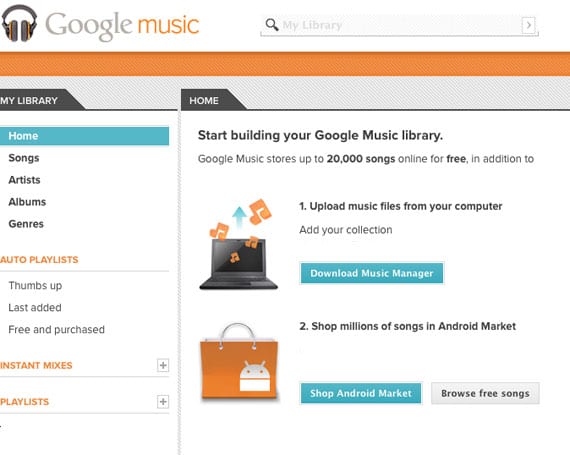
After much speculation, Google Music is live and open for business at https://music.google.com. The offering launched yesterday, enticing users with a catalog of 13 million songs comprising tracks from all the major labels except Warner Music Group. There is also free music file storage of up to 20,000 tracks, which can then be streamed on multiple devices.

The Android Market offers songs for about 99 cents – $1.29 each, and albums for about $10, prices comparable to iTunes. There are also hundreds of tracks available for free download.

Google Music debuts with a few advantages over other music services. Users of the company’s social networking component Google+ can share the songs they purchase with friends who can listen to them in full, as opposed to the 30-second snippets offered by iTunes.

The Google Music Artist Hub lets artists build landing pages, upload, stream, and sell music directly fans. There is a one-time set up fee of $25. The act sets their own price and receives 70% of each sale.

One of the biggest advantages in Google’s favor is the prevalence of its Android phones. Google Music integrates with Android, which has about 53% of the smartphone market, according to Gartner. Apple’s iPhone has just 15%. T-Mobile customers with Android phones can buy music and will be charged on their monthly cellphone bills.

Round-Up: Katy Perry Gives Fans Ultimate Thank-You

• Katy Perry is performing a free thank-you concert to fans on Nov. 23, the day before Thanksgiving. The pop hitmaker is renting out the L.A. Staples Center for the event on the night following her sold-out show there. Fans registered to win one of the 20,000 tickets on her Facebook page.


Erica Farber, best known as longtime publisher/CEO of R&R, is taking a new gig as EVP for the Radio Advertising Bureau starting in January. She was most recently CEO of consulting service The Farber Connection. Once she’s in the chair at the RAB, she can be reached at efarber@rab.com

.

30-second spots on the 2012 Oscars telecast cost about $1.6 – $1.7 million, reports Ad Age. This is basically flat from last year’s ad cost for the show on ABC, which is also home to the CMA Awards. About 37.9 million viewers tuned in to the 2011 Academy Awards, down from 41.7 million in 2010.


Apple Launches iTunes Match

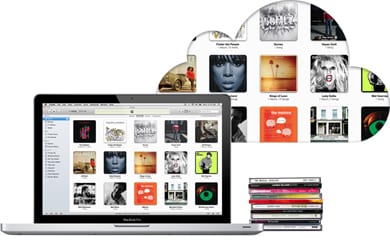
Apple unveiled its anticipated iTunes Match service yesterday (Nov. 14), a move that aims to make the company the undisputed leader in the cloud music battle.

For an annual fee of $24.99, iTunes Match will scan a user’s library and reserve a 256 kbps DRM-free AAC music file through its new iCloud service for any corresponding titles. These files will be playable/downloadable to any iTunes and web-enabled device, such as the iPad, Touch, iPhone, Apple TV and more. This applies not only to songs originally purchased through iTunes but to songs ripped from CDs or acquired by other means. Any songs not matched through iTunes can also be manually uploaded to iCloud.

The reveal of iTunes Match takes place just as Google is preparing to launch its Google Music service, which may be debuting without the approval of all the majors. Amazon has also been heavily pushing its new Kindle Fire for the holiday season, a tablet device that can play and/or purchase media from its large selection of products.

In short, the iTunes Match service is attempting to combine the future of access-based cloud music consumption with consumers’ history of file-sharing and hoarding. As more and more media-friendly devices hit the market, neatly managing libraries and files between them will be a growing concern.

NARM: Back Announcing Could Improve Music Discovery And Sales

NARM (National Association of Recording Merchandisers) recently unveiled new research on how consumers discover music completed by the NPD Group. This topic was last examined in 2007 and the current findings have “changed significantly,” due to the introduction, since that time, of social media, TV and other digital services as major influencers.

Top line findings show music discovery remains vital to the industry, but “applies differently to various consumer groups.” Interestingly, “80% of all respondents were interested in learning about new music from artists they were already fans of, and 60% were interested in learning about unfamiliar artists in genres that they usually buy.”

The most common means of music discovery is via am/fm radio plus family, friends and co-workers. For active music fans, online radio and web videos were also important. The report notes that TV (competitions, awards, online video outlets, scripted series) were extremely influential overall. Not unexpectedly, the importance of retail has lessened since 2007 when the previous study was completed.

“We have identified several areas where we believe we can move the needle and convert that discovery to a retail experience of some kind,” said Jim Donio, President of NARM. “For example, people hear music they like, but because of lack of identification, they don’t learn the artist’s name or the song title, so they cannot seek out that track again – more promotion of song recognition apps and stressing the importance of back announcing could go a long way to improve that situation.”

This is not the first study to urge radio to adopt more back announcing (the naming of a previous song) to increase music sales. The CMA segmentation studies in 2009 and 2010 also reached that conclusion. However, radio still does not seem to have incorporated back announcing on any wide scale.

The study also segmented consumers into five groups; “Committed,” “Convert,” “Comfortable,” “Casual,” and “Content,” plus examines various discovery tools.

[Press Release Excerpt] “Committed” consumers are the youngest group, with a mean age of 32 (20 percent are age 13 to 17; 42 percent are 18 to 35).  They represent 10 percent of all consumers who listened to or purchased music within the prior three months. “Committed” consumers also account for 46 percent of per-capita spending on music, and they are the most engaged consumers in the report. While they use a variety of discovery sources – including radio, video, streaming, and movies – they also value ownership, and they are the most open to discovering new artists. They find their current means to discover new music is good, but still wonder if they are missing something.

“Converts,” who make up 30 percent of musically active consumers and account for 34 percent of per-capita spending, are the second youngest group, with a mean age of 34 (13 percent teens; 23 percent are 18 to 25 years old). They also listen to music in a variety of ways and are more likely than the average consumer to purchase CDs or digital downloads. They are generally satisfied with their means of music discovery, but they would still consider other options.

Those in the “Comfortable” group make up 30 percent of musically active consumers and account for 15 percent of per-capita spending on music. With a mean age of 50, they are considered the mainstream segment. These individuals mostly listen to music on CD or on AM/FM radio, and they prefer to discover new music from familiar artists. They also rely primarily on television and radio to find new music, and they feel those methods are adequate for their needs; they are not interested in new ways to discover music.

“Casual” listeners, who make up 14 percent of musically active listeners and account for 3 percent of per-capita music spending, have a mean age of 43. They are also lighter listeners than average, they rarely buy music, and they have low interest in digital sources and discovery.

The “Content” group, which make up 11 percent of musically active consumers and account for 2 percent of per-capita music spending, have a mean age of 55. They are the lightest buyers and listeners, and while they periodically buy CDs, they do not find current music engaging.


Consumers cited TV as the second most influential tool for music discovery, trumped by am/fm radio, which was most important. According to the study, “most of those who cited radio also reported they would wait to hear a new song again, rather than purchase the track. This finding suggests a need for more back announcing, since three out of four of those who said they would wait also said they would shop more if there were more announcements revealing artist names and track titles.”

“As technology and music distribution has evolved, it’s fascinating how diverse the music fan base has adapted since the last time we conducted this study,” said Russ Crupnick, Sr. VP of The NPD Group. “On one hand you have fans who can’t find enough ways to learn about new music, whether it’s at retail, through apps and social networks, or on radio and TV. On the other hand there is still a large core group who learns by listening to AM/FM radio and on family shopping trips. Regardless of the type of music fan, there are actions the industry can take to improve the discovery process, and help drive revenue.”

The study was conducted by NPD Group in August 2011 and based upon 3,771 completed online surveys. The full research deck is available to NARM members only.

Consumers Finding Extra TV Content Online

NPD Group’s Entertainment Trends in America research report finds that “many consumers are supplementing their pay television offerings from cable TV, satellite TV and IPTV operators.” In short, the study finds that subscribers are searching for additional programing and steaming movies from both paid (Netflix) and free sites (Hulu, YouTube).

Results also show that 27% of all U.S. television subscribers (cable, satellite or IPTV)  subscribe to Netflix and almost half (46%) also pay for a premium movie or sports channel.

“Even though many consumers are paying for more content from their TV-service providers in the form of premium channels and video-on-demand, there’s still quite a lot of alternative video downloading and streaming activity going on,” said Russ Crupnick, senior VP and entertainment analyst for The NPD Group. “There may also be too much emphasis on so-called ‘cord cutters’ who represent a small group, as opposed to potential ‘cord throttlers,’ who are a massive segment of the subscribing population.”

Three out of four (73 percent) consumers who used Netflix, streamed video for free, or who paid for Internet-video downloads and rentals also have a cable, satellite, or IPTV subscription. “With all the various methods consumers now have to download video, TV-service providers would be in a better competitive position if they could expand their content offerings and improve on-screen search functionality,” Crupnick suggested.

The Entertainment Trends in America report is based on 10,058 completed surveys from qualified respondents (age 13 and older) conducted in July and August 2011. Final survey data was weighted to represent U.S. population.

Nashville For Sale: Albums, Labels and Publishers


Usually when reporting the weekly Nielsen SoundScan results we deal in facts, data, calculations and tabulations. However, this week the verifiable facts are only a small fraction of the equation. “What ifs” are flooding the horizon like a tsunami of change headed for the music industry overall and therefore Nashville…. But first let’s look at what we know: the Wednesday morning facts.

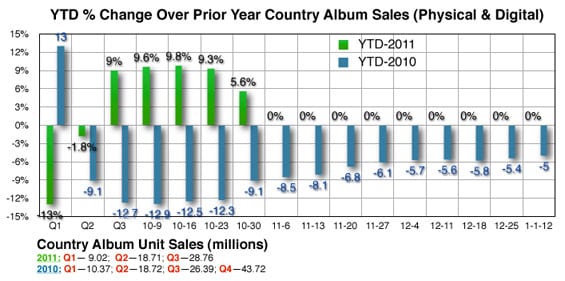
According to the numbers, and as shown on the above chart, YTD country music album sales continue to lose ground dropping from last week’s 5.6% ahead to 4.2% this week. Country is starting to come into parity with the industry overall which is ahead 3.4%. Readers of this column likely know why and expected to see this downward drop because last year at this time Taylor Swift released Speak Now which sold over one million units and there is nothing on this year’s list to challenge that, so far. Miranda Lambert’s creative tour de force Four The Record debuted this week with slightly over 133k units, more than double her last outing, but a far cry from offsetting our growing units deficit. Overall country album sales for the week were about 855k.

As we prepare for tonight’s CMA Awards and on the heels of celebrating the songs and songwriters responsible for driving the sales of our industry at SESAC, ASCAP and BMI over the past three evenings, news continues to surface that could/would reshape the country music landscape and conceivably have far reaching effects…

According to Bloomberg.com’s Andy Fixmer (11/8), Sony is actively negotiating to purchase Big Machine Records, founded by Scott Borchetta in 2005 and home to Taylor Swift. Valuations discussed in the article place the label group at around $200 million.

According to the article, “Negotiations are at an early stage and an agreement may not be completed. Universal Music Group also may enter the bidding, one of the people said. Borchetta, with a roster of the biggest country acts, would run Sony’s Nashville, Tennessee- based operation as part of the sale, the people said.”

The New York Times reported (11/7) on new Sony leader and 72-year-old industry vet, Doug Morris. In its article it notes that Morris in aggressively trying to dominate the industry. “My plan here is very simple,” Morris says. “To help create the pre-eminent record company in the world.” Last week Morris signed producer Dr. Luke to Sony and created a new record label Luke will run, Kemosabe Records. (Luke will no longer be able to work with EMI’s Katy Perry under the new deal.) The article also states, “Late last year, Mr. Morris stunned the industry when it emerged that he would take over Universal’s biggest competitor, going head-to-head against his former protégé, Lucian Grainge, Universal’s new chairman. The two are expected to bid aggressively for artists and for Cash Money and Big Machine, two independent labels whose distribution deals with Universal are expiring soon.”

Meanwhile EMI Records and EMI Music Publishing remain in play. Unconfirmed reports place the publishing company moving to Sony ATV as the result of a late night, last night deal. Sony ATV’s Marty Bandier reportedly was scheduled to be at the BMI awards where his company was named Publisher of the Year, but cancelled his trip at the last minute to firm the deal.

Analysis: Speculation does not create a good basis for informed analysis. However, the EMI publishing offering has been quite public, and seems destined to happen soon, even if the buyer remains unconfirmed. The consolidation of two top dog publishers is certain to realign the creative community in Music City. On the label side, the impending absorption of EMI Records and possibly Big Machine is also sure to involve a game of musical chairs.

Despite a cheery upbeat article in the Tennessean last Sunday stating that country music sales are ahead and quite healthy, insiders know that is is not the case. “Flat” is the very best one could say at this time, and if you get label heads together, off the record, they will get quite a bit less enthusiastic. While the SoundScan numbers appear flat, one must remember that album prices have fallen, margins have shrunk and costs of doing business continue to rise. Squeeze

However, despite the possible impending changes, if the previous three nights in Nashville have shown us anything, it’s that our town’s creative voices are strong and vibrant. Writers, artists and producers continue to make meaningful emotion-packed music. As long as that force remains intact, Nashville’s future will be just fine.

Sales Report: Blame It On Taylor And Sugarland

Whooooa! Are you feeling dizzy from the slide this week? 

As a quick look at our graph shows, country YTD sales tumbled from 9.3% ahead last week to a more modest 5.6% now. Why?

It’s all Taylor Swift’s fault. And Sugarland.  🙂

If Taylor hadn’t sold over a million albums during the same week last year, and Sugarland almost 90k (debuted the week before) then country sales wouldn’t have had a such a high bar to be measured against today. (Although, last year we all cheered because Taylor’s incredible debut was such a country sales game changer.)

So here’s how it all came down. This week we had Top 10 debuts from Toby Keith (No. 1; 69k), Vince Gill (No. 4; 21k+) and the Casey Donahew Band (No. 10; 11k+; 64% digital).

Shifting > 15k units was Scotty McCreery (No. 2; 42k), Lady Antebellum (No. 3; 31k), Jason Aldean (No. 5; 18k), Lauren Alaina (No. 6; 16k+) and Luke Bryan (No. 7; 15k+). Total country album sales for the week were, according to Nielsen SoundScan, about 742k. Last year’s total sales for the week ended 10/31/10 were 1.72 million!!!

It’s not that hard to figure out what just happened. More complex is trying to calculate what will happen between now and the end of the year. To end the year flat, we must sell 11.8 million additional albums over the remaining nine weeks. That equates to an average of 1.311 million albums per week. Powerhouse releases yet to arrive include Miranda Lambert next week, a Rascal Flatts Live edition and a Taylor Swift live edition. Added sales momentum will be felt from CMA and ACA Awards exposure, plus the holiday lift, but it’s going to be pretty hard to match that 1.3 million per week number. So I’m saying it now, in print, I predict country will end up flat or lower for 2011.

Tracking
The brief tracks story shows country downloading 120 million tracks YTD and about 2.16 million this past week. Congratulations to Toby the Keith who vanquished all other tracks on the country list this week, matching his No. 1 album performance. His track “Red Solo Cup” downloaded about 61k copies. The next two closest tracks were Blake Shelton’s “God Gave Me You” (46k) and Luke Bryan’s “I Don’t Want This Night To End” (41k).

Check back next week, same channel, same station…

Tuesday Tips: Hunter Hayes, Jimmy Wayne and Thompson Entertainment

Hunter Hayes has joined the Milk Rocks! campaign and will be featured on over 25 million milk containers in schools across the U.S. until Dec. 9. The Milk Rocks! Program promotes healthy lifestyles and nutrition with milk as the focus. They utilize milk carton side panels, lunchroom posters, and online initiatives to communicate their messages. Students can log on to www.milkrocks.com for a chance to win a “Day in the Studio” with Hunter. Hunter, is currently on his first headlining tour, “Most Wanted” Fall Tour 2011 and recently kicked-off the release of his self-titled Atlantic Records debut album.

>>Artist Jimmy Wayne will release Paper Angels on Nov. 1. The work of fiction is the artist’s first book and was written with author Travis Thrasher. “When my sister and I were kids, we were represented by two of those little paper angels hanging on the Salvation Army Christmas tree,” Jimmy said. “Our family was going through a really tough time, and had it not been for the Salvation Army and the people who selected our paper angels, we wouldn’t have had a Christmas. I have never forgotten that and to this day I am still grateful for the generous hearts who take care of these kids at Christmas.” Paper Angels is released on Howard Books an imprint of Simon & Schuster.

>>Nashville based Thompson Entertainment Group has moved to new offices located at 924 Deervale Drive Nashville, TN 37217. All email addresses and telephone numbers remain the same. Publicity Assistant Megan Burns can be reached at media@thompsonentertainmentgroup.com. President Chuck Thompson can be contacted at cthompson@thompsonentertainmentgroup.com