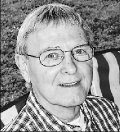
Lifenotes: Musician and Audio Innovator Bill West Passes

Bill West

Bill West


Steel guitarist, songwriter and audio innovator Bill West died on Thursday, Sept. 19, at age 80.
Born William Morris West Jr., he was raised in Nashville. After graduating from Hume-Fogg High School, he enrolled at Tennessee Tech in Cookeville to pursue an electrical engineering degree. By then, he was already proficient on pedal steel guitar.
While in Cookeville, he met aspiring country singer-songwriter Dorothy Marie Marsh. They married in 1952, and he worked in her band throughout the 1950s and 1960s.
As Dottie West (1932-1991), she became a big hit singer and a Grand Ole Opry star. She and Bill co-wrote her Grammy Award winning “Here Comes My Baby” (1964). The Wests also co-wrote her hits “Would You Hold It Against Me” (1966), “Mommy, Can I Still Call Him Daddy” (1966) and “What’s Come Over My Baby” (1967), as well as the 1963 Jim Reeves hit “Is This Me.”
Always an experimenter who could reportedly build and fix just about anything, Bill West developed a “talkbox” device. It sent processed vocal sounds through an electric-guitar amplifier. The effect was first heard on fellow steel guitarist Pete Drake’s 1964 hit “Forever.”
Rock artist Joe Walsh was a friend of the Wests. Bill West gave Walsh a prototype of the talkbox and Walsh used it on such hits as 1976’s “Rocky Mountain High.” He later also used it on some songs when he was a member of The Eagles, notably on “Those Shoes” on the million-selling 1979 LP The Long One.
A similar effect can be heard on several hits by Peter Frampton, including 1976’s “Show Me the Way.”
Several of the Wests’ children entered the music business. Daughter Shelly West became a country hit maker of the 1980s and a CMA Award winner as the duet partner of David Frizzell.
Son Kerry West is an audio engineer, both in Music Row studios and at concerts. He tours with stars such as Ronnie Milsap, and has also produced a number of song demos that resulted in big hits.
Son Mo West (1953-2010) was a guitarist and songwriter in the American rock band Thunder. Produced by Kyle Lehning, the group recorded albums for Atlantic Records in the early 1980s.
Bill and Dottie West divorced in 1974. In the 1980s, he continued to perfect his steel guitar sounds. He also performed in the Opryland USA theme park’s long-running stage show “Country Music USA.” He has been retired for several years.
Bill West is survived by his wife Brenda McClure West, by sons Kerry, Dale and Walter, by daughter Shelly West Hood, by six grandchildren and by three great-grandchildren.
A celebration of his life will be at noon today (Monday, Sept. 23) at the chapel of Spring Hill Funeral Home. Internment will follow in Forest Lawn Memorial Gardens. The family will receive friends from 10 a.m. until the time of the service. Memorial contributions may be made to Alive Hospice.

LifeNotes: R&B Musician DeFord Bailey Jr. Passes

deford bailey jr1

DeFord Bailey Jr.


DeFord Bailey Jr. died last Sunday, Sept. 15, in his hometown of Nashville. He was 81 years old.
Bailey was a Nashville r&b music mainstay for decades. He was a regular on the nationally syndicated soul TV show Night Train in 1963-68. His backing band on the show included the guitarist who later became known as Jimi Hendrix. The latter’s guitar style was reportedly influenced by Bailey’s.
DeFord Bailey Jr.’s band also became popular in local nightspots such as The Jolly Roger in Printer’s Alley. He continued to perform regionally throughout the 1970s, 1980s and 1990s. He was a musician at the Opryland USA theme park for a time. DeFord Bailey Jr. was the son of early Grand Ole Opry star and Country Music Hall of Fame member DeFord Bailey (1899-1982). His father was known as “The Harmonica Wizard.” “Junior” was frequently called upon by the media to speak about his legendary father. Junior’s son Carlos Bailey is also a professional musician in Nashville.
DeFord Bailey Jr. is survived by sisters Dezoral and Christine, 10 children, 26 grandchildren and 29 great grandchildren.
Visitation with the family is this afternoon (Sept. 20) until 6 p.m. and on Saturday from 11 a.m. to noon at Terrell Broady Funeral Home, 3855 Clarksville Pike. The funeral will follow tomorrow’s visitation. It will be held at Greater Bethel A.M.E. Church, 1300 South Street. Interment will be in Greenwood Cemetery, which is also where his father is buried.

Singer-Songwriter Vikki Sallee Dillard Passes

vikki sallee-dillard

Vikki Sallee in vintage publicity photo. Courtesy hillbillyhollywood.com.


Nashville recording artist Vikki Sallee has died at age 72.
The singer-songwriter billed herself as the “Queen of Hillbilly Hollywood” and maintained the hillbillyhollywood website. She was the widow of Bluegrass Hall of Fame member Doug Dillard (1937-2012) of The Dillards.
Vikki Sallee began her singing career over KWHN radio in Ft. Smith, Ark. As a teen, she performed with Bob Luman and Wanda Jackson. Jackson became her mentor, and Sallee sang with the Rock ‘n’ Roll Hall of Fame member in Las Vegas venues such as The Golden Nugget and The Thunderbird.
She started her recording career on Reprise Records with such singles as “There Goes the Lucky One” and “Favorite Lies.” Moving to Dot Records, she put out “Jimmy Darling,” “Little Wishing Star” and “Wild Angel,” which became her most successful single.
Sallee moved to Nashville in 1969 and signed with Tree Publishing. Loretta Lynn recorded her song “Sometimes I Go Crazy” in 1980.
The songwriter formed her own publishing company and co-wrote her theme song, 1980’s “Hillbilly Hollywood.” It was recorded by Dr. Hook’s Ray Sawyer, among others. It also became the title tune to her final CD.
Vikki Sallee Dillard is survived by sister Bobbie Sallee Rivarde and daughters Kelley Snead and Kristi Ritson, as well as several nieces and nephews. Visitation will be on Saturday, Sept. 21, from 10 a.m. to noon at Harpeth Hills Funeral Home. A Life Celebration service will be held there at noon. Interment will be at Harpeth Hills Memory Garden.

Founder and Director Emeritus of Dolby Laboratories Dies at Age 80

ray dolby1Dr. Ray Dolby, American inventor of groundbreaking audio technologies, died Thursday, Sept. 12 at his home in San Francisco. He was 80.
Dolby founded Dolby Laboratories in 1965; his pioneering work in noise reduction and surround sound led to the development of numerous state-of-the-art technologies. Dolby Laboratories transformed the entertainment experience from cinema to living room to mobile entertainment. Among Dr. Dolby’s honors are the National Medal of Technology (1997), a Grammy from NARAS (1995), and medals from the Audio Engineering Society (Silver-1971 and Gold-1992) and the Institute of Electrical and Electronic Engineers Edison Medal (2010).
“Today we lost a friend, mentor and true visionary,” said Kevin Yeaman, President and CEO, Dolby Laboratories. “Ray Dolby founded the company based on a commitment to creating value through innovation and an impassioned belief that if you invested in people and gave them the tools for success they would create great things. Ray’s ideals will continue to be a source of inspiration and motivation for us all.”
Dr. Dolby was born in 1933 in Portland, Ore. He worked in audio and instrumentation projects at Ampex Corporation from 1949 to 1957. In 1957, he received a BS degree in electrical engineering from Stanford. After being awarded a Marshall Scholarship and a National Science Foundation graduate fellowship, he studied at Cambridge University in England. He received a PhD in physics from Cambridge in 1961 and was elected an Honorary Fellow years later in 1983. In 1963, he took a two-year appointment as a United Nations advisor in India, then returned to England in 1965 to found Dolby Laboratories. He was awarded the George C. Marshall Award in 2003; he was inducted into the National Inventors Hall of Fame in the U.S. and the Royal Academy of Engineers in the UK in 2004.
Dr. Dolby is survived by his wife, Dagmar, his sons, Tom and David, their spouses, Andrew and Natasha, and four grandchildren. A celebration of his life will be held at a later date.

Outlaw Movement's Tompall Glaser Dies at 79

Tompall Glaser 4-870011111

Tompall Glaser


Thomas Paul “Tompall” Glaser, a central figure in the Outlaw Movement of the ‘70’s, died yesterday (Aug. 13) at his Nashville home following a lengthy illness. He was 79. Glaser was featured on Wanted! The Outlaws, country’s first million-selling album, along with Willie Nelson and Waylon Jennings.
Born in Nebraska, Glaser and his brothers sang on local radio and appeared in 1957 on Arthur Godfrey’s network TV show. Two years later Marty Robbins brought them to Nashville to sing harmony for him and signed them to his Robbins Records label. They also toured with Johnny Cash and lent harmonies to legendary recordings like “Ring Of Fire” and Robbins’ “El Paso.” As Tompall & The Glaser Brothers, they recorded several singles produced by Cowboy Jack Clement and penned a major hit for Bobby Bare with the 1966 song “Streets Of Baltimore,” (which would later be covered by Charley Pride, the Statler Brothers, and many more.)
In 1970 the Glasers would be named the CMA’s Top Vocal Group and with monies earned from their publishing company opened their own studio on 19th Avenue where works like Waylon Jennings’ Dreaming My Dreams were recorded. After they disbanded in 1973, Glaser embarked on a solo career. That same year he and Jennings co-produced Jennings’ landmark Honky Tonk Heroes album. The two became compadres who shared a disdain of the establishment and a vision of musicians operating independently outside of the traditional Music Row system.
They later had a falling out over a publishing dispute, and Glaser went back to his brothers and began performing as a group again in 1980 for a brief period. Signing to Elektra Records, they recorded a cover of Kris Kristofferson’s “Lovin’ Her Was Easier (Than Anything I’ll Ever Do Again),” which landed at No. 2 on the charts. By 1982 they dissolved the group once again, and Glaser recorded one final solo project in 1986 before selling the studio and disappearing from the public eye.
A private memorial is being planned.
All photos by Alan Mayor.
[slide]

Jody Payne, Guitarist For Willie Nelson, Dies

Jody Payne. Photo: willienelson.com

Jody Payne. Photo: willienelson.com


Jody Payne, a guitarist who toured with Willie Nelson from 1973 until 2008, has died at age 77. Payne, a Kentucky native, passed away at 5:13 a.m. on Saturday (Aug. 10) from cardiac problems, according to the Associated Press.
It is estimated that during his time performing with Nelson as part of The Family Band, Payne performed between 3,500 and 7,000 concerts with the entertainer. He then retired to Stapleton, Ala., with his wife Vicki, where Payne taught guitar at Picker’s Paradise, a local music store.
A post on Nelson’s Facebook page regarding Payne’s death stated, “Our friend will be missed.”

Houston Music Exec Don Daily Dies at 81

Don Daily, a founding partner of Cactus Records and member of Houston’s prominent Daily family, passed away July 31. He was 81 and died peacefully in spite of a long struggle with Parkinson’s disease, according to the Houstonpress.com.
In the mid-’70s, Don was credited as producer on three singles by George Strait for D Records, the label owned by Don’s father, H.W. “Pappy” Daily. Twenty years later, the singles were re-released on the 1996 set Strait Out of the Box.

don-daily0806

Don Daily. Photo courtesy of Glad Music Co.


Daily’s father built a company that eventually included nearly every aspect of the music business in Southeast Texas: retail, management, record labels, publishing, distribution and even performance – family member Mike Daily is an original member of Strait’s Ace In the Hole Band.
Daily Sr.’s label Starday Records had a string of hits including George Jones‘ “White Lightnin” and the Big Bopper‘s “Chantilly Lace.” Don and his brother Bud later opened Cactus Records in 1975.
Current Cactus Music partner and general manager Quinn Bishop describes Daily as “proud, but very unassuming about the Dailys’ contribution to [Houston’s] musical heritage.
“Don kept a hardback book on his desk that was embossed with “Everything I Know About the Music Business” with his name listed as the author,” he adds. “There was nothing written on the pages. He would always crack a smile when someone would pick it up and flip through the pages, not sure what to make of it.”
Daily was a widower who had been married to his late wife Helen for 35 years. He is survived by five children, several grandchildren and numerous other relatives. His memorial service was held Wednesday (Aug. 7) in Houston.

Cowboy Jack Clement Dies at 82

“Cowboy” Jack Clement at the 2013 CMA ceremony for the Country Music Hall of Fame’s 2013 inductees, Wednesday, April 10 in Downtown Nashville. Photo: John Russell/CMA

“Cowboy” Jack Clement at the 2013 CMA ceremony for the Country Music Hall of Fame’s 2013 inductees, Wednesday, April 10 in Downtown Nashville. Photo: John Russell/CMA


Cowboy Jack Clement died Thursday morning (Aug. 8) at his home in Nashville after a long battle with liver cancer. He was 82. Clement is slated to be officially inducted into the Country Music Hall of Fame later this year.
Jack Henderson Clement was born April 5, 1931, in the Whitehaven suburb of Memphis, Tenn.
After spending four years in the Marine Corps, Clement toured with a bluegrass band before temporarily living in Memphis. It was there that Sun Records founder Sam Phillips hired Clement as a staff producer-engineer.
In 1953, Clement made his first record. He studied at Memphis State University, where he earned his lifelong nickname “Cowboy.” He built his first recording studio in 1956, and has worked with Jerry Lee Lewis, Roy Orbison and numerous others. Clement wrote “Ballad of a Teenage Queen” and produced Johnny Cash‘s iconic “Ring of Fire.”
Clement moved to Nashville in 1960, working as a songwriter and producer for Chet Atkins at RCA. Clement later relocated to Beaumont, Texas, where he opened Gulf Coast Recording Studios with producer Bill Hall.
It was Clement who persuaded George Jones to record Dickey Lee‘s “She Thinks I Still Care,” along with the Clement-penned “Just Someone I Used To Know.” In the 1970s, he opened the JMI label, which became home to singer-songwriter Don Williams. Clement also opened Jack Clement Recording Studios, the first 16-track studio in Nashville and has written songs for Bobby Bare, Jones, Elvis Presley, Hank Snow, Porter Wagoner and Dolly Parton. Clement also produced Waylon JenningsDreaming My Dreams and hosted recording sessions for Merle Haggard and Ray Stevens, among others.
Clement has also produced for Townes Van Zant, Hank Williams, Jr. and U2. Clement’s career success was highlighted earlier this year in a ceremony at Nashville’s WAR Memorial.
“I’ve been walking around for the last hour thanking God for the privilege of knowing Cowboy Jack Clement,” says Marty Stuart. “He was one of my dearest friends. To know the Cowboy was to know one of the most original people to ever walk the Earth. I love him and I will miss him. Connie and I send our love to all the Clement family.”

Photos by Alan Mayor.
[slide]

Radio Promotions Veteran Chuck Thagard Passes

chuck thagard1

Chuck Thagard


Veteran radio promoter Chuck Thagard died this morning (July 31) at his home near Atlanta after an extended battle with multiple illnesses. Most recently, Thagard worked in music promotion at Quarterback Records.
Thagard was a part of the startup of BNA Records in 1991, starting as the Northeast Regional. In 1993, he was promoted to VP of Promotion, where he helped launch the career of Kenny Chesney, and oversaw radio careers of artists including John Anderson, Lonestar and Lorrie Morgan.
In 1999, Thagard joined Warner Nashville as Northeast Regional, working with Faith Hill, Trick Pony, and Blake Shelton among others. He joined Quarterback Records in April 2004.
A family-only private service is being planned in remembrance of Thagard.

Influential Stylist J.J. Cale Passes

J.J. Cale, photo by Jane Richey

J.J. Cale, photo by Jane Richey


Singer-songwriter J.J. Cale died Friday, July 26, at age 74. Cale achieved his greatest successes while living and working in Nashville during the 1970s. Among his best-known songs are “After Midnight,” “Call Me the Breeze,” “Clyde,” “The Sensitive Kind,” “Crazy Mama” and “Cocaine.”
He was born John Weldon Cale in Oklahoma City and came of age in Tulsa alongside such future music greats as David Gates (Bread) and Leon Russell. In 1959, he came to Nashville to work as a guitarist backing a troupe of Grand Ole Opry stars on tour.
After stints in Los Angeles and back home in Tulsa, he returned to Music City in 1970. Cale teamed up with Nashville producer and song publisher Audie Ashworth (1936-2000). They created his landmark 1971 LP Naturally for Russell’s Shelter Records label. It contained Cale’s versions of “Call Me the Breeze,” “Clyde,” “After Midnight” and “Crazy Mama.”
In 1972, the last-named became J.J. Cale’s biggest hit as an artist. “Crazy Mama” has since been recorded by such stars as Johnny Rivers, The Band and Nashville’s Mac Gayden and Billy Ray Cyrus.
Cale crafted his next seven albums in Nashville, including 1972’s Really, 1974’s Okie, 1976’s Troubadour (which included “Cocaine”) and 1983’s #8. These records established his reputation as a highly influential, genre-defying artist. Cale’s laid-back, groove-soaked music reflected such diverse styles as blues, country, rock, folk and jazz.
In 1975, he and Ashworth built a Nashville recording studio. While living on Old Hickory Lake north of The Hermitage in 1978, Cale also built a home studio. All eight of Cale’s career-building collections were produced with Ashworth.
Despite being a prolific record maker during those early years, J.J. Cale was never interested in being a “star.” He was more than content to have others popularize the songs he introduced on his albums.
“After Midnight” became a big pop hit for Eric Clapton in 1970 and has since been recorded by everyone from Chet Atkins to Jerry Garcia. Clapton also had a hit with Cale’s “Cocaine,” in 1980.
“Call Me the Breeze” became an enormously popular song in Lynyrd Skynyrd’s repertoire in 1974. It has also been recorded by Bobby Bare, David Allan Coe, Johnny Cash, The Mavericks, Larry Cordle and James Otto, among others.
“Clyde” became a top-10 country hit for Waylon Jennings in 1980. “The Sensitive Kind” failed as a J.J. Cale single, but Santana took it up the pop charts in 1981.
The singer-songwriter left Music City in 1980, but his successes with the community’s musicians continued for years afterward. Nashville-based jazz guitarist Larry Carlton, for instance, revived “Crazy Mama” in 1991.
Cale’s “Any Way the Wind Blows” was a country single for Brother Phelps in 1995. The songwriter’s “If You’re Ever in Oklahoma” has been recorded by several bluegrass groups, including The Front Porch String Band (1992), Bluegrass Alliance (2001) and Yonder Mountain String Band (2001).
The rock band Widespread Panic has recorded other J.J. Cale songs, as has Clapton. Cale and Clapton retained their relationship and won a blues Grammy Award for their 2006 album The Road to Escondido. Cale also maintained a musical relationship with Nashville’s Leon Russell for many years.
In 1981-2013, J.J. Cale lived and recorded six more albums in southern California for such labels as BMG/Silvertone, Virgin, Blue Note and Rounder. He was the star of the 2006 film documentary To Tulsa and Back.
His Music City works were reissued on such collections as 1997’s Any Way the Wind Blows and 2007’s Rewind. He was nominated for the Nashville Songwriters Hall of Fame in 2011.
Among the dozens of artists who have recorded Cale’s songs are Maria Muldaur, Bobby Bland, Poco, Jose Feliciano, Redbone, Bryan Ferry, Kansas, Herbie Mann, Dr. Hook, Jimmy Hall, Nazareth, John Mayall, George Thorogood and Clarence “Gatemouth” Brown.
J.J. Cale died of a heart attack in La Jolla, CA.