

My Music Row Story: The Listening Room’s Chris Blair
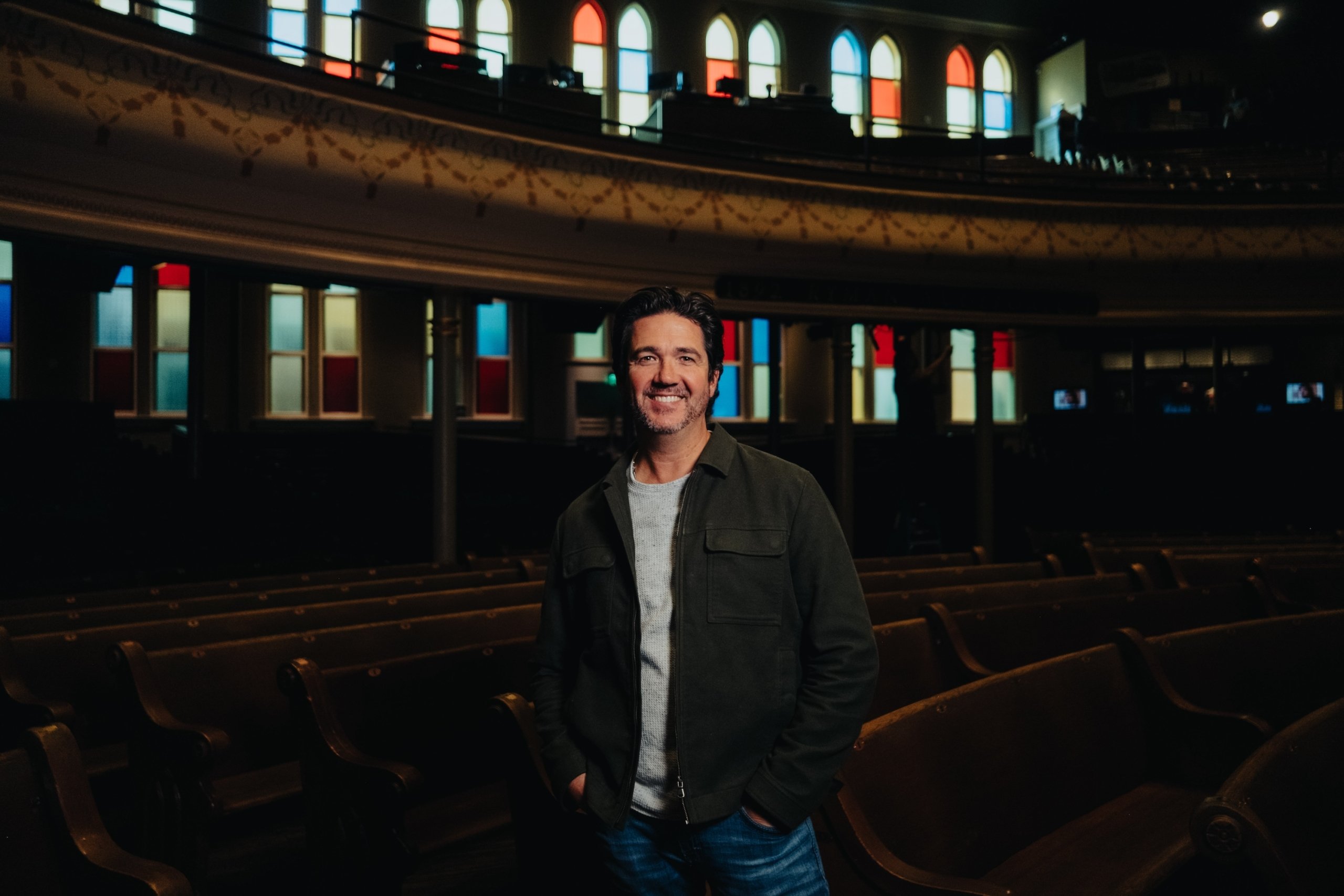
Chris Blair. Photo: Hunter Hart
Chris Blair is the Founder and visionary of The Listening Room Cafe, one of Nashville’s premier venues for hit songwriters. Raised in St. Louis, Blair balanced his time working in restaurants with a deep passion for music. After moving to Nashville in 2003 to pursue his own artist career, he saw an opportunity to combine the city’s renowned songwriter scene with top-notch sound, food and service. In 2006, The Listening Room was created where guests can experience the stories behind the songs in an intimate setting.
Beyond music, Blair serves on the boards of the Entrepreneur Organization, Operation Song and the MS Society and supports the community through TLR’s Sound Good, Do Good program, which donates 100% of ticket sales from special shows to local nonprofits. In his free time, Blair enjoys flying planes, writing music and spending time with his wife and three children.

Photo: Courtesy of The Listening Room
MusicRow: Where did you grow up? What was your childhood like?
I grew up in the St. Louis area. I was always outside, other than Saturday morning cartoons. I watched The Karate Kid and decided that I was going to start Karate Club. We’d go to junkyards and look for snakes. Just anything I could do outside.
What was your dream as a kid?
I wanted to be a big singer, and I wanted to be an attorney, which I know is crazy. I knew I wanted to do music, but in my parents’ minds, I should be a lawyer. I started playing music professionally at six years old. I became part of a group that would travel around and get paid to sing at nursing homes and wherever.
How did you get involved in that?
Debbie Fisher, my choir director, started doing this thing outside of school called MidAmerica Children’s Choir. It was eighth grade and up, but I became the first-grade soloist to sing with the eighth-grade choir. I was with her for years and years.
I stayed with that group through high school and even switched schools. Then I went to college on a full-ride scholarship for trumpet and vocals.
What was college like?
I lost my scholarship a couple of weeks in because I still, to this day, can’t read music. I play by ear. My director pulled me in and set a piece of music in front of me and said, “Hey, play this.” I was like, “That’s not how I do it.”
I was still interested in music, though. That’s really when I knew I wanted to be an artist. I put a band together and made an album. We started playing on trailers in the middle of cow fields. That’s how it really started.

Photo: Courtesy of The Listening Room
Tell me about coming to Nashville.
The first album that I released had three songs that went to radio. All three of them started to get some traction, so I began getting phone calls.
My grandparents grew up in Kennett, Missouri, and my grandma taught Sheryl Crow. There was a connection with that family. I would jam in the back of Wilcox’s Furniture store every time we’d go to Kennett with Wendell, Sheryl’s dad. There was Trent Tomlinson, David Nail, Sarah Buxton and all these people coming out of Kennett.
Doug Howard is also from Kennett, and my grandma is friends with Doug’s mom. When all of this attention was starting to happen, Doug called me and said, “I heard some of your stuff. There’s a connection. I’d love to meet with you. Can you be in my office Tuesday at two o’clock?” My mom took me shopping for something nice to wear, which feels ridiculous now, and I drove back to Nashville to meet with Doug.
After our meeting, he told me that day, “Hey, you’ve got something special. I want to work with you at Lyric Street, but you have to be in town.” I was working as a financial advisor in St. Louis. My brother had just bought a house with his wife a mile away from where I had a house. But I drove home, went to work the next day and quit. I called a realtor and put my house up for sale, got a U-Haul and started packing stuff up. Two weeks later, I was driving to Nashville and slept in the truck. I didn’t have a place to go, but I got here.

Photo: Courtesy of The Listening Room
Tell me about your experience of Nashville then.
I found my way to Printer’s Alley. I was told to go to Fiddle and Steel if I wanted to get to know people in the music industry. I went to Lonnie’s to do karaoke one night, and Cassie Miller was bartending that night. I sang a couple of songs, and then she pulled me aside to see who I was. Fast forward, I established a friendship with her. She lived with her mom, and she let me sleep on their couch. Eventually, Cassie helped me find an apartment and helped move me in.
I didn’t really know what songwriting was when I moved to town, so it was about getting out and meeting people in those early days. Eventually, that led me to Tootsies, and then I started playing there every Sunday, Monday, Tuesday, Wednesday and Thursday from 6 to 10. Usually, on Thursday night, I would leave and go out on the road with my band. I would play my own shows on the weekends and then come back and do it all over again. I did that for a while and honestly started to get pretty burnt out.
At the same time, I started hanging out more in Midtown and meeting more writers. Doug was mentoring me and encouraging me to start writing with people. I would go see James Dean Hicks, Steven Williams and Dylan Dixon do a round every single Tuesday. We started writing, and they put their arms around me. That led me to start playing writers’ rounds at the Commodore and Douglas Corner. I was falling in love with writing songs and playing writers’ rounds, but I was still exhausted from all the other stuff. I was at a crossroads and realized that I’m not nearly as good as most people in this town when it comes to being an artist. I had fallen in love with the writing and thought, I don’t think I want to do the artist thing anymore.

Photo: Courtesy of The Listening Room
Tell me about your songwriting chapter.
Backtracking a little, I had gotten a job as a teller at a bank when I first got to town to help pay the bills. I kept getting promoted at the bank, and then Fifth Third came and hired me. Before I knew it, I was the assistant vice president of Fifth Third Bank, managing more assets than anybody in the state of Tennessee. And I hated it. It was not what I wanted to do. Also, when I was growing up, my dad owned four restaurants, so I had watched him grow businesses and had a love for that.
So I’m playing these writers’ rounds, and I would literally sit on stage and count how many people were in the room. Then I would look at what they were eating and do the math. I’d be like, “This place just made $15,000 during our round, and they’re paying us nothing.” It started to bother me, and it started to stir in me. I realized, “I think I can do this, not necessarily better, just different. And I want to do it bigger.”
And thus, the concept for The Listening Room is born.
I wanted to have food that was better than frozen bar food, and I wanted to have the best sound in town. I went and got a sponsorship from Bose. I wrote a business plan and figured out what I was going to do. I called my boss at the bank and gave them a 60-day notice, but they went ahead and let me go for security reasons with confidential information. I got a partner for the business and just jumped in.
Our first location was in Franklin. It was kind of chaos at first. I didn’t know how we were going to book all the shows. I was working with some friends who are now huge writers, like Trevor Rosen, Matt Jenkins, Josh Osborne, Ross Copperman and Phil Barton. I’d tell them to bring other writers to the rounds, and that’s how it started. We quickly realized that we needed to be closer to Music Row, so I moved it to Cummins Station in 2008. Then, in 2009, I bought my partner out and just went from there. We’ve been at our current spot for the last seven years.

Photo: Courtesy of The Listening Room
What are you most proud of when you reflect on the last 20 years of The Listening Room?
There’s so much. We have an incredible team. I’m the one who always gets the credit as the visionary, but they’re the ones who make the wheels go around. I’ve watched so many now-successful artists and songwriters struggle as new writers. To see them get publishing deals or record deals from shows they’ve played at The Listening Room is so special. The customers, especially the out-of-towners who make a point to come, are so cool. Friends I’ve gotten to know because they come to The Listening Room once a year from Australia, Singapore, Scotland. There are a lot of hard days. There are a lot of times when I’m really in the valley, but those moments are why I keep pushing through it.
Who have been your mentors along the way?
My dad is somebody I still bounce ideas off of and look up to. My grandpa owned his own business in real estate, and I learned a ton from him. There are so many songwriters I’ve learned from who never should have asked to write with me, and yet they invited me into the room.
What is a moment you’ve had that your little kid self would think is so cool?
I have a video of Chris Stapleton playing when we were on Second Avenue. My office was upstairs, and I had this little balcony that looked down on the stage. Chris starts to play this song, and then he stops. He points up at me and says, “This song is from my buddy Chris up there. This is his favorite song.” Then he starts singing, “What Are You Listening To?” It was only weeks later that his performance with Justin Timberlake just blew up. Those kinds of moments are really big for me.
To think about the fact that we’re going to celebrate 20 years with a show at the Ryman Auditorium is crazy. I can 100 percent promise you that I won’t be able to get through that night without tears.
- BREAKING: Country Music Hall Of Famer John Anderson Passes - October 21, 2026
- WMG Unifies Global Sync Operations Across Recorded Music & Publishing - October 21, 2026
- Warner Chappell Music Signs Elizabeth Nichols To Global Publishing Deal - October 20, 2026