

Parker McCollum Talks New Album: ‘This One, I’d Send To Steve Earle’ [Interview]
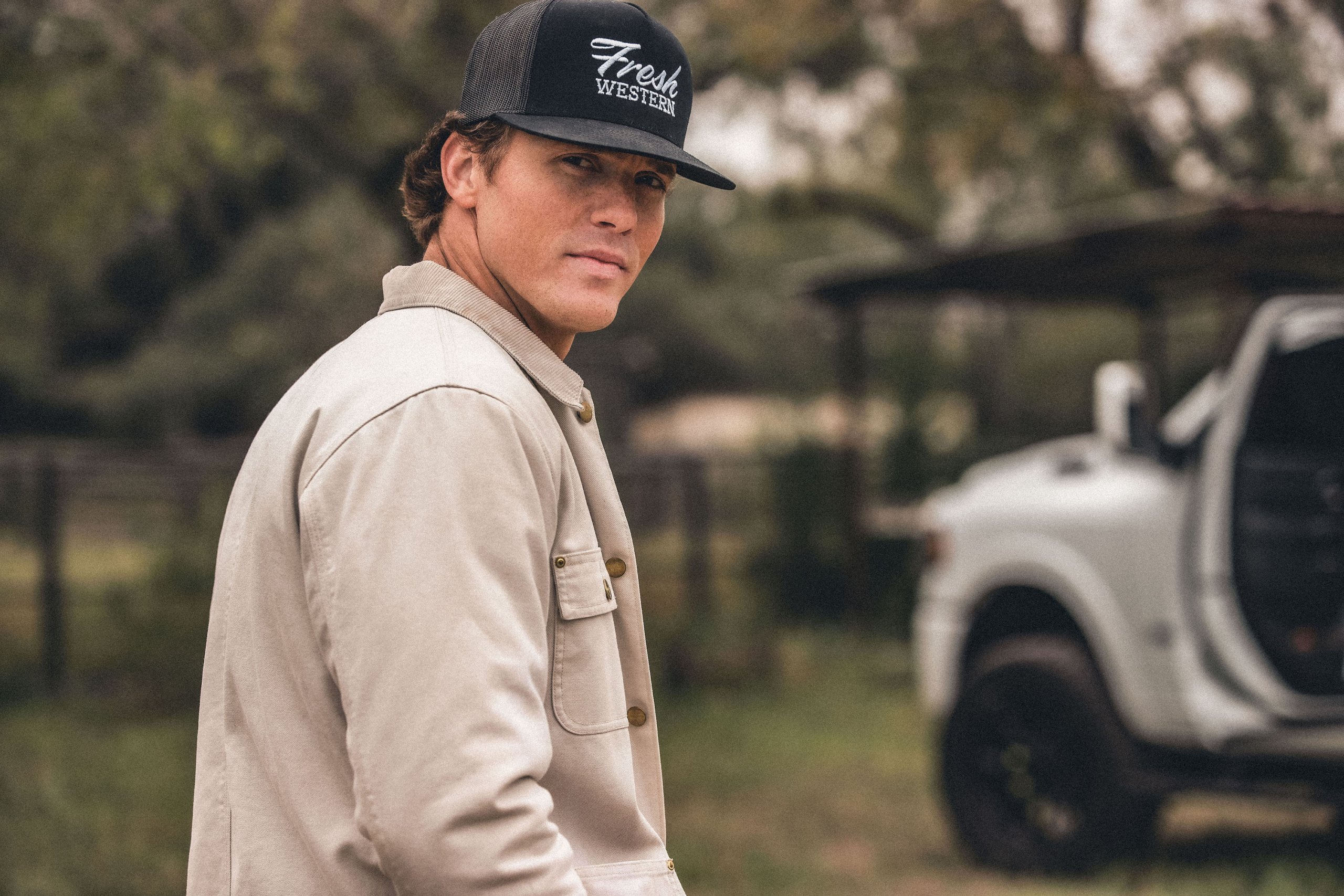
Parker McCollum
For all his Platinum hits, sold-out arena shows and back-to-back radio successes, Parker McCollum has never sounded more like himself than he does on his fifth studio album, appropriately self-titled and arriving tomorrow (June 27) via MCA Nashville.
Written and recorded in a season where he stopped chasing anyone else’s expectations, the project strips things down to something raw and immediate. It’s not a pivot or a reinvention—it’s a letting go.
“I’ve never made a record where I felt this confident,” McCollum tells MusicRow. “Not because I thought it would work. Because I finally quit trying to make it work.”
That shift didn’t happen by accident. McCollum booked a weeklong recording session at Power Station in New York City with producer Frank Liddell and engineer Eric Masse. It wasn’t just a change of scenery—it was a full mindset reset.

He booked a room at the Ritz-Carlton overlooking Central Park, walked around the city like he owned the place and let himself believe, just for a bit, that he was the rock star version of himself he used to dream about. “I told myself I was the shit for seven days,” he says. “I wore dope sunglasses, stayed in a badass hotel, dressed cool, walked into the studio and just did whatever I wanted to feel like John Mayer or Ryan Adams or Evan Felker. I just lied to myself for a week—and it worked.”
That kind of freedom wasn’t about arrogance. It was about unlocking something he couldn’t access while trying to measure up to the traditional image of a country artist.
“I respect country music so much, and I’ve always wanted to be someone that’s good for country music,” he says. “But I was trying to sound like what I thought a country singer was supposed to sound like—like what my heroes sounded like. The longer I’ve done it, I’ve realized… I don’t sound like any of them. I don’t write songs like a country singer.”
That clarity led to the most instinctive recording process of his career. McCollum tracked most of the record live, starting with a solo acoustic session where he ran through song after song with no agenda. Liddell and Masse hit record and followed the energy. “Permanent Headphones,” a song McCollum wrote when he was 15, resurfaced during that run and eventually made its way onto the album, despite his hesitation.
“I didn’t want people to think I was trying to go back to Limestone Kid. That wasn’t it,” he says of his beloved 2015 album. “But when I played that song for Frank and Eric, they kept saying, ‘That one. That’s the one.’ I said no for days. Then finally, I gave in. And I didn’t even listen to it until a few months later. When I did, I got emotional. It brought me back to being that kid again.”
That theme—of honoring where he came from without recreating it—threads quietly through the entire album. Songs like “My Blue,” “Hope That I’m Enough” and “What Kinda Man” carry the weight of experience while leaning into the looseness of his early days. “New York Is on Fire” came together on the second day of tracking after McCollum remarked that the skyline looked like it was burning as he flew in. He, Adam Wright and Nick Bockrath wrote it on the studio floor and cut it immediately.

“It happened the way I used to dream about,” McCollum says. “That cinematic, storybook feeling. Like I was in a movie. That’s how I thought making records would feel when I was a teenager.”
Other highlights include “Watch Me Bleed,” co-written with Lori McKenna and Mat Kearney, a dark and stirring moment that poured out once McKenna encouraged him to stop mapping out the song and just start singing. “She’s really good at getting me to open that part of myself I usually shut down,” McCollum says. “A lot of people need a structure to write. I don’t. And she knew how to lean into that.”
There’s also the cover of “Good Time Charlie’s Got the Blues,” a track McCollum asked Cody Johnson to join simply because he wanted to hear him sing it. “That was for me, honestly,” he says. “I’ve heard that song for years and always thought Cody would kill it. I cut it first, and when I asked him to take the second verse, he said yes right away.”
The album closes with “My Worst Enemy,” written with Wade Bowen, and includes an acoustic cover of “Enough Rope” by Chris Knight—another song McCollum never planned to include, but which Masse and Liddell pulled from that initial session because it felt too real to leave out.
Even with four No. 1s, major tours, industry awards and a rising profile in mainstream country, McCollum isn’t overly concerned with how the album fits into that arc. He’s always had creative control, he says—but this is the first time he fully stepped into it. Instead of deferring or second-guessing, he followed his instincts from start to finish.
When asked what makes this record different, McCollum doesn’t hesitate. The setting, the sound, the approach all mattered. But more than anything, it’s the kind of project he’s proud to put his name on. “This is the one I’d send to Steve Earle,” he says. “That’s what matters to me.”
McCollum knows it may not be the flashiest move in a career built on radio wins, but he also knows it’s the kind of project that lasts.
“It took me five studio albums to figure out how I want to run my career,” he says. “I spent every day in New York freaking out, thinking I’d ruined everything. But on the last day, we sat and listened to everything we’d cut—and I just thought, yeah. This is it.”
- BREAKING: Country Music Hall Of Famer John Anderson Passes - October 21, 2026
- WMG Unifies Global Sync Operations Across Recorded Music & Publishing - October 21, 2026
- Warner Chappell Music Signs Elizabeth Nichols To Global Publishing Deal - October 20, 2026