JUST IN: MusicRow Announces New Date For Annual Rising Women On The Row

UPDATED: The Sept. 23 Rising Women on the Row event has been postponed due to due to the Coronavirus pandemic. Click here to see more details regarding the new event date and tickets.


MusicRow has rescheduled its ninth annual Rising Women on the Row breakfast event to Wednesday, Sept. 23 at the Omni Nashville Hotel, beginning at 8:30 a.m. The event, originally scheduled to take place in March, was postponed due to the COVID-19 pandemic.

The event’s presenting sponsors are City National BankTri Star Sports & Entertainment Group, and Loeb & Loeb.

A special performance, sponsored by Radio Disney Country, will be confirmed at a later time. Likewise, CMT will make a special presentation at the event.

The ninth annual celebration will honor the 2020 Rising Women on the Row honorees: Jen Conger (FBMM, Business Manager), JoJamie Hahr (BBR Music Group/BMG, VP Marketing), Mandy Morrison (City National Bank, Vice President/Senior Relationship Manager), Missy Roberts (Universal Music Publishing Group, Senior Creative Director), Jennie Smythe (Girlilla Marketing, CEO) and Stephanie Wright (UMG Nashville, Senior VP, A&R).

Read more about the honorees here.

Past honorees include—2019: Janine Ebach, Kelly Janson, Meredith Jones, Lenore Kinder, Sandi Spika Borchetta, Jennifer Turnbow; 2018: Faithe Dillman, Leslie DiPiero, Becky Gardenhire, Lynn Oliver-Cline, Annie Ortmeier, Janet Weir; 2017: Tatum Allsep, Virginia Davis, Kerri Edwards, Kella Farris, Laura Hutfless, Juli Newton-Griffith; 2016: Abbey Adams, Amanda Cates, Cris Lacy, Leslie Roberts, Risha Rodgers; 2015: Kele Currier, Tiffany Dunn, Dawn Gates, Jensen Sussman, Lou Taylor; 2014: Julie Boos, Caryl Healey, Ebie McFarland, Alicia Pruitt, Kelly Rich; 2013: Cyndi Forman, Cindy Hunt, Beth Laird, Cindy Mabe, Brandi Simms; 2012: Shannan Hatch, Mary Hilliard Harrington, Heather McBee, Denise Stevens, Carla Wallace.

Tickets for the Rising Women event are closed at this time. 

Tickets will not be sold at the door. Current ticket holders can expect arrival details to come via email a week prior to the event.

For any questions regarding tickets and/or seating, contact LB Rogers at lbrogers@musicrow.com.

John Prine Hospitalized With Coronavirus Complications

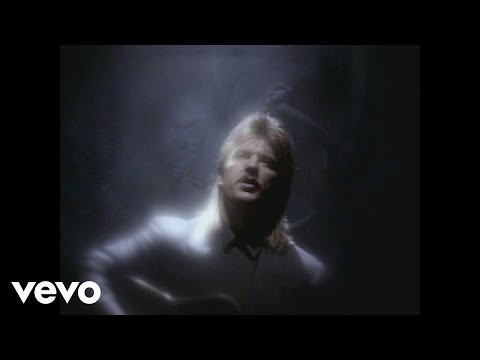
John Prine

[Update: March 30, 2020, 11:16 a.m. CT]: Prine’s wife and manager, Fiona Whelan Prine, revealed that she has now recovered from COVID-19, and that John Prine is now listed in stable condition.
[Original post, March 29, 2020]:

Songwriters Hall of Fame member John Prine, 73, has been hospitalized and is in critical condition due to the sudden onset of symptoms of the COVID-19 novel coronavirus.

According to a post on Prine’s official social media accounts on Sunday (March 29), Prine was hospitalized on Thursday (March 26) and has been intubated. His wife Fiona Whelan Prine revealed her own COVID-19 diagnosis earlier this month.

Prine’s songs, such as “Sam Stone” and “Angel From Montgomery,” have influenced numerous artists and songwriters across country, folk, rock and Americana spheres. David Allan Coe made the Prine co-write “You Never Even Called Me By My Name” into a hit in the mid-’70s. Bonnie Raitt and Joe Walsh are among those who recorded “Angel From Montgomery,” while Joan Baez recorded “Hello In There.” The Highwaymen recorded the Prine/Steve Goodman track “The Twentieth Century is Almost Over.” Tammy Wynette recorded the Prine/Bobby Braddock tune “Unwed Fathers,” releasing the track in 1983.

In addition to being a member of the Songwriters Hall of Fame, Prine is a four-time Grammy winner and has been nominated for membership into the Rock and Roll Hall of Fame. He has been nominated for two Country Music Association Awards (including in 1998 for penning George Strait’s “I Just Want To Dance With You,” and in 1992’s Vocal Event of the Year category as part of the group Buzzin’ Cousins—which also included John Mellencamp, Dwight Yoakam, Joe Ely,  and James McMurtry—for the film Falling from Grace).

Prine, who released his debut album in 1971, saw a career resurgence in recent years. In 2018, he was honored with BMI’s Troubadour Award. That same year, he released his first album in 13 years, titled The Tree of Forgiveness and recorded at Nashville’s RCA Studio A. The album brought the highest debut of Prine’s career, debuting at No. 5 on the Billboard Top 200.
The full post from Prine’s social media account is below:

BREAKING: Joe Diffie Dies At 61 From Coronavirus Complications


Multi-million selling Grand Ole Opry star Joe Diffie passed away on Sunday, March 29, following a brief illness. Diffie, 61, announced last Friday that he had tested positive for COVID-19, the coronavirus. He has now become the first music star to die from the disease.

One of the biggest country hit makers of the 1990s, Joe Diffie had more than 20 Top 10 hits. They include such No. 1 smashes as “Home,” “Third Rock from the Sun” and “Pickup Man.” He holds four Gold Record awards and two Platinum ones for his albums.

He co-wrote nine of his hits as well as successful songs for Jo Dee Messina, Holly Dunn, Tim McGraw and Conway Twitty. During his career, he won both Grammy and CMA awards.

Known as a “singer’s singer,” he received praise from such greats as Tammy Wynette, George Jones, Gene Watson, Vern Gosdin, Liza Minelli, Garth Brooks, George Strait and Buck Owens. Diffie celebrated his 25th anniversary as an Opry star last year with a show including Vince Gill, Michael Ray and Ricky Skaggs.

Born Dec. 28, 1958 in Duncan, OK, Diffie was raised in a musical household. He was singing in gospel groups such as Higher Purpose by the time he was in high school. He spent four years as a member of the bluegrass band The Special Edition and made his recording debut by recording an album with that group in 1985.

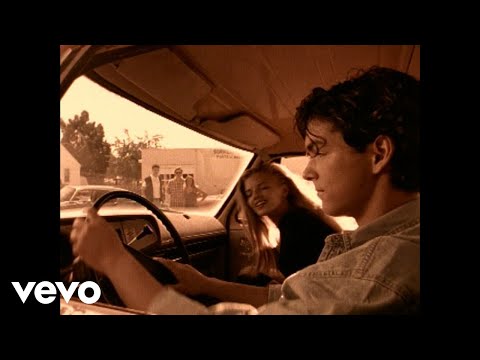
YouTube video

While working at an iron foundry in Oklahoma, Diffie also ran a small recording studio. When the foundry laid him off and he went through a divorce, there was no reason not to start over in Nashville. He arrived in 1986.

Diffie took a job at the Gibson Guitar factory, then landed a staff songwriting gig on Music Row. Hank Thompson recorded his “Love on the Rocks” in 1988. Holly Dunn scored a big 1989 hit with his “There Goes My Heart Again.”

He also attracted attention for his vocals on demos for other songwriters. Diffie sang the demos of such future hits as “I’ve Cried My Last Tear for You” (Ricky Van Shelton), “Born Country” (Alabama), “You Don’t Count the Cost” (Billy Dean) and “I Cross My Heart” (George Strait). This led to a recording contract with Epic Records in 1990.

Joe Diffie’s first single was “Home,” which was notable as a debut disc that hit No. 1. In 1991-92, he scored successive hits with “If You Want Me To,” “If the Devil Danced (In Empty Pockets),” “New Way (To Light Up an Old Flame),” “Is It Cold in Here,” and “Ships That Don’t Come In.” In 1992, he earned a Grammy nomination for “Not Too Much to Ask,” his duet with Mary Chapin Carpenter. He was also nominated as the CMA Male Vocalist that year.

Diffie won a CMA Award in 1993 for “I Don’t Need Your Rockin’ Chair,” recorded with George Jones and other guest vocalists. His songwriting continued to make waves as “I’m the Only Thing (I’ll Hold Against You)” and “Memory Lane” both became 1993 singles, for Conway Twitty and Tim McGraw, respectively. Also in 1993, Joe Diffie was inducted into the Opry cast and co-hosted the International Bluegrass Music Association’s award show (a gig he repeated in 1999).

YouTube video

Most of his early singles were ballads, at which his powerful honky-tonk tenor excelled. Beginning in 1993, a different Joe Diffie emerged on disc. He released a string of wildly successful uptempo novelty tunes. These included such hits as “Honky Tonk Attitude” (1993), “Prop Me Up Beside the Jukebox” (1993), “John Deere Green” (1994), “Third Rock from the Sun” (1994), “Pickup Man” (1994), “I’m in Love with a Capital U” (1995), “Bigger Than the Beatles” (1996) and “C-O-U-N-T-R-Y” (1996).

Following a second divorce, he began a long relationship with Liz Allison, the widow of NASCAR star Davey Allison. Diffie had sung at Davey’s funeral after the race-car driver died in a 1993 helicopter accident. The new romance led to coverage in People magazine and several tabloids in the mid 1990s.

In 1996, Ford Trucks selected “Pickup Man” as its jingle, which Diffie re-recorded for a national ad campaign.

The following year, Diffie was presented with the Country Radio Broadcasters Humanitarian Award for his work with Tennessee Special Olympics, Teach for America, Operation Smile, Parade of Pennies, the Children’s Organ Transplant Association and other charities. He did an annual concert and golf tournament to benefit First Steps because he was the father of a child with Down Syndrome.

Also in 1997, he made his acting debut opposite Johnny Cash in the TV movie All My Friends Are Cowboys. He closed out the year as the Grand Marshall of the Nashville Christmas Parade.

YouTube video

He re-entered the Top 10 on the country charts with 1998’s “Texas Size Heartache.” Then he earned a Grammy Award for his participation in the 1998 Marty Stuart all-star outing “Same Old Train.”

The hits “A Night to Remember” (1999), “The Quittin’ Kind” (1999), “It’s Always Somethin’” (2000) and “In Another World” (2001) took Diffie into the new century. He was inducted into the Oklahoma Music Hall of Fame in 2002.

Diffie signed with Broken Bow and hit the charts again with “Tougher Than Nails” in 2004. The following year, he returned to No. 1 as the co-writer of Jo Dee Messina’s smash “My Give a Damn’s Busted.”

Rounder Records picked him up in 2010 to distribute his CD Homecoming: The Bluegrass Album. The record’s supporting cast included The Grascals, Shawn Camp, Rhonda Vincent, Rob Ickes, Aubrey Haynie, Alecia Nugent, Bradley Walker, Harley Allen and Charlie Cushman. Later that year, Diffie published Homecoming: The Diffie Family Cookbook.

In recent years, Joe Diffie had returned to mainstream country recording. He teamed with Aaron Tippin and Sammy Kershaw on the 2013 CD All in the Same Boat.

YouTube video

Younger artists have begun to acknowledge his influence. Blake Shelton sings his “If the Devil Danced (In Empty Pockets).” Diffie is prominently name-checked in such hits as Jason Aldean’s “1994” (2012) and Chris Young’s “Raised on Country” (2019).

Joe Diffie is survived by his wife Tara and by children Parker, Kara, Drew, Tyler and Kylie. Funeral arrangements have not been announced.

BREAKING: Grand Ole Opry Member Jan Howard Dies at 91

Jan Howard. Photo: Joel Dennis.

Singer-songwriter Jan Howard, known as one of “The Grand Ladies of the Grand Ole Opry,” has passed away at age 91.

During her long career, Jan Howard was a recording star, a hit writer, a member of Johnny Cash’s troupe, Patsy Cline’s demo singer, Bill Anderson’s duet partner, Harlan Howard’s wife and business co-owner, Tammy Wynette’s confidant and Wynn Stewart’s disc collaborator, as well as a matriarch of the Opry cast.

Her big solo hits included “The One You Slip Around With” (1960), “Bad Seed” (1966) and the Grammy-nominated singles “Evil On Your Mind” (1966) and “My Son” (1968). While working on the West Coast, she recorded such 1958-60 duets as “Wrong Company,” “How the Other Half Lives” and “Yankee Go Home” with Wynn Stewart.

Her hit Anderson duets in Nashville included “For Loving You” (1967), “If It’s All the Same to You” (1969), “Someday We’ll Be Together” (1970) and “Dis-Satisfied” (1971). She was also a member of Bill Anderson’s road show and TV series cast for seven seasons.

In addition, Howard logged a number of years as an “honorary” member of Mother Maybelle & The Carter Sisters. In this capacity, she can be clearly heard warbling, “Mama sang tenor” on the memorable 1969 Johnny Cash hit “Daddy Sang Bass.”

She also authored one of country music’s most compelling autobiographies, Sunshine and Shadow (1987). She said that she wrote it as therapy when she became suicidal. That is understandable: Howard had much trauma to heal via the book. Her saga included rape, spousal abuse, bigamy, poverty, war fatality, infidelity, divorce, suicide, financial ruin and mental illness.

She was born Lula Grace Johnson in 1930, the eighth of the 11 children of an impoverished farm couple during the Great Depression. Raised near West Plains, MO, she was enthralled by Grand Ole Opry radio broadcasts as a girl and fantasized about being a country singer.

Howard recalled being raped at age 8 by one of her father’s friends. She kept it a secret from her family. She dropped out of school to marry at age 16. Her husband beat her viciously and tried to kill her. She fled with their three sons and had a nervous breakdown. Following her 1953 divorce, she wed a military man who turned out to be already married. This time, she and her boys got on a bus headed for California.

On the West Coast, she met and married aspiring songwriter Harlan Howard (1927-2002) in 1957. After two miscarriages, she had a hysterectomy at age 27. During her recovery, Harlan heard her singing as she washed dishes one evening. Painfully shy, it was one of the first times she had ever sung in front of someone.

Harlan was so excited by his discovery that he taped Jan singing his song “Mommy For a Day” and sent the result to Nashville. Kitty Wells had a hit with the song in 1958. Jan was soon constantly in the studio recording demos of her husband’s tunes.

Harlan believed that his wife could record hits, herself. When she signed with Challenge Records, the label changed “Grace” to “Jan.” She recorded Harlan’s “Pick Me Up on Your Way Down” and “I Wish I Could Fall in Love Today” in 1958-59. Both later became country standards.

During these early years, she and influential West Coast honky-tonk star Wynn Stewart (1934-1985) recorded their duets. Jan scored her first solo hit with Harlan’s “The One You Slip Around With” in 1960.

The Howards moved to Nashville later that year. Despite chart success for her as a singer and for him as a writer, anxiety plagued Jan Howard. She developed phobias of heights, open spaces and the dark, as well as crippling stage fright. Harlan institutionalized her, and she went into therapy.

Because of her hit, Jan began getting calls to do guest appearances on the Opry. The show’s Jean Shepard (1933-2016), Skeeter Davis (1931-2004) and, especially, Patsy Cline (1932-1963) welcomed, comforted and befriended her. Jan sang Harlan’s song demos that became Patsy’s records, including “I Fall to Pieces,” “When I Get Through With You,” “That’s When Your Heartache Begins,” “You Took Him Off My Hands” and “He Called Me Baby.”

Patsy Cline recorded for Decca Records. The label’s Owen Bradley (1915-1998) was impressed with Jan’s demos. He signed her to a Nashville recording contract and became her producer. Bradley was an architect of a style of country recording known as The Nashville Sound.

Unlike most of her ballad-singing contemporaries, Jan’s version of The Nashville Sound featured up-tempo tunes. She brought brass and sass to the style. Despite her chronic inner doubts, insecurities and fears, she frequently expressed assertiveness, self-confidence and spunk in her recorded performances.

Harlan Howard wrote many of Jan’s singles of the 1960s, including “I Wish I Was a Single Girl Again” (1963), “What Makes a Man Wander” (1965), “Evil On Your Mind” (her biggest hit, 1966), “Time Out” (1966) and “Any Old Way You Do” (1967). But the marriage unraveled after she became aware of his infidelities. Jan said that Harlan duped her out of her half of their song publishing business before their divorce in 1967.

Now her singing became an economic necessity. Opry star Bill Anderson supplied her with the songs “Bad Seed” (1966), “Count Your Blessings Woman” (1968), “I Still Believe in Love” (1968) and “The Soul You Never Had” (1970), as well as most of their duets.

Jan was a songwriter, too. She wrote the Kitty Wells hit “It’s All Over But the Crying” (1966) and Bill Anderson’s hit “Love Is a Sometimes Thing” (1970), as well as her own singles “Marriage Has Ruined More Good Love Affairs” (1971) and “Life of a Country Girl Singer” (1981).

She and Anderson co-wrote their hit 1971 duet “Dis-Satisfied,” as well as Connie Smith’s 1970 hit “I Never Once Stopped Loving You.” Her songs “Ring the Bells for Jim” and “Christmas As I Knew It” were recorded by Johnny Cash. She wrote “Wherever You Are,” for Jean Shepard. She wrote songs recorded by Conway Twitty, The Osborne Brothers, Tammy Wynette and others.

Jan also wrote 1968’s “My Son,” a moving recitation that began as a letter to her son serving in Vietnam. Despite her reservations, Anderson insisted she record it. She wept throughout the recording session. This mother’s plea for the safe return of her boy was on the market for just two weeks when Jan’s son Jimmy was killed in the war.

During her mourning, Jan got more than 5,000 letters from soldiers and their parents, saying how much the Grammy-nominated single meant to them. She was never able to perform it live.

Les Leverett (L) and Jan Howard (R) perform at the Grand Ole Opry. Photo: Grand Ole Opry.

Four years later, her youngest son David committed suicide at age 21. A singer, dancer and actor, he had been a performer at the Opryland theme park.
June Carter (1929-2003) and Johnny Cash (1932-2003) helped the devastated Jan to cope with her losses by taking her on the road with them. She also sang backup on such Cash hits as “Ghost Riders In the Sky,” “Gone Girl” and “I Will Rock and Roll With You,” as well as “Daddy Sang Bass.”

Next, Tammy Wynette (1942-1998) hired Jan in 1980 to become a member of her ensemble as a backup singer. This troupe toured internationally, and the two women remained close thereafter.

Jan Howard’s 1987 autobiography was/is a testament to the survival of the human spirit in the face of overwhelming tragedy. She always maintained that it wasn’t a show-business book. Rather, she viewed it as the story of a woman who endured despite adversity.

In the 1990s and 2000s, Jan became ever more active in veterans’ issues. She campaigned for the establishment of the Vietnam War Memorial in Washington D.C. and has been a spokesperson for the Veteran’s Administration and for several Armed Forces charities.

During her recording career, Jan Howard placed 30 titles on the country hit parade. She issued 15 albums between 1960 and 1986. She became a Grand Ole Opry cast member in 1971. Her trumpet-like tones were a fixture on the Opry stage for more than four decades thereafter. Along with Jean Shepard, Connie Smith and Jeannie Seely, Jan Howard was dubbed one of “The Grand Ladies of the Grand Ole Opry” during her later years.

She is survived by one of her three sons, Carter A. Howard and his wife Pamela, two grandchildren, Mitsi H. Lindsay (Keith), Anita H. Simpson (Travis), and three great-grandchildren, Cole, Alli and Charlie.


BREAKING: President Trump Signs Stimulus Package Into Law


President Donald Trump on Friday signed the $2.2 trillion coronavirus stimulus package just hours after it passed in the House of Representatives.

The legislation stands as the largest emergency aid package in U.S. history, and includes sending checks directly to individuals and families, an expansion of unemployment benefits, money for hospitals and health care providers, financial assistance for small businesses and $500 billion in loans for distressed companies.

The legislation will provide $1,200 checks for individuals, increase unemployment compensation, defer tax and student loan payments, generate trillions in economic support to keep businesses open and billions to help hospitals buy medical supplies and speed development of tests, treatments and vaccines.

Goals for the legislation include:

Awarded Songwriter Jessi Alexander Paints A Colorful Tennessee Picture With ‘Decatur County Red’

Jessi Alexander. Photo: Kristin Barlowe

Talented and lauded Nashville songstress Jessi Alexander released one of the most purely country albums of the year today (March 27), which is exactly what she set out to do when she fell into making a record two years ago.

With well-earned songwriting expertise and a rich country sound, Decatur County Red offers Alexander exploring all forms of herself: as a mother, a lover, a Southerner and a respected music-maker. The sound of the record reveals an artist influenced by Loretta Lynn and Tammy Wynette on “Mama Drank,” Charlie Daniels Band and Lynyrd Skynyrd on “Decatur County Red,” Hank Williams Jr. on “My Problem Is You,” and even Etta James and Otis Redding on “Lonely Out Of Me.”

It’s a landscape of sounds from Memphis, through Decatur County, to Nashville, Tennessee, inspired by a cabin she inherited from her late-grandmother as her muse.

“Those vinyl records are kind of like the template, the ground zero for all the songs,” Alexander tells MusicRow of her influences. “When I’m writing for other artists, I’m trying to craft a song that is well-crafted, it’s a hit, it could be commercial, it could fit a lot of places. Whereas for this, I got to dig deep into, really, my own influences and just no holds barred. Nothing was off limits and it was so liberating.”

With songs including Lee Brice’s “I Drive Your Truck,” Blake Shelton’s “Drink On It” and “Mine Would Be You,” and Miley Cyrus’ “The Climb” under her belt, the talented tunesmith has become one of Nashville’s most beloved singer-songwriters. Decatur County Red is Alexander’s first since 2014’s Down Home.


Alexander co-produced the album with her husband, Grammy-nominated musician/producer/songwriter Jon Randall Stewart and Leslie Richter (Sheryl Crow, Wynonna, John Hiatt, Jim Lauderdale).

“I really wanted the sound of it to be that timeless vintage throw back and [Leslie], her work with Ben Folds and her reputation of really knowing how to make things sound raw,” Alexander says. “I knew that she was my girl when she was trying to get the microphone set up in the tracking sessions so that I could get live vocals. That’s something people don’t do anymore. It’s ambitious and I know that the vocals aren’t perfect. There’s definitely tuning and phrasing issues and things, but I wanted it to sound like an old record. She was kind of of the same mindset and we just had so much fun. I had fun just having a woman in there with me. It was a blast.”

One of the most fun tracks on the record comes with a jaunty duet called “Country Music Made Me Do It” with Randy Houser.

“I thought I need to get somebody in here to just get rowdy with, and literally the first person that came to mind, one of the most honky-tonk, country blues singer I could think of was Randy Houser,” Alexander says.

In true Nashville fashion, Alexander texted Houser while she was putting the finishing touches on the record and asked if he would sing on the tune. His response: “When and where?”

YouTube video

Two of the eight tracks on Decatur County Red have had another life. Tim McGraw cut and made “Damn Country Music” the title track of his 14th studio album in 2015. Dierks Bentley closed his 2018 album The Mountain with Alexander’s “How I’m Going Out,” a song inspired by the carousel that Music City is, and how people get off.

“I feel like getting to the place that I’m in my career where, oh gosh, I’ve seen it all,” Alexander says. “I’ve seen the new kid in town turn to the hottest new thing, turned to a has been, turned to where he has reinvented himself. I’ve had to learn those lessons and watch those trends and it’s given me a lot to write about. I’ve watched some of my heroes become faded into our backdrop, people that when I moved to town were like the hottest songwriter. I’ve watched new songwriters come to town and not even know who they are. It’s kind of that carousel, that’s why we use that image of people just jumping on and jumping off.

“It really started to resonate for me when our dear friend Andrew Dorff passed away and it was like, gosh, you never know. You don’t know when your time is up, physically, or just when it’s time to put your guitar down and you’re done. Not to say you’re ever done—I think I’ll be writing songs forever—but when you’re done with the chase.”

YouTube video

Alexander is first to admit that releasing her first album in six years in the thick of a global pandemic was not how she had planned to celebrate the album, but that she hopes it resonates in a way that gives people an escape.

“I’ve written music for inspiration, have written music for hope,” Alexander says. “For this record, I just hope it transports you to either your roots, your ground zero, your home, or I hope it transports you to a place where you have no cares. Maybe your favorite dive bar, your favorite on honkytonk, or maybe your favorite back porch.”

The mother of three also knows that “Mama Drank,” a witty tune about Alexander finding out why her mother drank when it was her turn to have children, is really resonating now that children are home from school.

YouTube video

Decatur County Red is available now on all platforms, and Alexander is celebrating its release with a livestream acoustic performance at 5 p.m. CT on Airstream’s Facebook and Instagram, and another livestream on her on Instagram at 8 p.m. CT for “Stories, Wine and Damn Country Music.”

A2IM’s Indie Week Transitions To Virtual Conference For 2020


The American Association of Independent Music’s (A2IM) annual Indie Week and Libera Awards in New York City will transition to a virtual conference this year, bringing together leaders in the independent music world together for four days of keynote sessions, workshops, panels and more.

The conference will keep the same dates, convening from June 15-18, 2020.

As previously announced, among those to be honored during the conference are John Prine and Alejandro Escovedo, who will each be honored with the Independent Icon Award.

More information about the virtual Indie Week and Libera Awards event will be released soon, and the organization will contact all ticket holders regarding information on joining the virtual conference.

Joe Diffie Tests Positive For Coronavirus


Country artist Joe Diffie, 61, has tested positive for COVID-19, the novel coronavirus, he said via a statement.

“I am under the care of medical professionals and currently receiving treatment. My family and I are asking for privacy at this time. We want to remind the public and all my fans to be vigilant, cautious and careful during this pandemic,” Diffie said.

Diffie has released 13 albums and earned over 20 Top 10 hits during his career, including radio favorites “If The Devil Danced (In Empty Pockets),” “John Deere Green,” and “Third Rock From The Sun.” He recently released his first vinyl LP, titled Joe, Joe, Joe Diffie! (the title pays homage to Jason Aldean’s tribute track “1994”) and celebrated 25 years as a member of the Grand Ole Opry.

The United States now leads the world in the number of confirmed cases of coronavirus, with more than 93,000 cases in the U.S. and more than 1,400 people in the U.S. have died from the virus.


CMA Pledges $100,000 To Music Health Alliance

The CMA has pledged $100,000 to Music Health Alliance (MHA) to further aid the nonprofit in their mission of providing free healthcare advocacy and essential support to those within the music industry.

“The CMA called us the morning of the tornadoes and have been in constant contact throughout the unfolding of the COVID-19 pandemic and its impact on our industry,” says Tatum Allsep, MHA Founder/Chief Executive Officer. “The CMA truly recognizes that we have all been tasked with finding solutions to face these challenges and navigate this uncharted territory. Music Health Alliance is immeasurably grateful for our CMA partnership because together we are stronger. The CMA’s support today ensures that our team of advocates can continue to provide direct, free services as well as immediate financial relief to the most vulnerable in our industry at this critical time.”

Founded by Tatum Allsep and based in Nashville, MHA has provided free healthcare advocacy and support to more than 11,000 music industry members in the non-profit’s first seven years by providing access to lifesaving transplants, medicine, mental health resources, end of life care and many other necessary services.

“Music Health Alliance’s critical work and advocacy is essential to supporting those within our entire music industry,” says Sarah Trahern, CMA Chief Executive Officer. “While we planned this pledge well before the current COVID-19 pandemic, today it is even more important that we aid MHA and all that they do. In Middle Tennessee, our community is still recovering from the devastating tornadoes that ripped through the region just three weeks ago. From lifesaving medical services and mental health assistance to offering resources and advice to those who have recently lost or do not have healthcare coverage, the support MHA provides is enormous and I personally thank Tatum and her devoted team for their crucial work.”

BREAKING: House Approves Coronavirus Stimulus Package


The House has voted to pass the $2 trillion stimulus package, the CARES Act, which would offer assistance to those who have lost jobs, as well as aid to businesses and industries that have been affected by income losses in the midst of the ongoing COVID-19 novel coronavirus. The CARES Act (Coronavirus Aid, Relief and Economic Security Act) now heads to President Donald Trump’s desk for a final approval.

To date, COVID-19 has killed nearly 1,300 people in the United States. As many in the United States stay at home to help stem the spread of the virus, and as many states have banned large gatherings, restaurants and entertainment venues have been among the hardest-hit industries.
Yesterday, it was announced that more than 3 million people had filed for unemployment benefits in a single week, marking the largest number since the Department of Labor began tracking those numbers in 1967.

Key provisions in the stimulus package include: Individuals who earn $75,000 in adjusted gross income or less would get direct payments of $1,200 each, with married couples who earn up to $150,000 receiving $2,400. The act also gives $500 per each child in the household. Those provisions phase out at $99,000 for individuals and $198,000 for couples without children. The act also provides for an additional $600 weekly in unemployment benefits for four months. Small businesses, independent contractors and sole proprietors would be eligible for various grants and loans.

Many music industry organizations have already begun weighing in on the House vote.

“Now more than ever, it is our collective responsibility to protect our music creators. They have not only remained committed to their craft of making music during this unprecedented time but have also provided a sense of unity, connection and passion, which will only strengthen our nation in the days to come. To that end, today the U.S. House of Representatives passed the historic stimulus package and we’re grateful to all Members of Congress and their relentless efforts on getting this Bill passed. The “CARES Act (Coronavirus Aid, Relief and Economic Security Act),” is critical to recharge the economy while providing relief to so many American businesses and workers, and we’re thrilled that certain provisions will include relief for many music professionals who are independent contractors, small business owners or self-employed.” said SESAC’s John Josephson.

BMI’s Mike O’Neill said, “We are extremely pleased that the federal stimulus package will offer relief to America’s songwriters and composers, who are, in many cases, our nation’s ultimate small businesses. Thanks to the CARES Act, music creators who are independent contractors, sole proprietors or self-employed, will be eligible for small business loans, emergency grants, unemployment insurance, payroll tax deferrals and more, which will all help protect their livelihoods during this challenging time. We would like to thank Senator Blackburn, Representative Deutch, Representative Roby, Majority Leader Hoyer and the many music organizations involved in this effort,  for their steadfast dedication to ensuring the needs of America’s music creators were addressed in this critical Act. We applaud Congress for swift action on this important legislation and look forward to President Trump signing so that this assistance can begin flowing to all those in the music industry, and beyond, who desperately need it.”

Recording Academy Interim CEO Harvey Mason Jr. said, “The Recording Academy thanks the Congressional leaders who worked with the music community to craft a bill that allows the music to play on. In navigating this unprecedented crisis, all music industry professionals across the U.S., many of whom rely on multiple gigs for their livelihood, can be grateful that they are included in this extraordinary effort to help Americans. We will now turn our attention to helping music makers and others who make a living in our industry navigate the process of getting the financial assistance they need while anticipating the day when they can return to providing the soundtrack to our nation, which we’ll all need when this crisis is over.”

RIAA’s Mitch Glazier said, “We applaud Speaker Pelosi, Leader McCarthy, Senate leaders and the Administration for their hard work to pass this legislation, which includes direct financial aid to Americans in need, including musicians who face unique circumstances during this national emergency. We are grateful that this bill contains access to expanded unemployment insurance and small business loans, both of which will ensure that hundreds of thousands of musicians’ families across the country can continue to pay their bills, put food on the table, and care for their children during this public health and economic crisis. We applaud the federal government in taking this step to care for the millions of people in our country who are in such desperate need.”

“We are reminded in difficult times like these how music unites us, and we are thankful that all sides have joined in solidarity to help everyone affected by this crisis, particularly our community of songwriters and composers who bring so much joy to the world. ASCAP will continue to do everything in our power to ensure that American music creators can weather this storm and continue sharing their incredible talents with the world.” said ASCAP President/Chairman Paul Williams.

“We are grateful that support is coming for millions of American songwriters and music creators whose lives and livelihoods have been upended by this crisis. In particular, music creators who are self-employed and those who own or work for small businesses will now receive emergency assistance, thanks to the music community rallying together to draw attention to their needs. As the entire music industry faces an uncertain future, ASCAP stands ready to do our part to help music creators endure these difficult times.” said ASCAP CEO Elizabeth Matthews.