

Shelia Shipley Biddy Retires After Decades Of Impact Across Music Row [Interview]
Shelia Shipley Biddy
After more than a decade serving the music community through Music Health Alliance, Shelia Shipley Biddy is stepping away from her role as Chief Administrative Officer and Certified Senior Advisor, closing a chapter that, for many across the industry, has been defined as much by compassion as by expertise.
Biddy joined Music Health Alliance in 2013, the year Founder Tatum Hauck Allsep launched the organization, and quickly became a cornerstone of its day-to-day operations and client care. Over the next 13 years, she would work with more than 1,400 clients, helping artists, songwriters and industry professionals navigate the complexities of health insurance, financial assistance and medical crises. In many cases, those relationships extended far beyond transactions, evolving into something closer to family.

Music Health Alliance staffers
“I’ve walked a lot of journeys with people,” Biddy says. “Some are just indelibly imprinted on my soul.”
That work, paired with significant personal loss in recent years, ultimately informed her decision to retire. After losing her husband and, just months later, her son, Biddy continued to serve clients while processing her own grief. The experience deepened her empathy, but also clarified a desire to step away from a traditional schedule and spend more time with her grandson and family.
“It’s time,” she says. “I want to be able to run through the yard with him, take some trips, and do some of the things I’ve put off.”
Long before she was helping the music community navigate healthcare, Biddy was helping shape it from within the label system, building a career that spanned Monument Records, RCA and MCA during some of the most formative decades in Nashville’s modern era.
She arrived in Nashville in her early 20s after her first husband accepted a job at WSM Radio. At the time, she envisioned a future in broadcasting and even held a radio license, but quickly encountered the limitations placed on women in the field.
A near opportunity in television ultimately gave way to a receptionist role at Monument Records, a position she accepted despite modest pay and the financial realities of raising a young child. After childcare and expenses, she cleared less than $100 a month, but the job offered something more valuable: a foothold inside the music business.
“That changed my destiny,” she says.
At Monument, Biddy found herself immersed in a creative environment, working alongside artists and witnessing the inner workings of a record label for the first time. She developed an early appreciation for both the artistry and the business, a combination that would become a defining strength throughout her career.

Reba McEntire, Steve Wariner and the MCA promotion staff
She later moved to RCA, where she worked under Joe Galante and began to deepen her understanding of promotion and marketing strategy. Though her initial title was “marketing secretary,” her responsibilities quickly expanded to include tracking chart performance, coordinating campaigns and assisting with radio promotion efforts. Over time, she earned a promotion and began handling secondary radio markets, gaining firsthand experience in the relationship-driven side of the business.
Her next major opportunity came at MCA under Jimmy Bowen, though it arrived in an unexpected way. Initially hired for retail promotion, Biddy soon found herself stepping into broader responsibilities after internal changes left a leadership gap. When executives approached her about formally taking on a senior promotion role, her first instinct was hesitation, due to the lack of female leadership on Music Row.
“I said, ‘You don’t want to hire me. You don’t want a woman head of promotion for these men,’” she recalls.
The response was immediate and definitive. Leadership told her that the field staff, many of whom were older and more established, had specifically requested that she be promoted.
“Every single one of them had said, ‘Give her the job. She knows what she’s doing.’”
It was a turning point, both professionally and personally. Biddy accepted the role, negotiated her salary upward, and stepped into a position that would see her help lead the label to significant success, including earning many label of the year honors. Her approach to leadership emphasized collaboration, accountability and a willingness to recognize contributions at every level.
“I valued people who would give credit where it was due,” she says. “If someone else pushed something over the line, say so.”
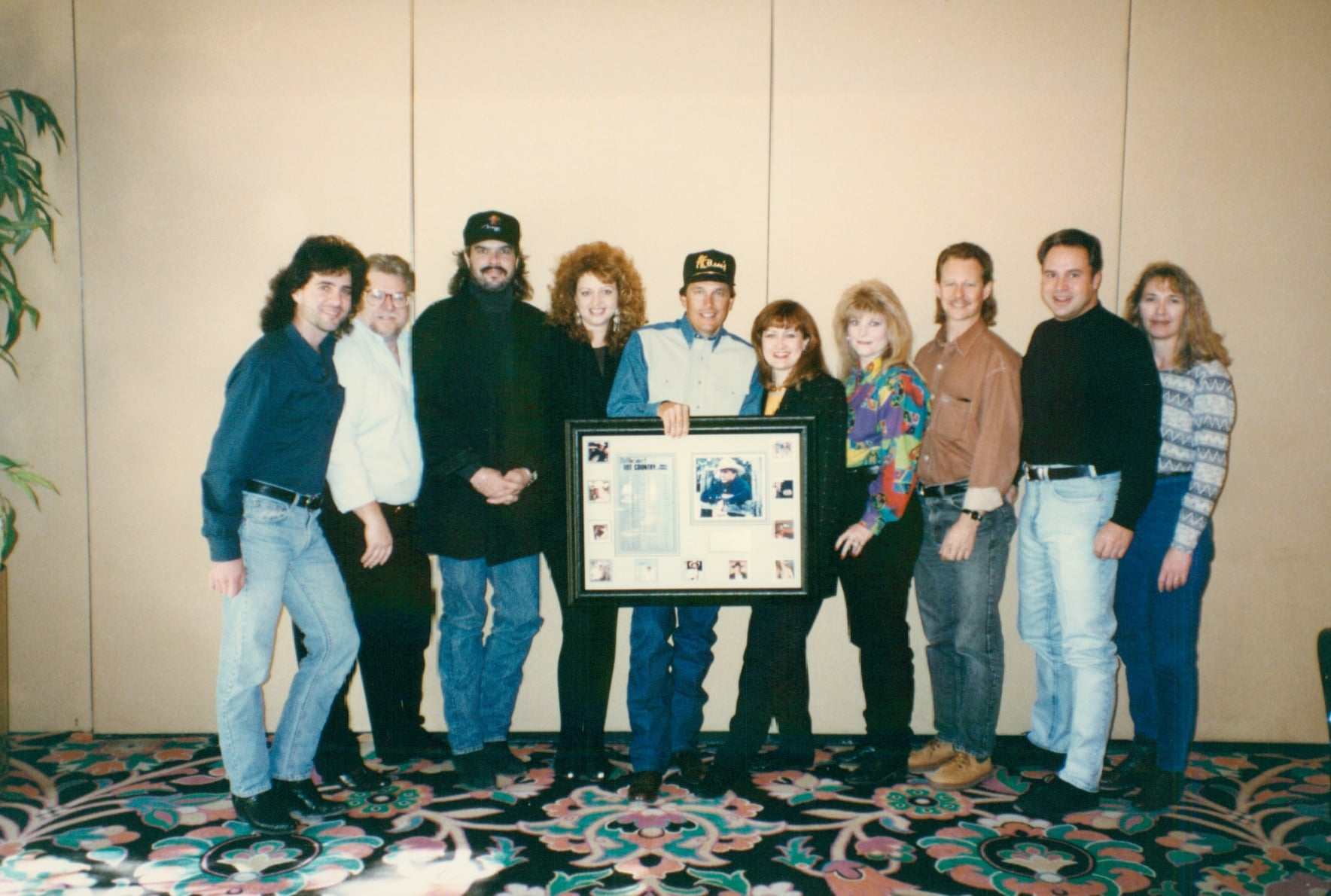
MCA promotion team with George Strait
That philosophy carried into one of the most influential chapters of her career: the launch of Decca Records as Senior Vice President and General Manager. She became one of the first women—and widely recognized as the first—to lead a major record label in Nashville. Tasked with building the label from the ground up, Biddy was given wide latitude to shape its identity, from hiring staff to selecting artists and defining its creative direction. Her approach centered on authenticity and a belief in meeting artists where they were, rather than trying to mold them into a predetermined image. That mindset played a key role in signing artists such as Gary Allan. During early conversations, Allan asked what she would change about him as an artist.
“I told him, ‘I don’t want to change anything about you. It’s not my job to change you. It’s for me to see you and explore the best of you the way you are,’” she says. Allan would later tell her that answer influenced his decision to sign with the label.
Biddy applied that same instinct to other projects, including Lee Ann Womack, where she helped craft a distinctive campaign that set the artist apart in a crowded radio landscape. Her decision-making process often blended intuition with input from her team, even incorporating internal feedback when selecting singles to better understand how songs resonated across different audiences.
“Always the best song,” she says. “Fight for the best song.”
Under her leadership, Decca developed a reputation for thoughtful artist development and a roster that balanced commercial appeal with creative integrity. However, the broader industry was undergoing significant change. The late 1990s brought consolidation, deregulation and a wave of mergers that reshaped both radio and label structures.
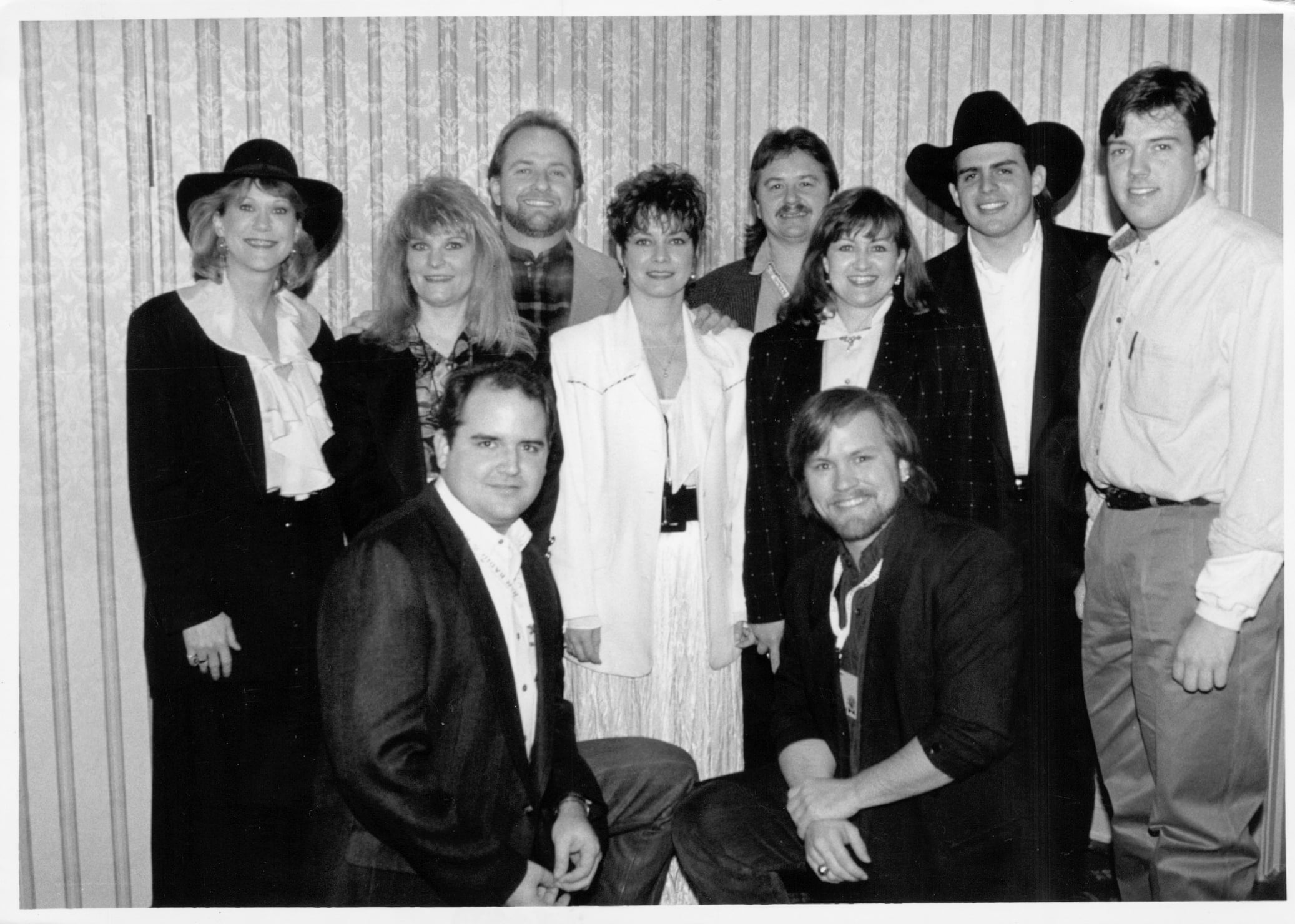
Decca staff and artists
In 1999, Decca was shuttered as part of a larger global consolidation that resulted in widespread job loss.
In the years that followed, Biddy continued working in artist management, independent labels and promotion, navigating a shifting industry landscape. Despite her experience and track record, she encountered new challenges in securing roles at the same level she had previously held. At one point, she was told she was facing what was described as a “double up,” being both overqualified and over 50.
“There is not a man in this town with your resume,” she recalls being told, “and yet I can’t get through the door.”
The experience reinforced the realities she had observed throughout her career. While progress had been made for women in the industry, barriers remained.
Her next chapter would take her in a different direction, though one that ultimately drew on the same skill set she had developed over decades. In 2013, Allsep reached out with an idea for what would become Music Health Alliance, an organization designed to help members of the music community navigate healthcare and related needs. The offer came with a reduced salary and no immediate benefits, but Biddy saw the potential.
She immersed herself in learning the healthcare system, obtained her insurance license and began working directly with clients. The role required a combination of technical knowledge, organizational skill and emotional intelligence, all areas where Biddy had long excelled.

Decca staffers
Over time, the work became deeply personal. Clients often returned year after year, reaching out not only for assistance with insurance but also for guidance during major life events, including illness, caregiving and financial hardship.
“You’re not just dealing with a policy,” she says. “You’re dealing with someone’s life.”
Her impact was felt across the organization as well, helping train younger advocates and contributing to the growth of a team that now serves thousands across the industry. For Biddy, the work represented a continuation of what she had always done, even if the context had changed.
Throughout her career, Biddy has been recognized with numerous honors, including the CMA Humanitarian Award, the Country Radio Broadcasters President’s Award and induction into the SOURCE Hall of Fame, where she was also a founding member. She points to those moments with gratitude.
As she reflects on her career, Biddy often returns to a piece of advice she has shared with colleagues and staff over the years.
“You interview for your next job every day,” she says. “Every meeting, every conversation, how you carry yourself. Someone is always paying attention.”
It is a philosophy that guided her from her earliest days in Nashville through leadership roles at major labels and into her work at Music Health Alliance. It is also one that underscores a career defined not by titles alone, but by consistency, preparation and a willingness to do the work.
As she steps away from her formal role, Biddy is not closing the door entirely. She has expressed interest in consulting and continuing education, and remains open to opportunities that allow her to stay connected to the industry on her own terms. For now, though, her focus is on a different pace and a different set of priorities, shaped by both experience and perspective.
After decades of contributing to Music Row in ways both visible and behind the scenes, Biddy leaves behind a legacy built on relationships, trust and a steady commitment to serving others.

- BREAKING: Country Music Hall Of Famer John Anderson Passes - October 21, 2026
- WMG Unifies Global Sync Operations Across Recorded Music & Publishing - October 21, 2026
- Warner Chappell Music Signs Elizabeth Nichols To Global Publishing Deal - October 20, 2026