

My Music Row Story: Spotify’s Jackie Augustus

Jackie Augustus
Jackie Augustus is a seasoned music industry executive who currently leads Country & Folk Artist Partnerships at Spotify. In this role, she oversees global strategy for both genres, building trusted relationships with artists, managers and key industry collaborators. Based in Nashville, Augustus serves as a core creative and cultural advisor across Spotify’s cross-functional teams, shaping innovative campaigns and genre-defining moments that extend well beyond traditional release cycles.
Augustus began her career at Scooter Braun’s SB Projects, where she rose to become Head of Digital Marketing and led global digital strategy for more than 23 artists, including Justin Bieber and Ariana Grande. Augustus’ unique career trajectory began in 2009 when she launched the Justin Bieber fan account @BieberArmy on Twitter, rapidly gaining worldwide recognition from millions of fans and eventually catching the attention of Braun and Bieber. She then began collaborating with Braun on communicating Bieber updates to his fans, and in 2012 Braun recruited her to join the SB Projects team in Los Angeles, where she lived for six years.
Augustus also spent time as a Strategic Partner Manager on Meta’s Music Partnerships team, where she developed large-scale immersive experiences, launched a content funding program for emerging artists, and onboarded global superstars to Reels. Augustus was named a 2025 Variety Nashville Power of Women honoree, a 2022 and 2025 Billboard Country Power Player, and the recipient of multiple Webby and Clio Awards.
Augustus will be honored as part of MusicRow’s Rising Women on the Row class of 2026 on March 3 at the JW Marriott. Read more about the event here.
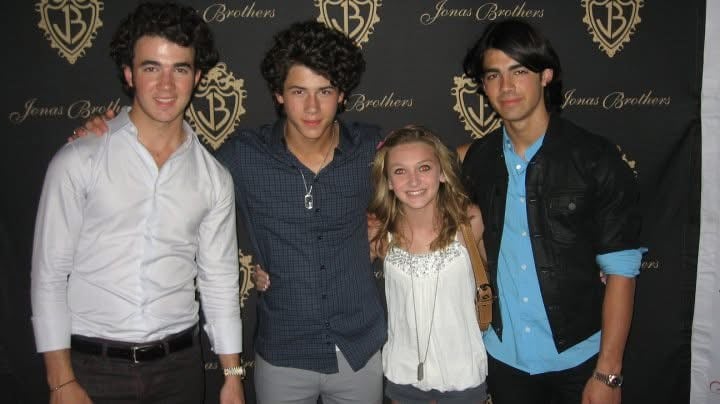
Photo: Courtesy of Augustus
MusicRow: Where did you grow up?
I grew up in Allentown, Pennsylvania, where I lived until I went to college in Hawaii at 16. I’m one of six kids.
What were you into?
I grew up listening to music. I definitely didn’t think anything of it in terms of a role or an industry or anything. I got my first computer when I was 12, and I was obsessed with the Jonas Brothers. I spent most of my time after school making custom Jonas Brothers layouts on MySpace.
This hobby turned into a life-changing opportunity for you.
Yep. I started a Justin Bieber fan account on Twitter when I was 15. Twitter was new. Justin was new, and a couple other super fans and I started posting about things he did. Little did we know our account @bieberarmy, was going to amass a million followers. His then-manager, Scooter Braun, noticed it and started messaging us, and we kind of just stayed in touch. It was very grassroots marketing. It allowed them to ask the fans exactly what their opinion was. He would show us things, ask for our opinions, and we’d give him ideas.
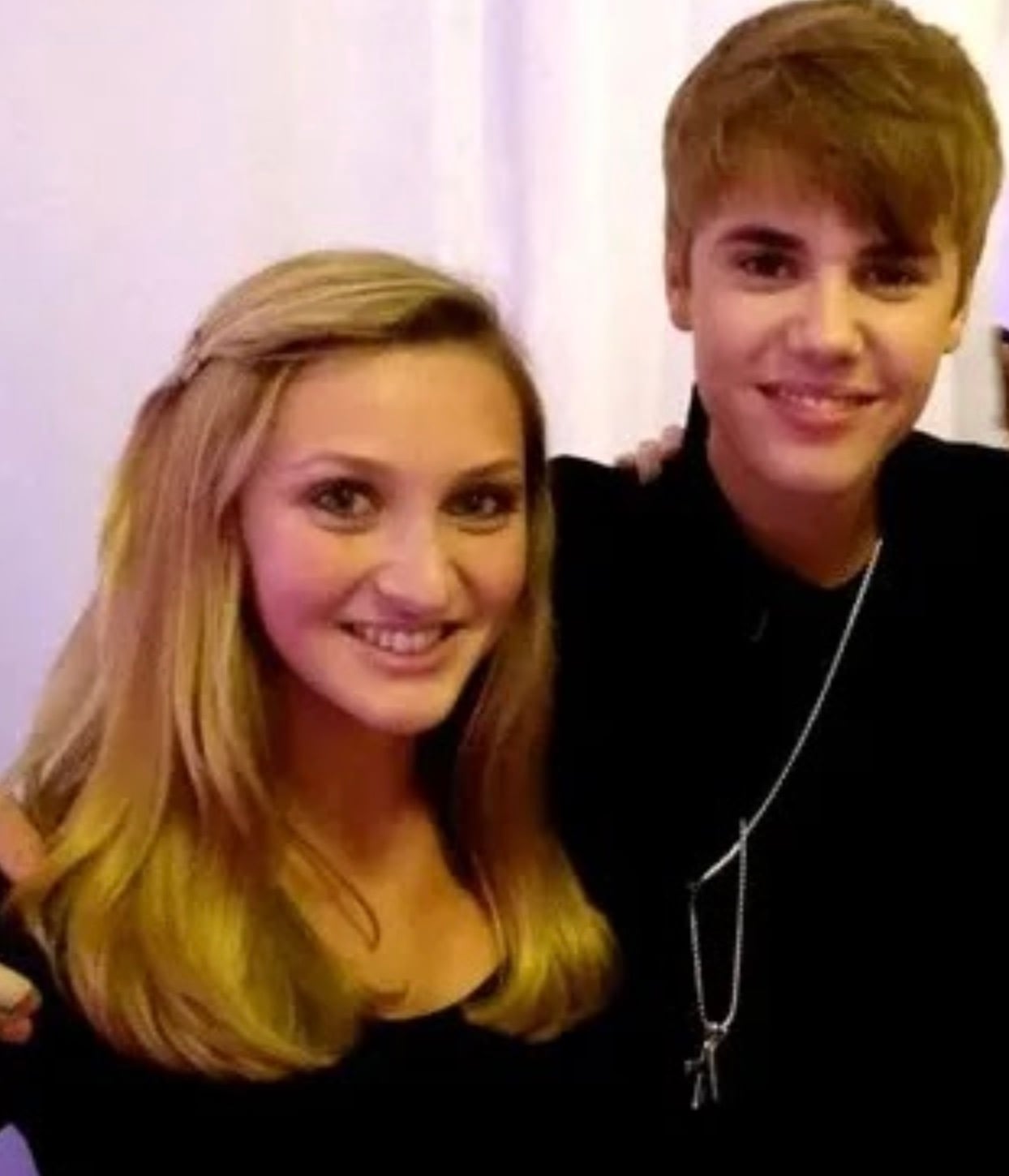
Photo: Courtesy of Augustus
We started this thing called a buyout, where on album release day, all the fans in whatever city you were in would get together, go to Best Buy and buy all the albums. It was super fun. So the account just became the destination for all things Justin Bieber updates.
We weren’t doing anything intentional by any means. It was just organically happening. Justin would retweet us. We had an account and a list of fans that we wanted him to follow, and he would follow them. It did not feel like real life. I obviously got to meet him and go to the shows, and then I somehow convinced my mom to let me go to the show at Atlantis in The Bahamas, which is where I met Scooter for the first time. I was about 16.
Then you went to college?
I played every sport growing up but wasn’t good at any of them until I got into cheerleading. I actually ended up cheering competitively in Jersey, so I missed a ton of school. When I got to high school, I convinced my mom to let me be homeschooled, so I ended up graduating a year early. I ended up going to college in Hawaii on a cheerleading scholarship.
I couldn’t actually make the tryout because I was so far away. They asked me to make an audition tape, so my one ask for Justin was to make an audition video for me. He made a video that said, “Hey guys, you should pick Jackie to be on your team because she’s the best.” [Laughs] I got in.
The cheerleading program at that school actually ended after my freshman year, so I ended up coming back to Pennsylvania for the summer. I was working for Crowd Surf at the time, just running fan accounts, and they were like, “Just come to Nashville, go to MTSU, finish school here and we’ll give you a job.” So I was planning on doing that, and Scooter called me one day to check in. I told him I was going to move to Nashville. He said, “Let me talk to your mom.”

Photo: Courtesy of Augustus
He said, “I’m giving your daughter a job. She’s moving to LA.” My mom was like, “Okay, it’s a state closer than Hawaii. Sure.” I turned 18, bought a car, drove across the country and walked into the office, which was still being built. I met with the CMO, and he said, “I’m supposed to give you a job. What do you want to do?” And I said, “I know how to tweet.” So we called it a social media coordinator. That was 2012.
At the time, I was really a resident fan, and a lot of what I think I was doing was just reminding everybody that the fans are smarter than us and three steps ahead, and figuring out how we bridge that gap closer and closer.
I finished college online, so I would go to the office all day and then come home and do science experiments on my balcony. I asked a lot of questions. My question to everything was, “Why are you guys doing that?” I was probably the most annoying person in the meetings. My brain constantly thought about things from the fan perspective. How did I do this as a fan? How would I receive this as a fan? How would I want to hear from this artist? How can we tease something or roll it out? I would ask our partners at Facebook, Twitter, Instagram or wherever, “Hey, can we do this?” When you work with Justin Bieber, Ariana Grande, Demi Lovato and J Balvin, and the biggest names in music, the partners are willing to experiment.

Photo: Courtesy of Augustus
What a way to start your career!
I was in LA for six and a half years running digital, and I always joked with Scooter that I was moving to Nashville. We co-managed Dan + Shay, which was my first foray into the country music business. That project was very close to my heart. I finally moved to Nashville in 2019 and stayed working remote with the company for another two years throughout the pandemic.
One day my friend at Instagram called and said she was leaving and asked if I had any interest in applying. I said, “Yeah, but I’m not moving back to LA.” So I applied and got the job, and then I did pop and country artist partnerships on the Instagram side, which was fun.
When I started at Instagram, Reels was new. The main mission was to get artists what we call “zero to one” on Reels, where they made their first Reel. I was able to get Taylor Swift, Post Malone and some of the biggest names on Reels, by simply explaining the value to all my digital friends from my management past.
What was next?
Spotify came knocking and said, “Hey, we’re starting an artist partnerships team focused on managers. That’s where you came from.” I was thriving at Instagram, so I actually turned Spotify down at first. Then a couple of months later, they came back around. I was the only person on the Meta team here in Nashville and was going to shows by myself, so having the community on the Spotify team here really spoke to me.

Photo: Courtesy of Augustus
What is a day-to-day for you now?
We have our tentpole events every year. We have Spotify House during CMA Fest, among other things that we try to do each year. But the artist campaigns are the most exciting part that we get to work on, bringing the album to life with the artist. Spotify does it so well.
Day-to-day, I’m constantly talking to managers about new releases, but also about what else is happening in their world because I’m responsible for the partnerships and the genre strategy, so who we’re partnering with and where we’re activating. I want to know what else the artist is doing outside of release day to make sure that we’re tapping in, whether it’s the Houston Rodeo, Stagecoach or whatever else is happening culturally. Just making sure that all of the pieces of Spotify have what they need in order to support a project.
Who are your biggest mentors?
I definitely have a lot of people to thank in terms of the reason I’m still here and the reason I was able to survive being so young in the industry. I always call my old boss at Meta, Malika Quemerais. She’s my second mom. And then Mike Chester, who’s at Warner now, worked at SB with me for several years. He’s my second dad. If I’m ever questioning something or need a sounding board, I’ll call one of them.

Photo: Courtesy of Augustus
What is some of the best advice you’ve ever gotten?
Scooter always told me that it’s better to ask for forgiveness than permission, which can get me in trouble at times, but has also proven to work. Because I didn’t have a rule book per se when I worked at SB Projects, it didn’t feel like a real job. It felt like there was no limit. You could do whatever you wanted when you were working with the biggest artists in the world. I was so spoiled, and I’ve learned everything I know about this industry from just kind of being thrown into it.
Tell me about an experience you’ve had that your little kid self would think is so cool.
I also work on Taylor Swift at Spotify, which obviously isn’t specific to just country or folk necessarily, but we’ve broken a lot of records with her and done a lot of amazing fan events. Last year we did an activation with her in Asia where we brought her “This Is Taylor Swift” playlist to life. I never thought I would be in Asia in a working capacity on a project for Taylor Swift.
My grandpa was a massive Taylor Swift fan and a big part of my life growing up. He always had her music on in the car. In that moment, I thought, Pop would be proud.
- BREAKING: Mike Sistad, Evyn Mustoe Johnston Exit ASCAP - October 15, 2026
- MusicRow Weekly (News, Charts, More…) - October 2, 2026
- Johnny Mike Walker Joins Country Music Hall of Fame And Museum Circle Guard - September 28, 2026